
Why go
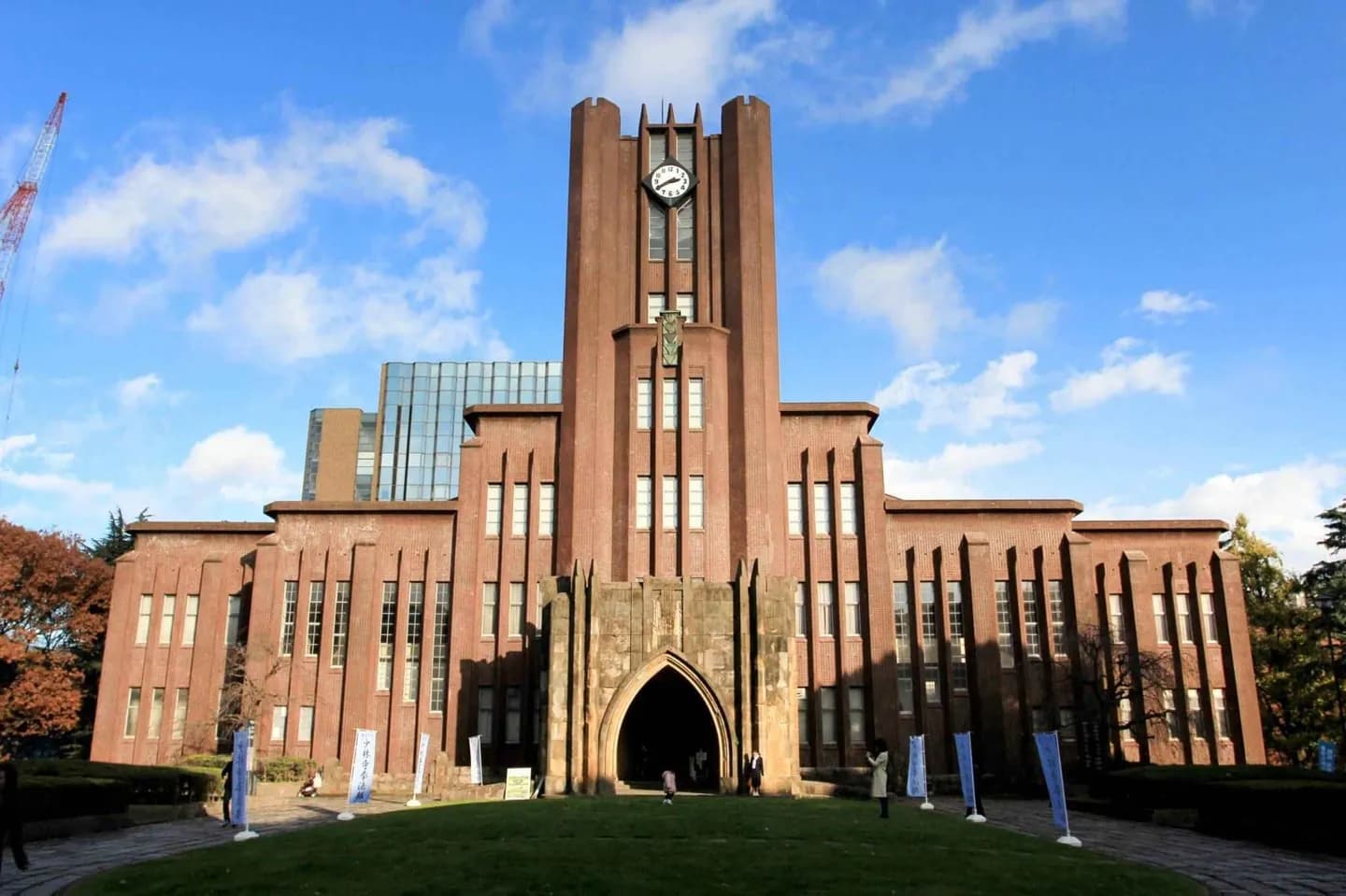
Hongo offers a quieter way to read Tokyo's modern institutional architecture. The approach to Yasuda Auditorium establishes the campus axis, while brick facades, gingko trees and the surviving gatehouses show how successive periods were layered into a working university rather than a museum precinct.
What to look for
- Walk the tree-lined axis toward Yasuda Auditorium's clock tower.
- Compare the campus's brick academic buildings with later research blocks.
- Look for Akamon's gatehouse and the public university museums marked on the campus map.
The full story
The Hongo campus occupies land associated with the Maeda domain residence during the Edo period, a history still signaled by Akamon, the surviving Red Gate. After the University of Tokyo moved here in the late nineteenth century, the campus became a laboratory for modern Japanese institutional architecture. Yasuda Auditorium, completed in 1925, gave the university a monumental center with a Gothic-influenced brick tower and a strong processional axis. The building later became inseparable from the 1968–69 student protests, when its occupation and police retaking made the campus a national political symbol. Today Hongo remains an active academic environment. That continuity changes the visit: historic gates, memorials and museums sit among laboratories, libraries and ordinary student routes, allowing visitors to see how the country's oldest national university carries its architectural and political past into daily use.
Useful to know
- Individuals and families may walk the campus after reading the university's visitor rules; larger groups must register in advance.
- Most academic interiors are restricted, so plan the visit around exterior architecture and explicitly public museums.
Your next visit
Estimated · Declared scenario and planning estimates; no live opening, weather, queue or booking service.
Outdoor visit · 35–70 min
World planning estimate; admission, opening, visit duration and access need checking.