
Why go
Read this history before looking at the sanctuary’s Mudéjar details or the cloister. The surviving cathedral stands where earlier religious buildings shaped Toledo’s claim to ecclesiastical primacy, although the exact plan of the former mosque is unknown. The sequence also explains why later Christian builders inherited a site already central to the city.
The full story
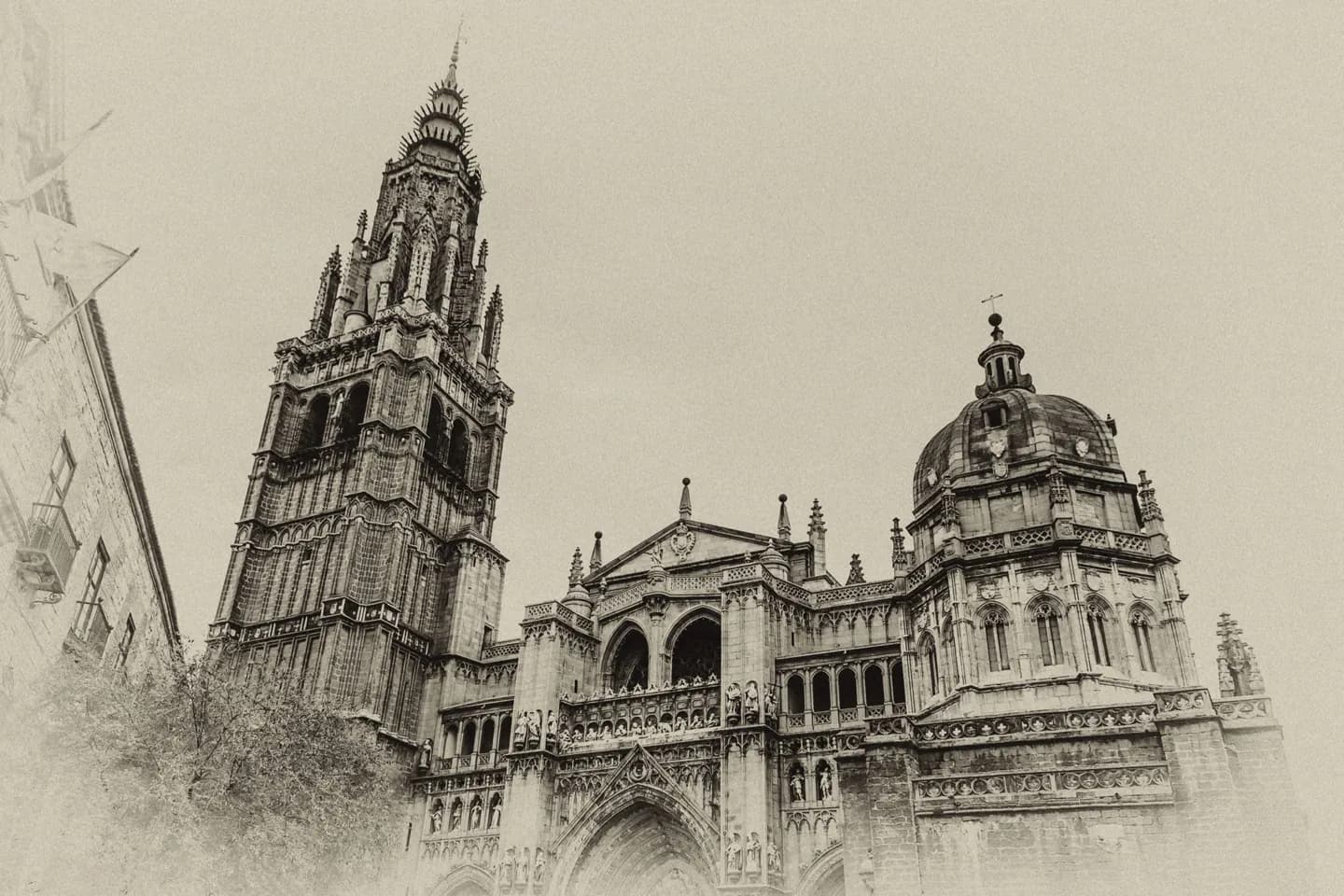
Toledo was an important episcopal seat under the Visigoths, and its church councils helped shape the religious life of that kingdom. A tradition places an earlier church on the cathedral site; a later inscription records a consecration in the time of King Reccared. After the Muslim conquest, a mosque occupied the site, while a Christian bishopric continued elsewhere in the city. Alfonso VI took Toledo in 1085. The former mosque then became a cathedral, and Pope Urban II recognised Toledo’s primatial status in 1088. That adapted building stood until the thirteenth century, when the present Gothic cathedral was begun; the ceremonial laying of its foundation stone is generally dated to 1226. The previous mosque’s full appearance is not known. Some forms in the later cathedral invite comparison with Islamic building traditions, but they cannot by themselves prove the exact layout of the lost building. This layered history matters most when you notice that the monument in front of you is both a replacement and a continuation of Toledo’s sacred centre.