
Why go
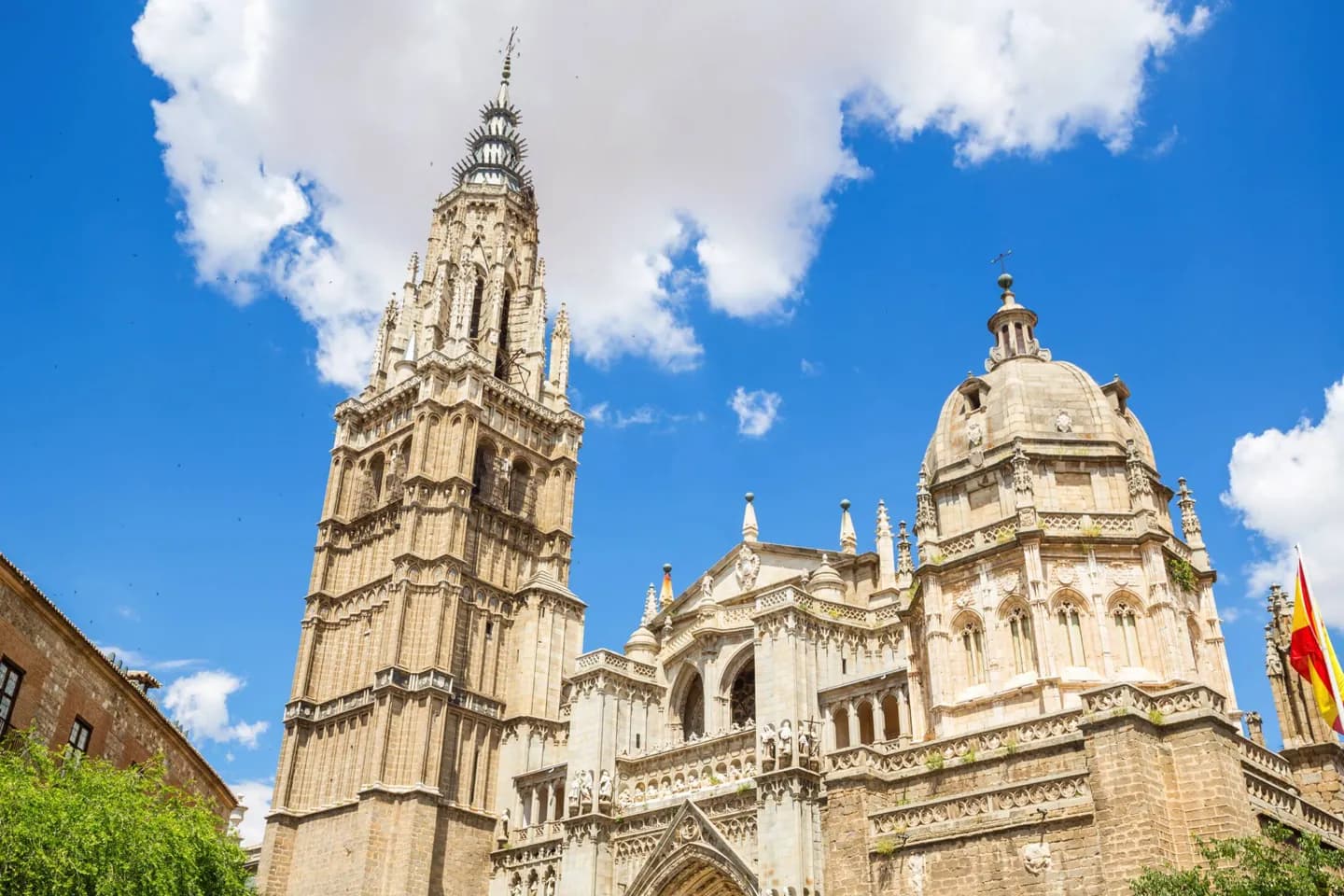
The cathedral is more than a showcase of Gothic vaults and arches. Its layout shows how builders adapted ideas from France to established Iberian worship practices. Seeing where the choir sits makes that choice tangible and helps explain the cathedral's influence on later Spanish churches.
The full story
The builders of Toledo Cathedral drew on French Gothic techniques, including pointed arches and buttresses. They did not simply copy the plan of a French cathedral. Rather than concentrating the choir and altar together in a large eastern sanctuary, they placed the choir in the central nave. That choice reflected established Spanish liturgical traditions as well as the new structural language. Toledo's standing as the primatial cathedral helped its arrangement carry authority. Later cathedrals, including those of Seville, Cádiz and Palma de Mallorca, adopted comparable ways of organizing space, while Burgos and León followed French models more closely. The distinction is easiest to grasp inside Toledo Cathedral: follow the main nave toward the choir, then compare its position with the sanctuary beyond it. The building's influence also travelled with Spanish church building to the Americas and the Philippines. The useful point is the combination: French Gothic construction serving a spatial plan shaped by local practice.