
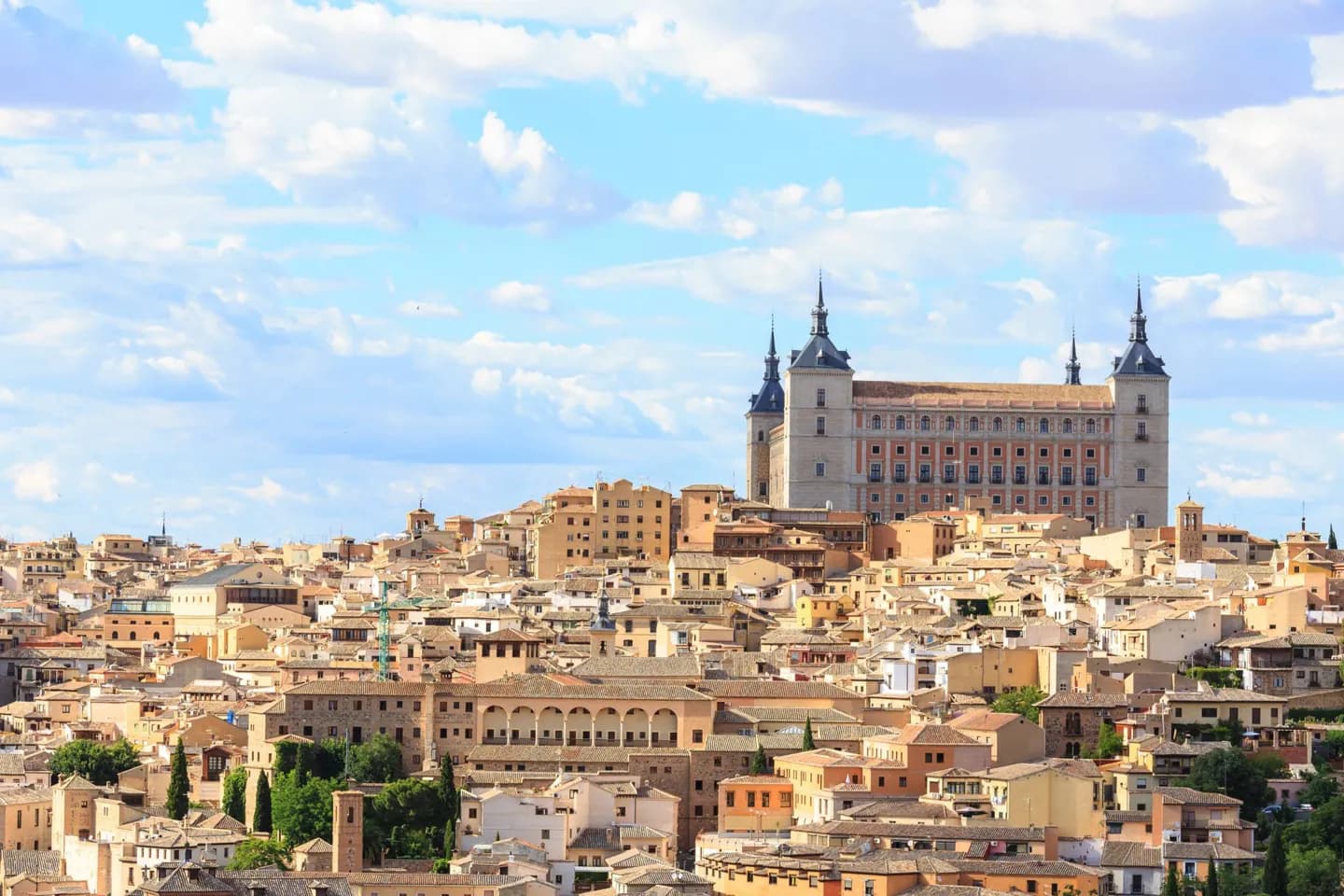
Why go
Read this before visiting the cathedral, Jewish quarter, or Alcázar. Roman defenses, Visigothic councils, the 1085 Castilian conquest, Arabic and Hebrew scholarship, and the later royal court each left a different claim on the same compact hilltop. The geography of the river bend also helps connect these episodes to the streets you walk today.
The full story
The Tagus bend made Toledo a defensible settlement long before the present monuments. Romans called it Toletum; it later became a capital of Visigothic Spain, where church councils helped shape the kingdom’s religious policy. Muslim rule began in the early eighth century. In 1085 Alfonso VI took the city, but its Arabic and Hebrew books remained a resource for scholars. Translation work associated with Toledo carried learning into Latin Europe. The phrase “three cultures” describes a real overlap of traditions, but it should not hide coercion: Toledo’s Jews faced restrictions, violence, and forced conversion across different periods. In the sixteenth century the city hosted the court of Charles I before royal power shifted elsewhere. The Alcázar acquired another, contested meaning during the Spanish Civil War, when a Nationalist garrison endured a Republican siege and the damaged building became a symbol in Francoist accounts. Look across the city’s monuments with all these layers in mind; no single period explains the whole place.