
Why go
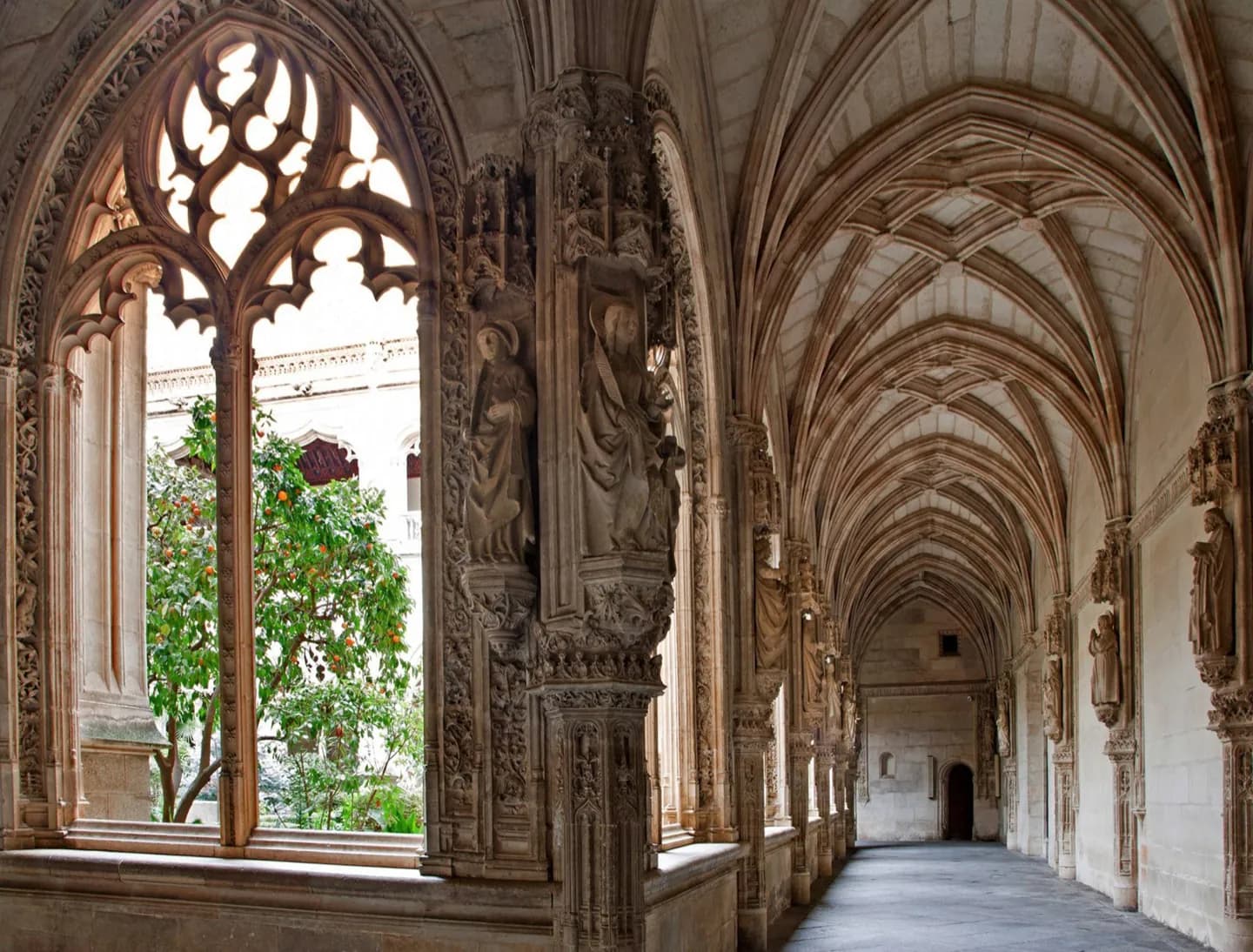
The monastery offers a more focused architectural visit than Toledo’s vast cathedral. Look for the monarchs’ coats of arms, the long church interior, and the cloister’s carved vaulting; together they show how dynastic ambition shaped a place of worship. This is where the royal purpose becomes visible in stone rather than only in a chronology.
What to look for
- Royal coats of arms appear prominently in the church decoration.
- The church has a long nave with side chapels.
- The cloister surrounds a small garden beneath carved vaulting.
The full story
Isabella of Castile and Ferdinand of Aragon founded San Juan de los Reyes in the late fifteenth century, linking it to their political victory after the disputed Battle of Toro in 1476 and the birth of their son John. It was initially considered as their burial place, but they were later buried in Granada. Construction began in 1477 to designs associated with Juan Guas, and the monastery was completed in the early sixteenth century for the Franciscans. Its church combines Gothic forms with Spanish and Flemish influences. The heraldic decoration makes the royal purpose impossible to miss, while the cloister provides a quieter counterpoint around its garden. Napoleonic troops damaged the monastery in 1809; later restoration helped recover the complex. The result is both a religious building and a carefully staged statement of monarchy, more revealing when you notice how insistently royal emblems appear inside.
Useful to know
- Give the church and cloister separate attention; their scale and detail feel different.
- Pair the monastery with nearby Jewish-quarter monuments for a walk through contrasting religious histories.