
Why go
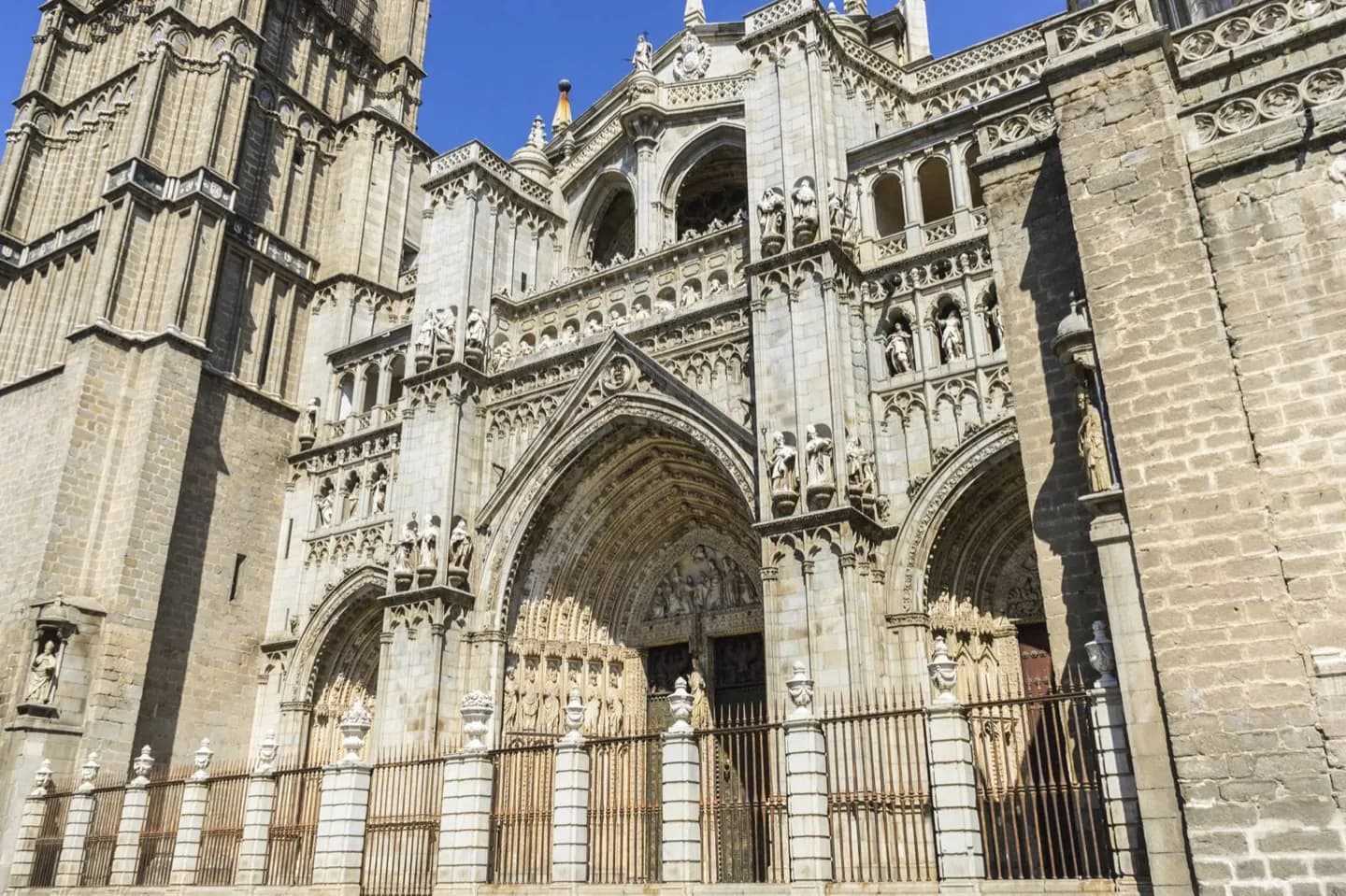
The cathedral gathers several of Toledo’s histories in one building: a former mosque site, thirteenth-century Gothic construction, chapel patronage, and the theatrical Baroque El Transparente. The contrast between the main nave, choir, and chapels is the real payoff. Its scale rewards choosing a few features to follow closely.
What to look for
- The sanctuary retains interlaced Mudéjar-style arches in its triforium.
- The main chapel’s Gothic altarpiece was commissioned under Cardinal Cisneros.
- El Transparente uses sculpture, marble, and light in a Baroque altar setting.
The full story
A Visigothic church and later the city’s principal mosque occupied this site before the present cathedral. After Toledo passed to Alfonso VI in 1085, the former mosque served as the cathedral until Gothic construction began in the thirteenth century. The new building grew over generations: five naves and a double ambulatory gave it unusual breadth, while its sanctuary kept arches with Mudéjar character. Cardinals and archbishops then sponsored chapels, screens, an altarpiece, and later alterations. The main chapel reflects Cardinal Cisneros’s wish for a larger presbytery and a monumental Gothic retable. El Transparente shows a very different Baroque interest in sculpture and light. The building is therefore best read in stages, not as one stylistic moment. Its exterior, interior, cloister, and musical fittings each reveal a separate use of space and patronage.
Useful to know
- Allow enough time to move beyond the nave to the choir and individual chapels.
- If visiting for architecture, look at the main façade before entering, then compare its Gothic portals with later work inside.
- Check the cathedral’s current visitor arrangements before setting out; worship may affect access.