
Why go
At Tulum, the wall gives the core an unusually legible edge. Compare that enclosure with the broader pattern of Maya cities, where ceremonial centres often grew outward over time and residential groups extended beyond the main plazas and public buildings.
The full story
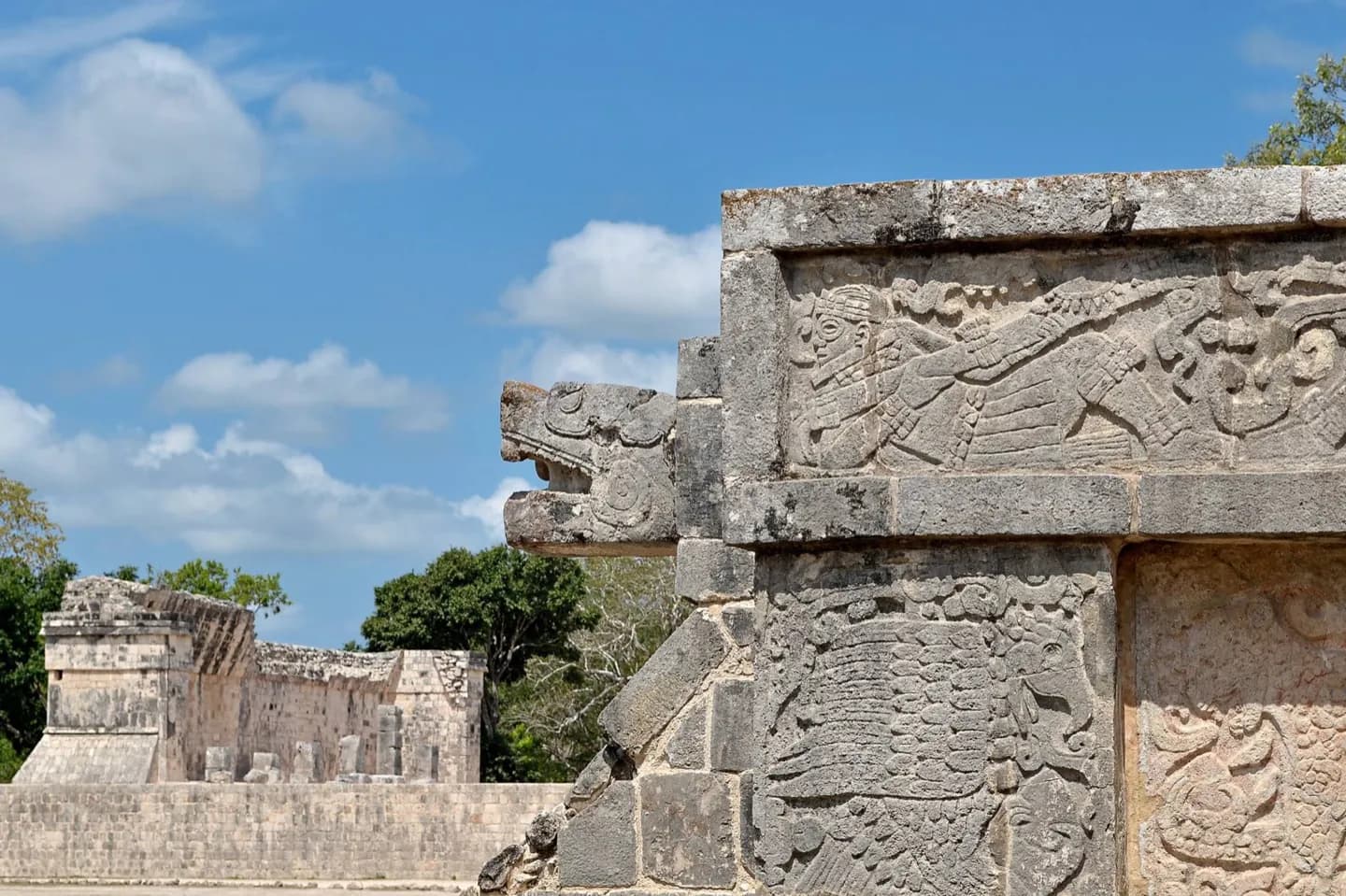
Maya cities often expanded in stages. New buildings rose over earlier ones and groups accumulated around ceremonial and administrative centres. Temples and other public architecture framed plazas; elite residences occupied prominent nearby ground. Houses and smaller compounds spread farther out, sometimes linked to the core by causeways. Some residential platforms raised living areas above seasonal water. This pattern helps explain why a visitor’s circuit through a famous monumental centre can show only a fraction of the former city. The open plaza was a place for gathering, while adjoining structures expressed the position of rulers and noble families. At Tulum, the surviving wall makes the enclosed centre especially clear, yet the wall does not mean that every part of Maya life happened inside it. Read the site as a relationship between public space, buildings and the surrounding landscape.