
Why go
At Tulum, a carved inscription is more than ornament. The Temple of the Initial Series is associated with the site's earliest dated inscription, while painted and carved signs elsewhere show how writing moved between surfaces. This short guide gives you a way to look at those marks without expecting an alphabet.
The full story
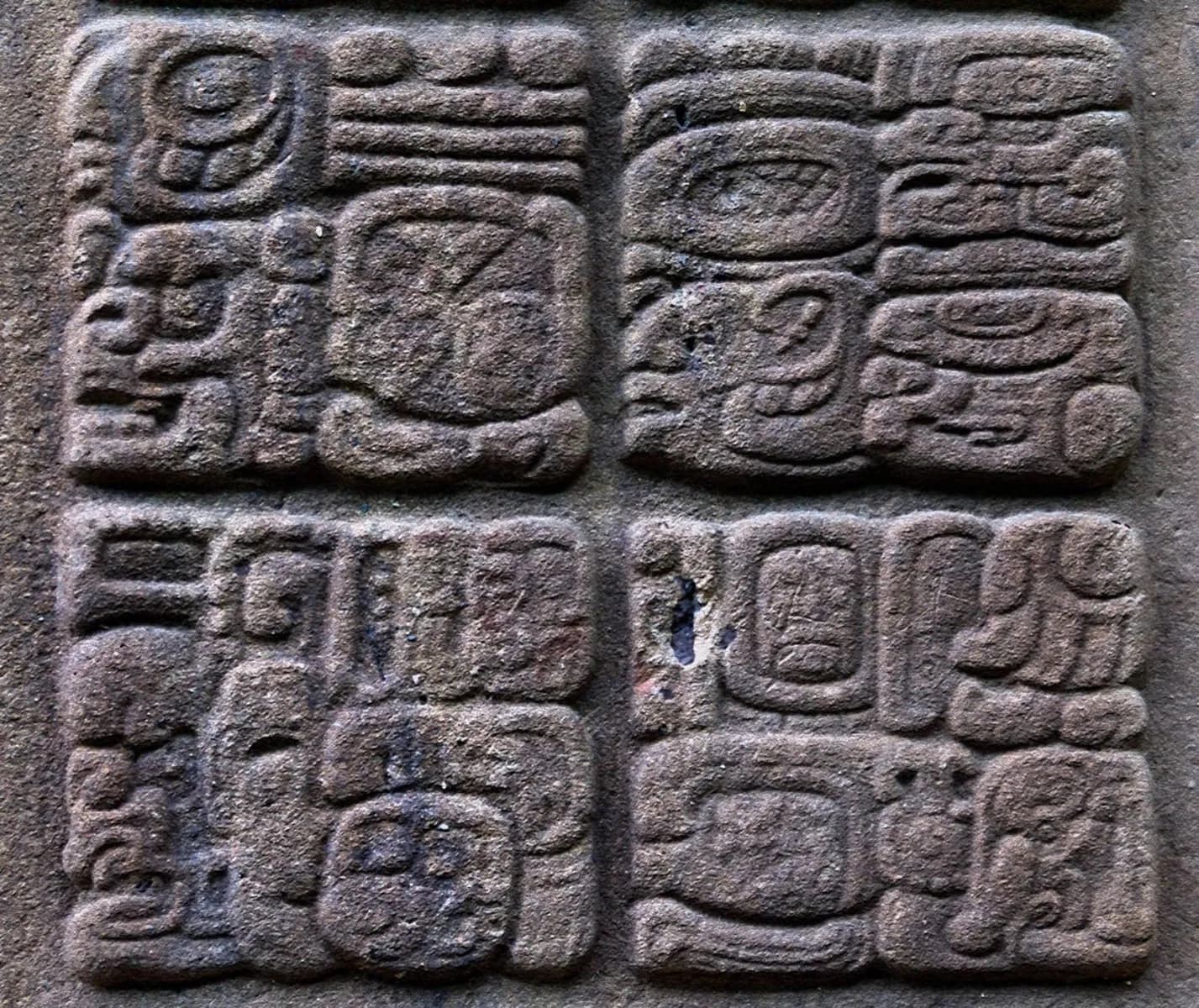
Maya writing used both logograms, signs that stand for words, and phonetic signs that stand for syllables. A scribe could combine them within a compact glyph block. Blocks were normally arranged in paired columns and read in a set order. That structure helps explain why an inscription can look like a field of individual pictures yet form a connected statement. Writing appeared on stone monuments, architectural elements, ceramics, plaster walls and folded books made from bark paper. The books preserved knowledge that stone alone could not hold, but few survived the upheaval following the Spanish conquest. The ability to read the script was then lost to scholars for centuries. Twentieth-century work showed that many signs record sounds as well as ideas, opening royal names, dates and historical events to interpretation. At Tulum, look first for the grouped signs and their position on the building. You need not decode a passage to recognize that it was placed for a particular audience and purpose. The same visual language connects a coastal city to a wider Maya tradition of recording time and identity.