
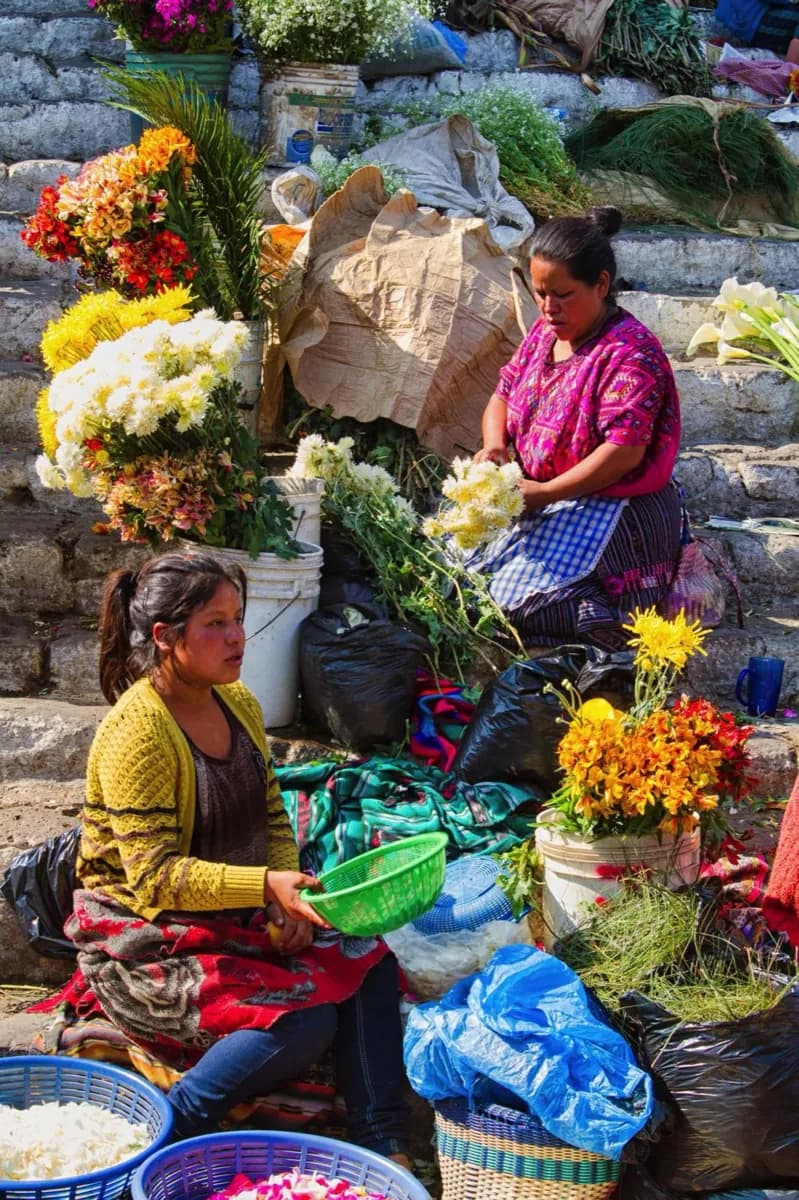
Why go
Keeping living communities in view changes how you read Tulum: temples and carved stones come from an earlier city, while Maya people remain part of the region. The Maya communities of the Yucatán and Chiapas have distinct identities; avoid treating one village, language or ritual as representative of all.
The full story
Maya communities are part of the region’s present, with different identities across Yucatán, Chiapas, Guatemala and neighbouring areas. Names such as Yucatec Maya and Tzotzil refer to distinct peoples; neither stands for every Maya community. Language, clothing and religious practice can vary between places and change over time. Some traditions combine Indigenous and Christian forms, but no single ritual or style of dress defines Maya life. This matters when you visit Tulum. Its temples and wall tell a story about an earlier city, while living people carry their own histories beyond the archaeological grounds. The names and images on ancient monuments should not be treated as a complete portrait of present-day communities. If a museum or local cultural programme presents a particular Maya community, read its name and place carefully. That small distinction keeps the visit connected to living people without folding many separate voices into one past.