
Why go
Tulum's temples and surviving murals invite close looking, but a carved figure does not explain itself. A little context about ancestors, deities and ritual cycles helps connect architectural decoration with the beliefs that gave it meaning while leaving uncertain identities open.
The full story
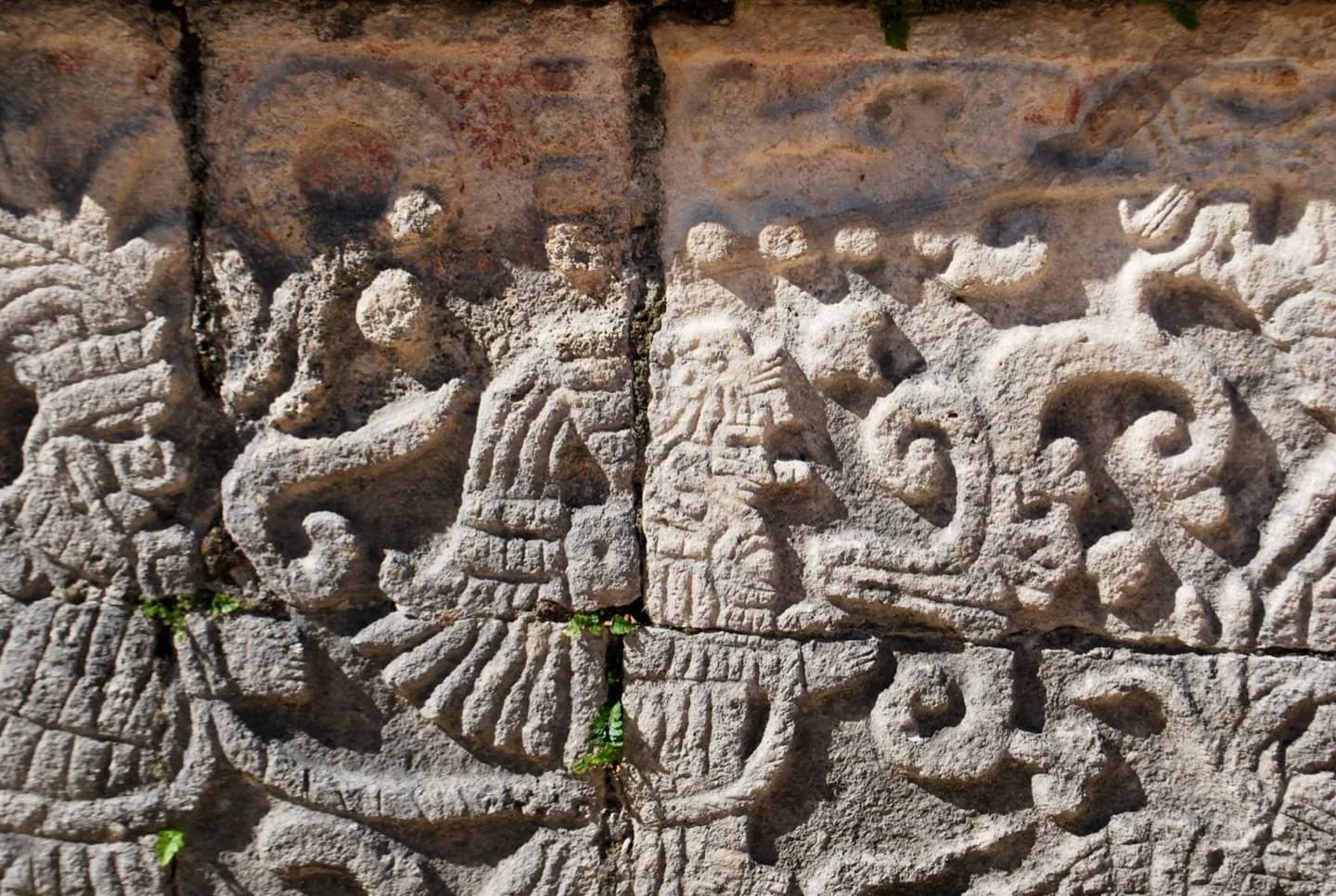
Maya religious life involved many deities and powerful ancestors. Offerings and ceremonies sought relationships with these forces, and rulers could present themselves as intermediaries between people and the supernatural realm. Archaeologists reconstruct these practices from shrines, burials, ritual deposits, images, inscriptions and accounts recorded after the Spanish conquest. Each kind of evidence has limits. Time was part of the sacred order. Repeating natural and celestial cycles were tracked in calendars and could shape ceremonies. Public rituals might include incense, music, dance, feasting or bloodletting. Practices changed across places and centuries, so a detail known from one Maya city should not automatically be assigned to Tulum. At Tulum, pay attention to the placement of decorated façades and murals within temple spaces. The Temple of the Descending God carries a figure above its doorway; the Temple of the Frescoes preserves painting. Those visible details show how images formed part of a building's ritual setting. The precise identity or meaning of a figure may remain debated, and an open question is better than a confident but unsupported label.