
Why go
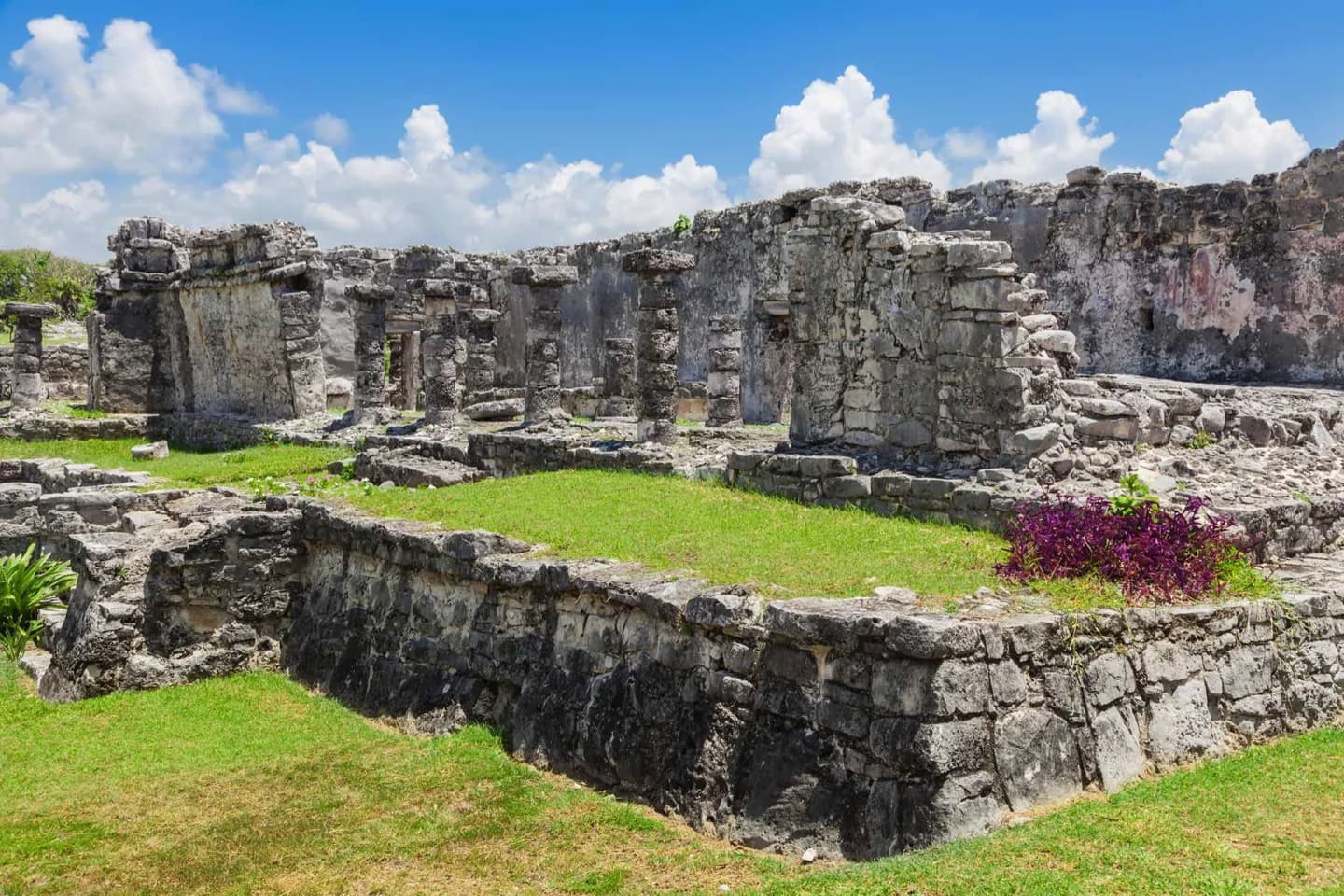
The wall is the easiest way to grasp Tulum as a planned settlement rather than a scattering of temples. Trace the contrast between the thick masonry and the exposed sea side. The enclosure held major buildings, yet the wider community extended outside it along the coast.
What to look for
- Five narrow gateways pierce the landward enclosure.
- The sea-facing cliff completes the defensive setting without a fourth wall.
- Buildings within the wall contrast with evidence of settlement beyond it.
The full story
Tulum's wall enclosed three sides of the central precinct. It was broad and high enough to shape both the view of the settlement and movement into it. The Caribbean cliff provided a natural boundary on the fourth side. Five narrow entrances interrupted the masonry: two on the northern side, two on the southern side and one to the west. The passages made access more deliberate than an open approach across the ground. The wall also separated a concentration of temples and other monumental structures from the broader coastal settlement. That does not mean everyone lived inside it. People occupied areas beyond the enclosure, and the sea linked the city to other communities. Seen from a gateway, the wall expresses control and protection; seen from the cliff, it forms part of a port city whose life extended outward.