
Why go
Taste a gianduiotto to understand Turin's long connection with chocolate and Piedmont's hazelnuts. The sweet takes its name from gianduja, the chocolate and hazelnut mixture, which in turn recalls Gianduja, a Piedmontese theatrical character. The form and the ingredients tell that story together.
What to look for
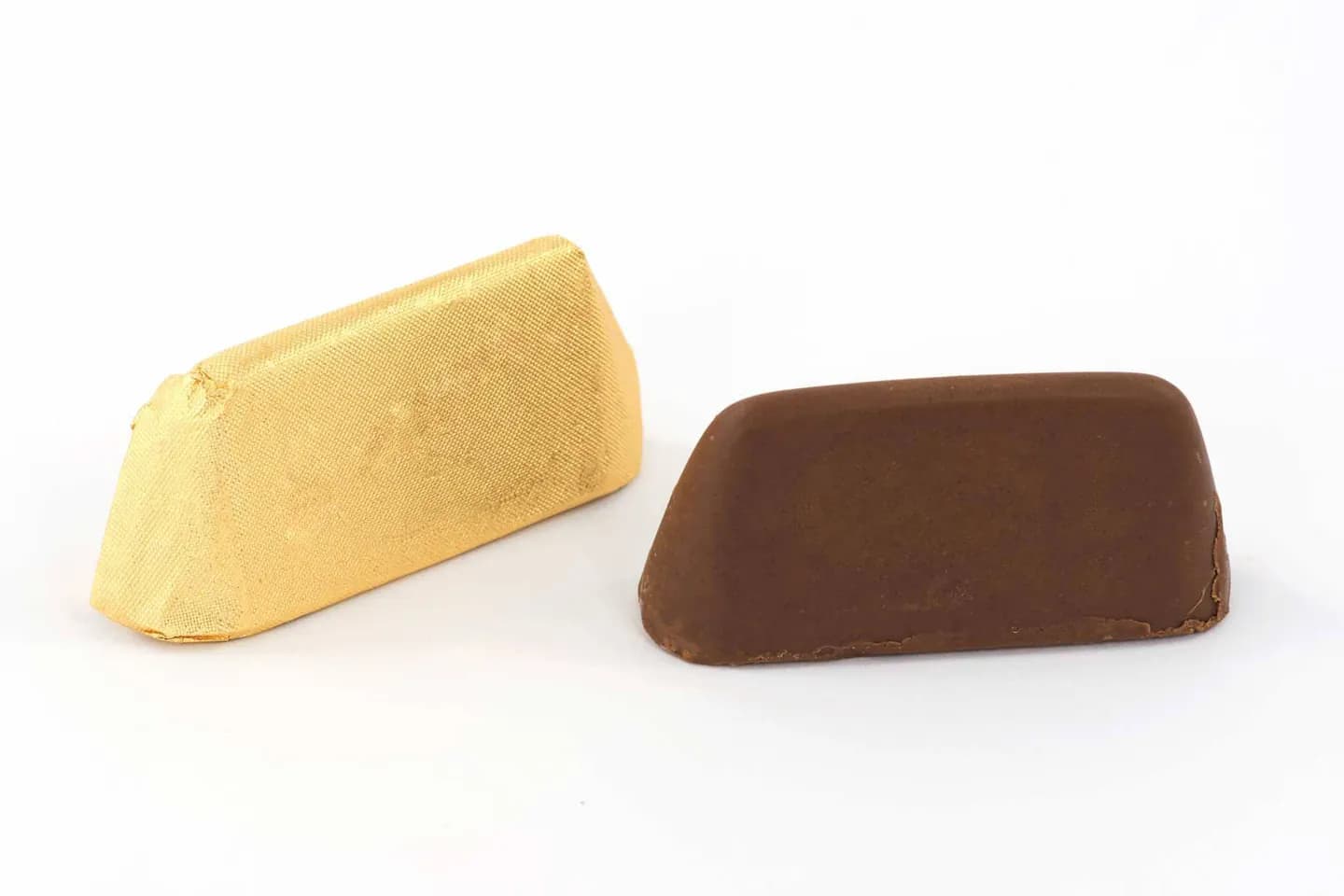
- The little upturned-boat shape echoes the hat associated with the Gianduja character.
- Hazelnut paste softens the cocoa flavour and gives gianduiotto its characteristic texture.
- Individual foil wrappers are part of the sweet's recognisable presentation.
The full story
Gianduiotto brings several parts of Piedmontese culture into one small sweet. Its gianduja mixture blends cocoa and sugar with ground hazelnuts, a crop closely associated with the region. The name leads back to Gianduja, a character of Piedmontese popular theatre; the chocolate's tilted, boat-like shape is commonly linked to his hat. The traditional account places the sweet's public debut in Turin in 1865 and associates it with chocolatiers Paul Caffarel and Michele Prochet. That story helps explain why gianduiotto became identified with the city, though the broader practice of combining cocoa and local hazelnuts developed over time. The foil-wrapped piece is therefore more than a flavour to try: its ingredients, shape and name each point to the place that made it famous. Compare it with other gianduja sweets to notice how the same chocolate and hazelnut idea takes different forms.
Useful to know
- Look for the name gianduiotto when choosing a Turin chocolate; gianduja also describes the mixture used in other sweets.
- Check ingredients on the actual product if you need to avoid dairy or other allergens.