
Why go
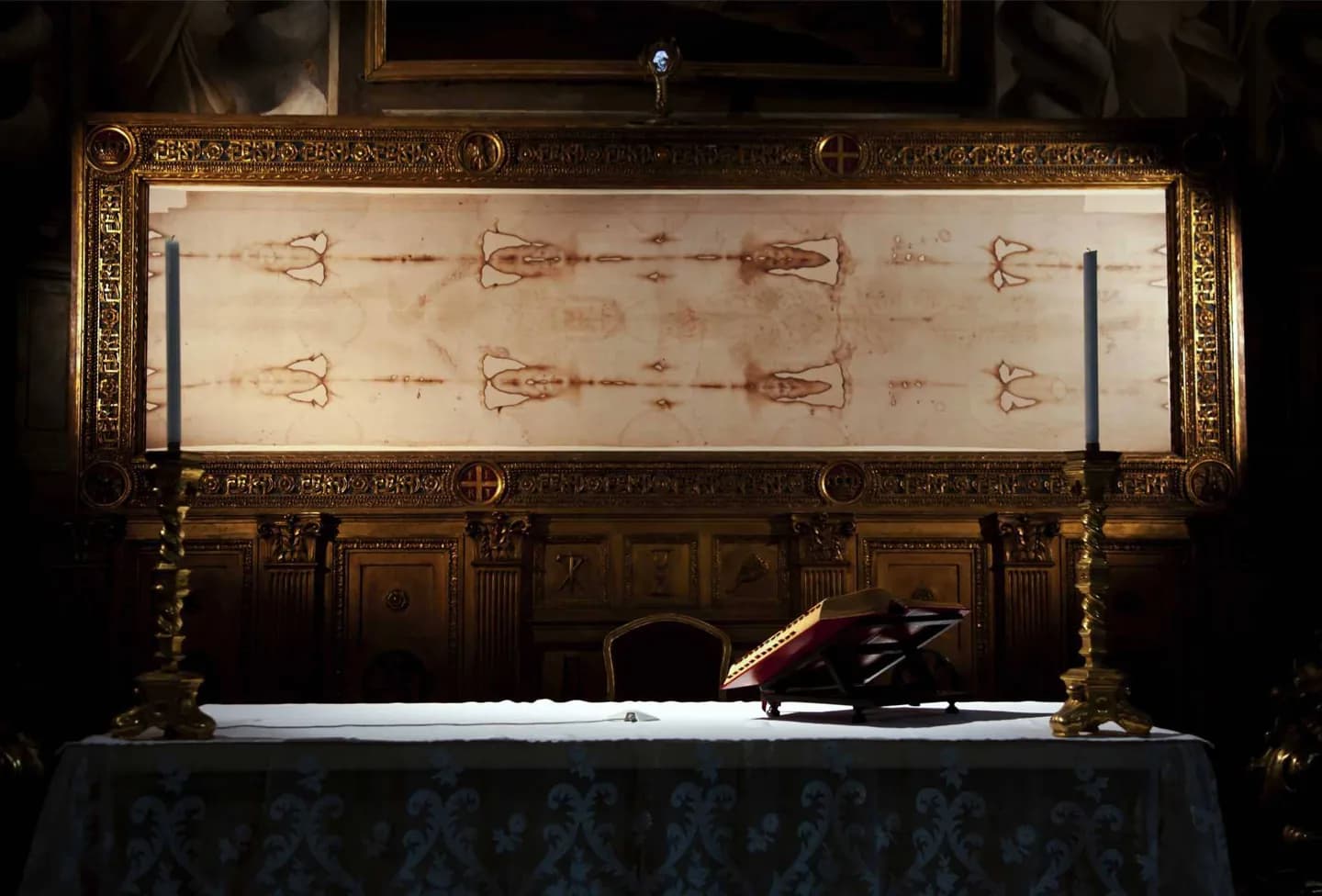
Read the Shroud alongside the cathedral and the Chapel of the Holy Shroud, built for the relic, rather than treating all three as the same attraction. The cloth matters to many Christians, while the origin of its image remains contested. That distinction helps make sense of the surrounding architecture.
The full story
The cloth shows the front and back image of a man who appears to have suffered injuries associated with crucifixion. Some believers regard it as the burial cloth of Jesus. Scientific study has produced competing interpretations, and radiocarbon tests on sampled material dated it to the medieval period. The result and its meaning remain disputed; neither devotion nor debate settles the image’s origin. A photographic negative made by Secondo Pia in 1898 brought the image to wider attention because its features appeared clearer in negative than on the cloth itself. The Shroud’s place in Turin is architectural as well as religious: the cathedral is the church associated with it, while the Chapel of the Holy Shroud was designed to house it. Understanding those separate roles gives the nearby buildings meaning even when the cloth itself is not on public display.
Useful to know
- Check official cathedral information if seeing the cloth itself matters to your visit.
- Pair this context with the cathedral and Chapel of the Holy Shroud, treating access to each separately.