
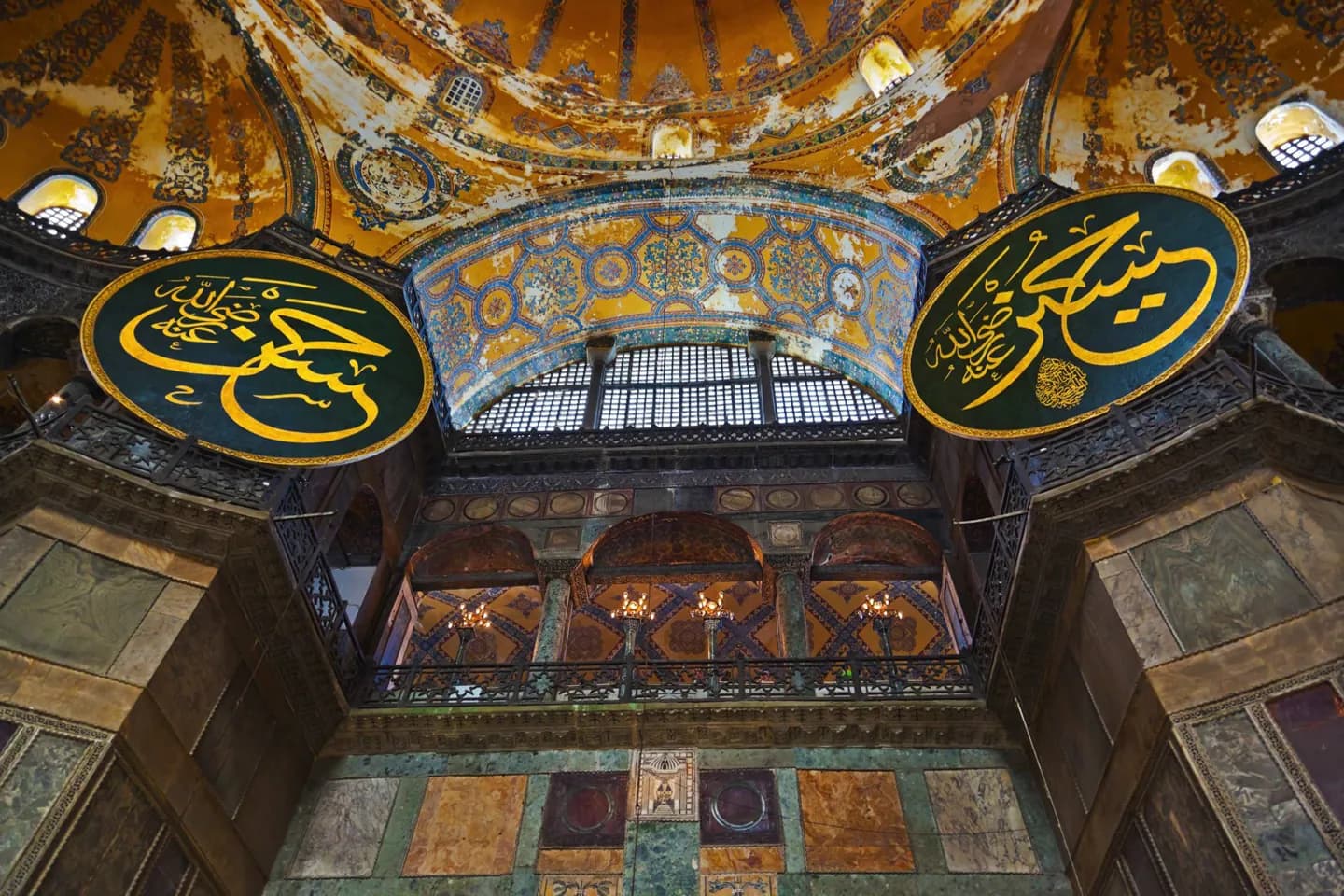
Why go
Follow the shift from early single domes to the large mosque complexes of the classical period. İznik’s Hacı Özbek Mosque, Bursa’s Ulu Cami, Edirne’s Selimiye Mosque and Istanbul’s Süleymaniye Mosque give that change concrete form. Later Baroque influence adds another contrast to notice.
The full story
Early Ottoman building took shape in centers such as İznik and Bursa. The Hacı Özbek Mosque in İznik is an early single-domed example, while Bursa and Edirne mark further stages in the development of larger domed spaces. Edirne was an Ottoman capital before Istanbul, and its Selimiye Mosque is among Mimar Sinan’s major works. In Istanbul, Sinan’s Şehzade and Süleymaniye mosques show the scale of classical design. The mosque was often part of a larger community complex with schools, baths, kitchens or tombs, so the surrounding buildings matter as much as the prayer hall. Courtyards became central to the experience of these complexes. Later Ottoman architecture drew on Baroque and Rococo forms. Comparing these buildings across cities reveals changes in form and public life more clearly than a dense chronology does.