
Why go
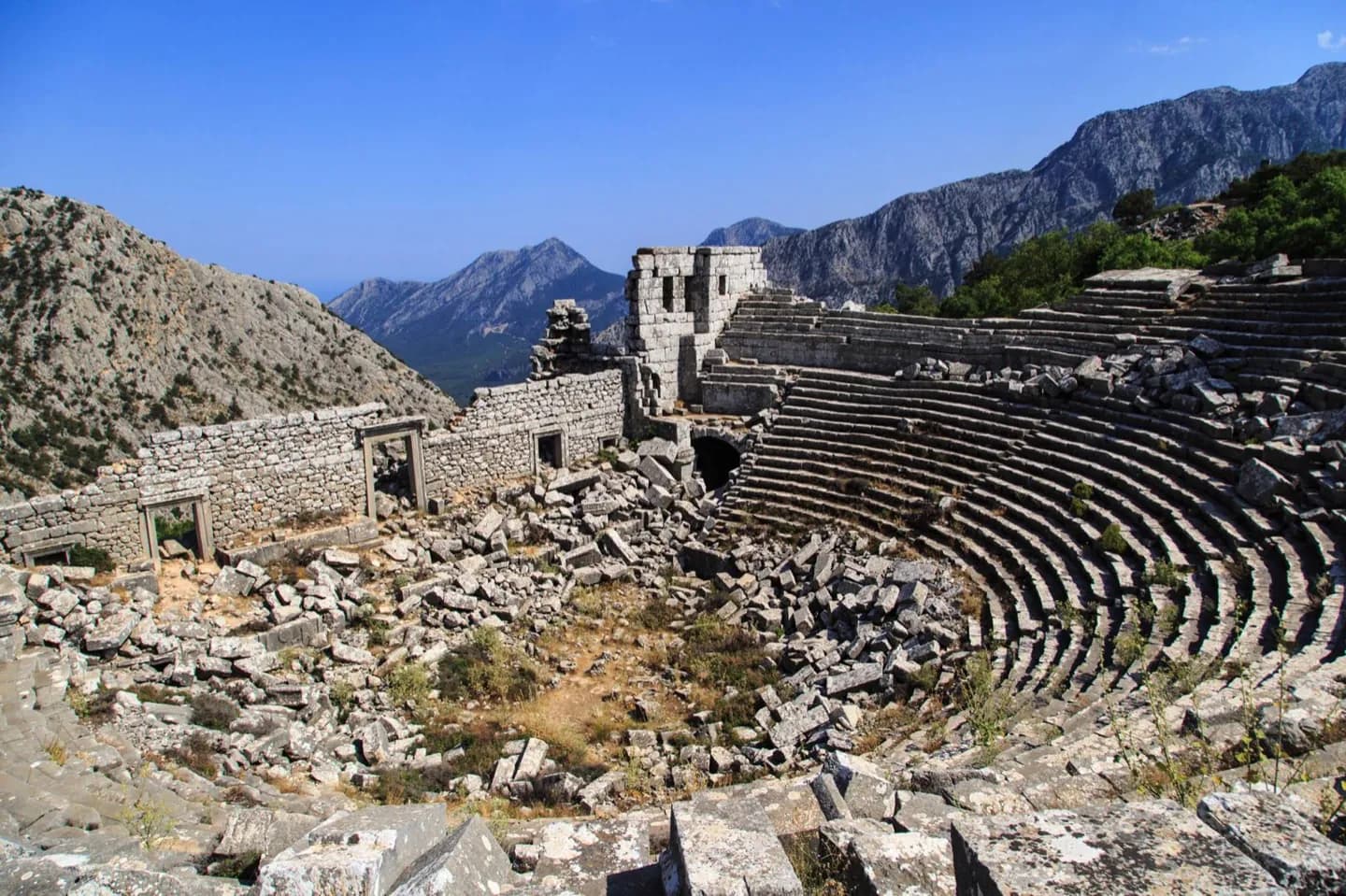
The Pisidian city occupied a natural platform on Güllük Dağı above the routes between the coast and the inland plateau. Walking among its agora, cisterns and theatre makes its defensive position easier to grasp than a map can. The mountain setting gives this archaeological visit a distinctly rugged feel.
What to look for
- The agora stands on a raised stone platform with cisterns cut into its northwest side.
- Stoas once bordered three sides of the marketplace.
- The gymnasium ruins are partly obscured by trees northeast of the agora.
The full story
Termessos belonged to the Pisidians, who built their city high in the Taurus Mountains. Its position above a route from the coastal plain into the interior gave defenders a strong advantage. Ancient accounts say Alexander the Great approached in 333 BC but did not capture the city. Standing among the ruins, the steep ground helps explain that decision better than a long account of the campaign. The civic centre tells a second story. The agora was raised on stone blocks, with cisterns cut beside it to store water. Stoas bordered the marketplace, including one associated by inscription with Attalos II of Pergamum. These remains show that Termessos was more than a mountain stronghold: it had the public buildings and connections of a substantial ancient city. Follow the terrain as well as the masonry, and the relationship between survival, water and civic life becomes clear.
Useful to know
- Wear shoes suited to rough paths and uphill walking.
- Leave enough time for the climb as well as the ruins; the city sits more than 1,000 metres above sea level.
- Check current site access before making the trip from Antalya.