
Why go
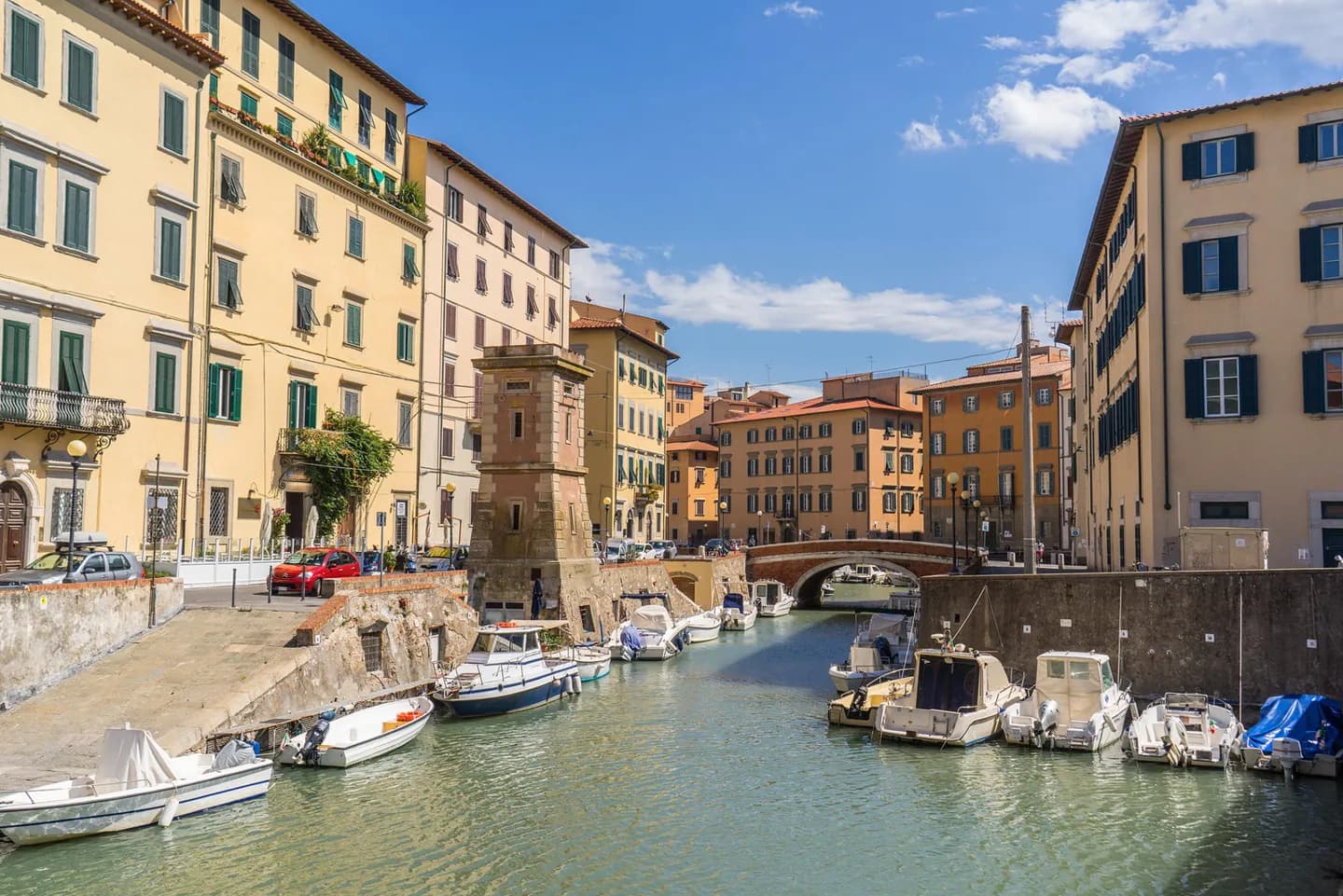
Walk the bridges and canals of Venezia to see the city’s maritime identity at street level, then look toward the old fortifications. The Medici free-port policies drew merchants and religious communities from across the Mediterranean, leaving a history distinct from inland Tuscany.
What to look for
- Venezia district bridges cross navigable canals.
- Fortezza Vecchia recalls the defended Medici port.
- The street plan reflects the city’s late Renaissance expansion.
The full story
Livorno grew from a small coastal stronghold into a purpose-built Medici port. In the late sixteenth century the rulers of Tuscany expanded the town and promoted it as a free port. Their Livornine laws offered privileges that attracted merchants and persecuted religious groups, including a substantial Jewish community. That history makes Livorno feel different from Tuscany’s inland medieval centres. The canals and bridges of the Venezia district were practical parts of a working maritime city, not merely decoration. Nearby fortifications recall the need to defend trade and harbour access. Later political and economic changes altered the port’s role, but the water routes and urban plan still reveal its early modern ambition. Walk the canal quarter slowly, then look at the old fortress from outside if its interior is unavailable. The important contrast is between this engineered coastal city and the region’s more familiar hilltop settlements.
Useful to know
- Begin in Venezia for canals and bridges, then continue toward the port fortifications.
- Check access separately before planning to enter the forts.
Your next visit
Estimated · Declared scenario and planning estimates; no live opening, weather, queue or booking service.
Outdoor visit · 30–45 min
World planning estimate; admission, opening, visit duration and access need checking.