
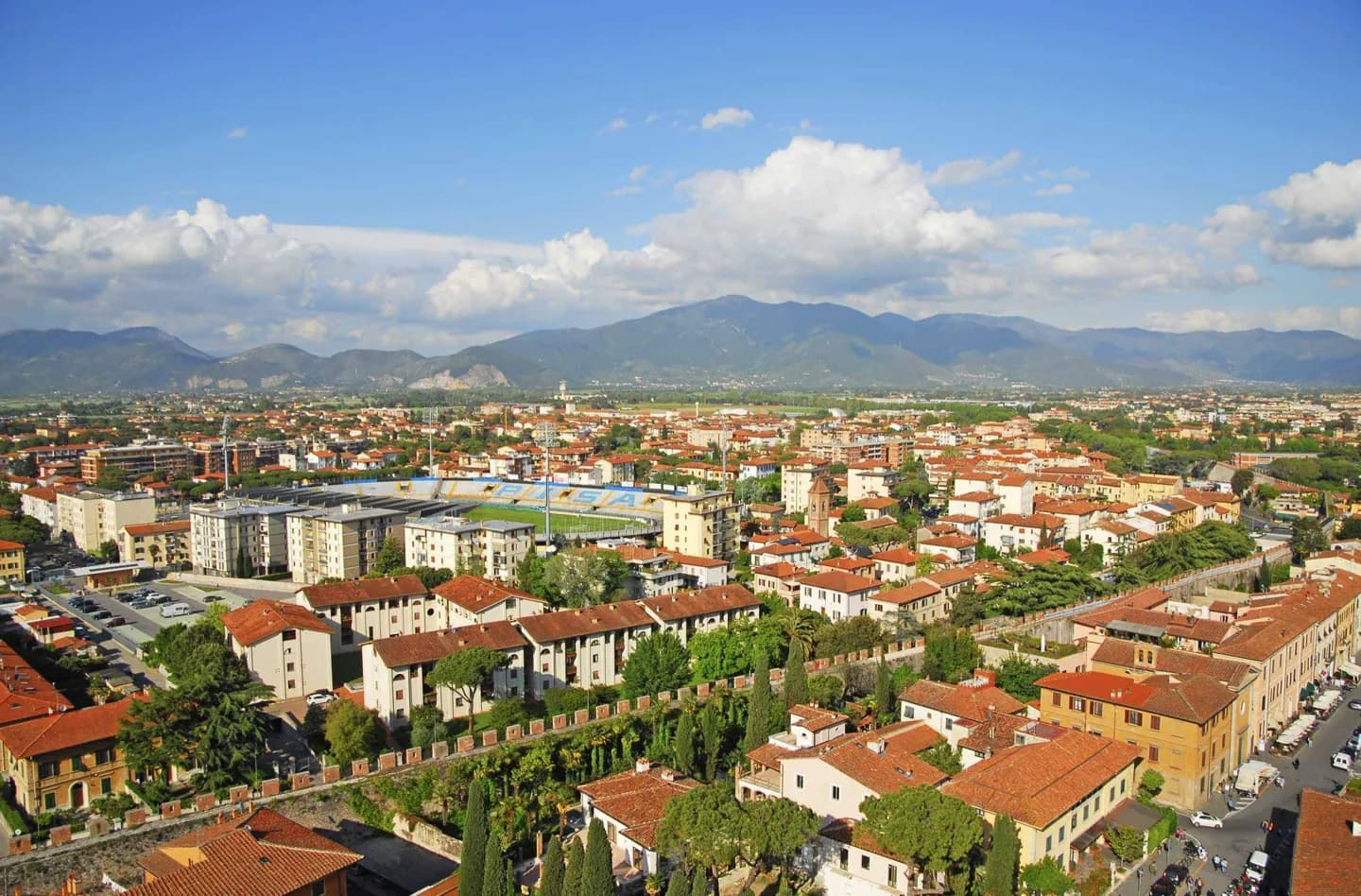
Why go
The cathedral, baptistery, cemetery and bell tower make one of Tuscany's clearest monumental groups. Continue to Piazza dei Cavalieri and the Arno to see a different side of the city, where later civic architecture and riverside churches complicate the familiar tower photograph.
What to look for
- The leaning tower is the cathedral's bell tower, one part of the Piazza del Duomo ensemble.
- Piazza dei Cavalieri includes the Palazzo della Carovana facade designed by Vasari.
- Santa Maria della Spina is a small marble church beside the Arno.
The full story
Pisa's image is dominated by its leaning bell tower, but the tower was built for a cathedral in a larger religious complex. The Piazza del Duomo also contains the baptistery and the Campo Santo cemetery, making it a useful place to read medieval Pisa's wealth and ambition together. That wealth was linked to a city with a strong maritime role, even though Pisa now lies inland from the Tyrrhenian shore. River and sea connections supported its growth as a republic, and the Arno remains a way to understand the city's layout. Away from the cathedral square, Piazza dei Cavalieri shows a later civic chapter through Vasari's Palazzo della Carovana. Pisa's university tradition adds another layer to the city. A short visit can focus on the monumental square; a longer one can follow these shifts from sacred buildings to civic space and riverfront.
Useful to know
- See all four principal buildings of Piazza del Duomo before deciding how much time to give the tower.
- Continue from the cathedral area into Piazza dei Cavalieri and toward the river for a fuller city walk.