
Why go
At the Campo, the Palazzo Pubblico and Torre del Mangia express the medieval republic's public life. The cathedral, its baptistery and museum open a second story of sculpture and painting. Comparing these sites gives a fuller sense of Siena than treating the city as a single postcard view.
The full story
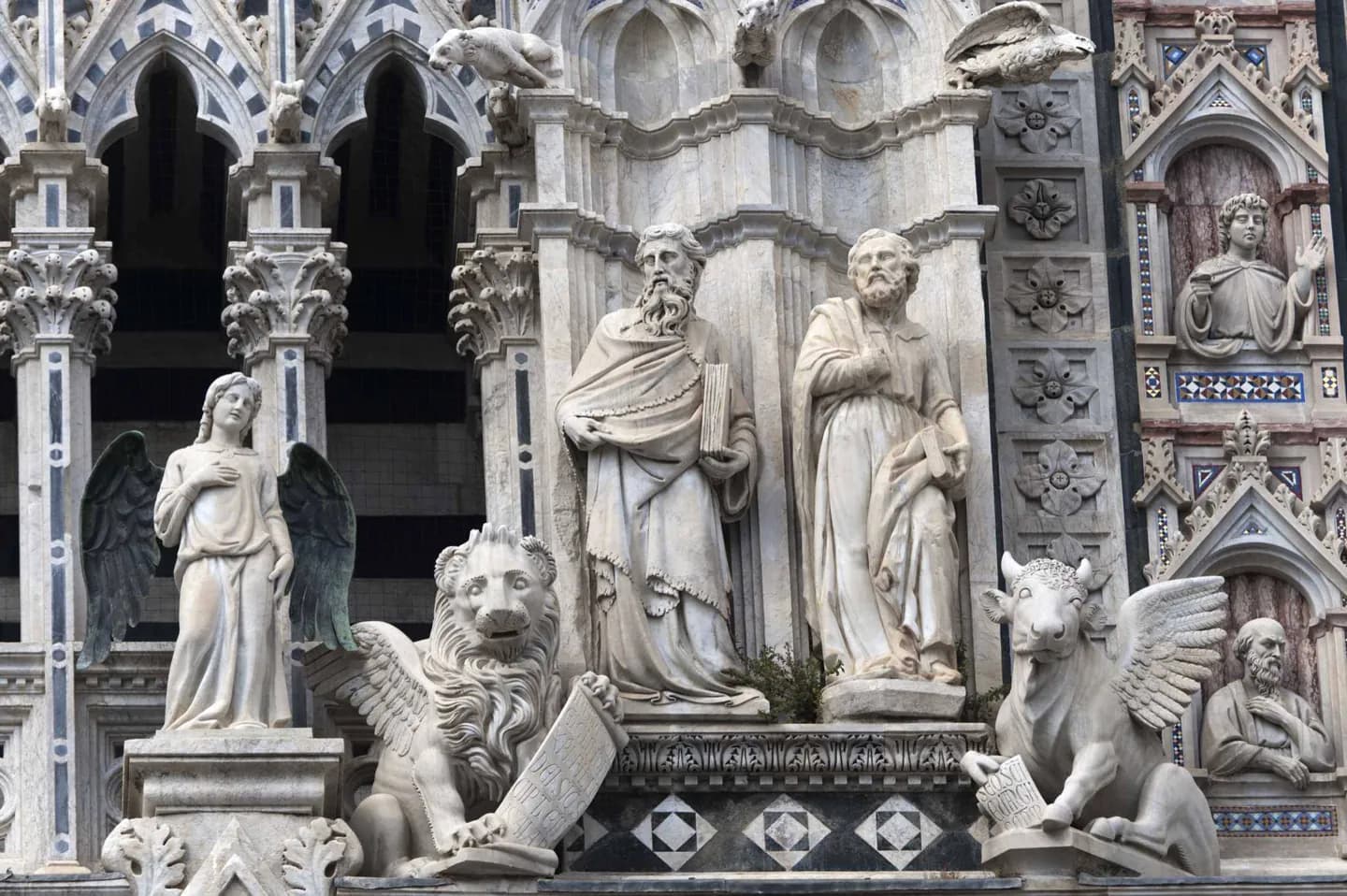
Piazza del Campo is Siena's civic stage. Its shell shape draws the eye toward the Palazzo Pubblico and Torre del Mangia, and the square is also the setting of the Palio. Inside the palace, Ambrogio Lorenzetti's fresco cycle on good and bad government makes medieval civic ideas visible. A visit there is especially rewarding after you have spent time looking at the square itself. The cathedral tells a different story. Its striped stone, sculpted façade and interior works show Siena's religious and artistic ambition. Nicola Pisano's pulpit rests on carved lions; the floor's inlaid designs deserve attention underfoot. Below the cathedral is the baptistery with a font decorated by leading 15th-century sculptors, including Donatello and Lorenzo Ghiberti. The Museo dell'Opera del Duomo holds Duccio's Maestà, while the Pinacoteca offers more Sienese painting away from the cathedral complex. Those interiors can occupy much of a visit. If time is short, see the Campo and choose either the civic palace or the cathedral complex for a deeper look. San Domenico adds a different religious landmark if you continue beyond the central pair.
Useful to know
- See the Campo before the Palazzo Pubblico to connect its art to the square outside.
- Choose between the palace and cathedral interiors when time is tight; add San Domenico only with room for another stop.