
Why go
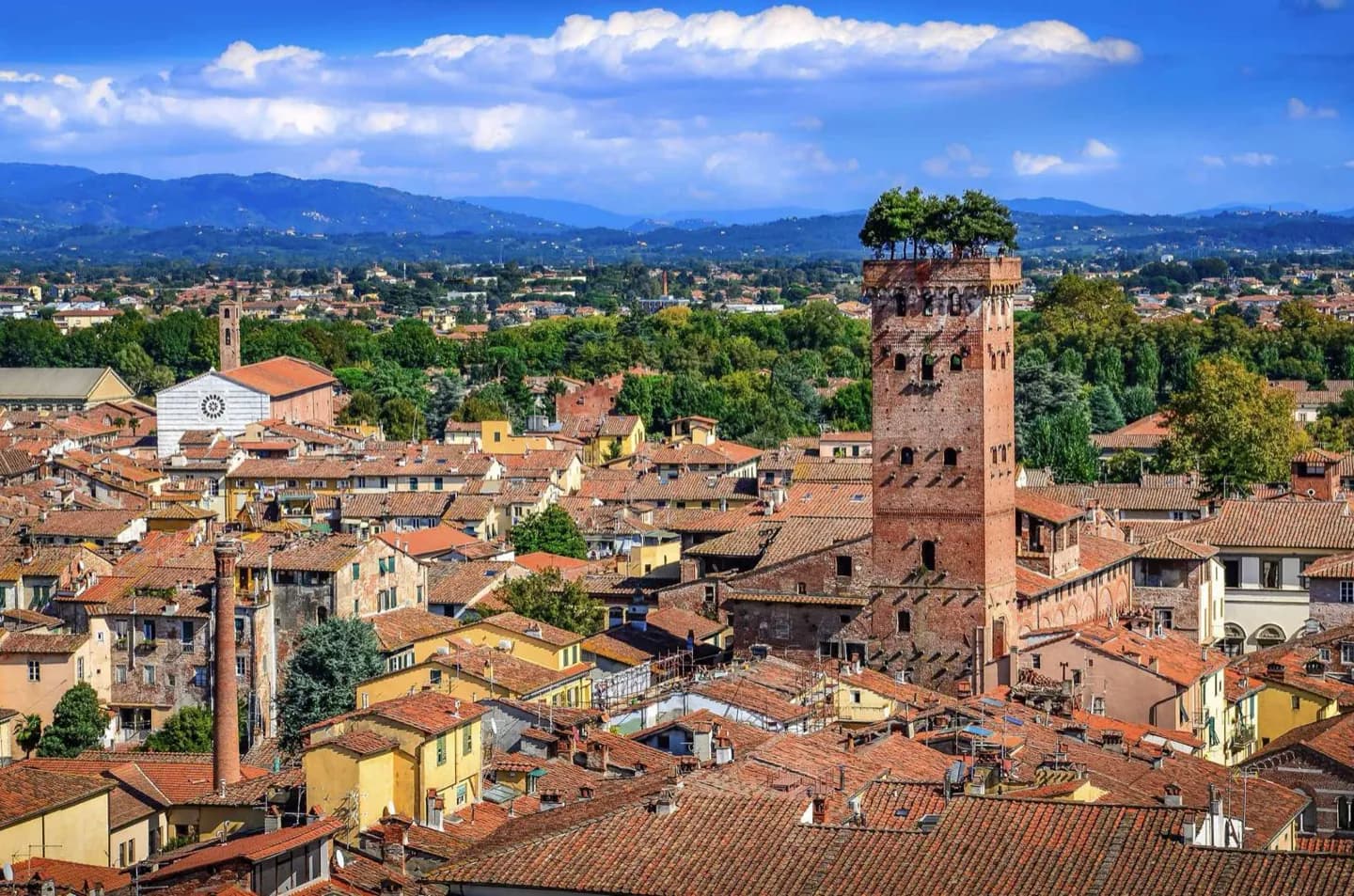
The sights work best as contrasts rather than a long checklist. Walk the former defenses above street level, then return to the tight lanes for San Martino, San Michele in Foro and San Frediano. Piazza dell'Anfiteatro and the oak-topped Guinigi Tower reveal two very different uses of the city's older fabric.
The full story
The walls are Lucca's clearest first sight. They remained intact as the city expanded and, after losing their military role, became a broad promenade around the old town. A short stretch helps you see the scale of the center before you descend into its streets. The city's churches then show different faces of medieval Lucca. San Martino is the cathedral; San Michele in Foro stands on the Roman forum site and is known for its layered arcaded façade. San Frediano offers another church to compare in the northern part of town. Between them, Piazza dell'Anfiteatro holds the oval shape of the Roman arena in a ring of later buildings. The Guinigi Tower adds an unmistakable vertical marker, with oak trees above the roofline. These places reward selection. A wall walk and the piazza give a strong outdoor introduction, while a church interior or tower climb changes the visit into a closer look at art and construction. Palazzo Pfanner's garden is a quieter addition near San Frediano if you want to slow down.
Useful to know
- Start with the walls for orientation, then choose church interiors according to your interest and available time.
- Keep Palazzo Pfanner as an optional quieter stop after San Frediano.