
Why go
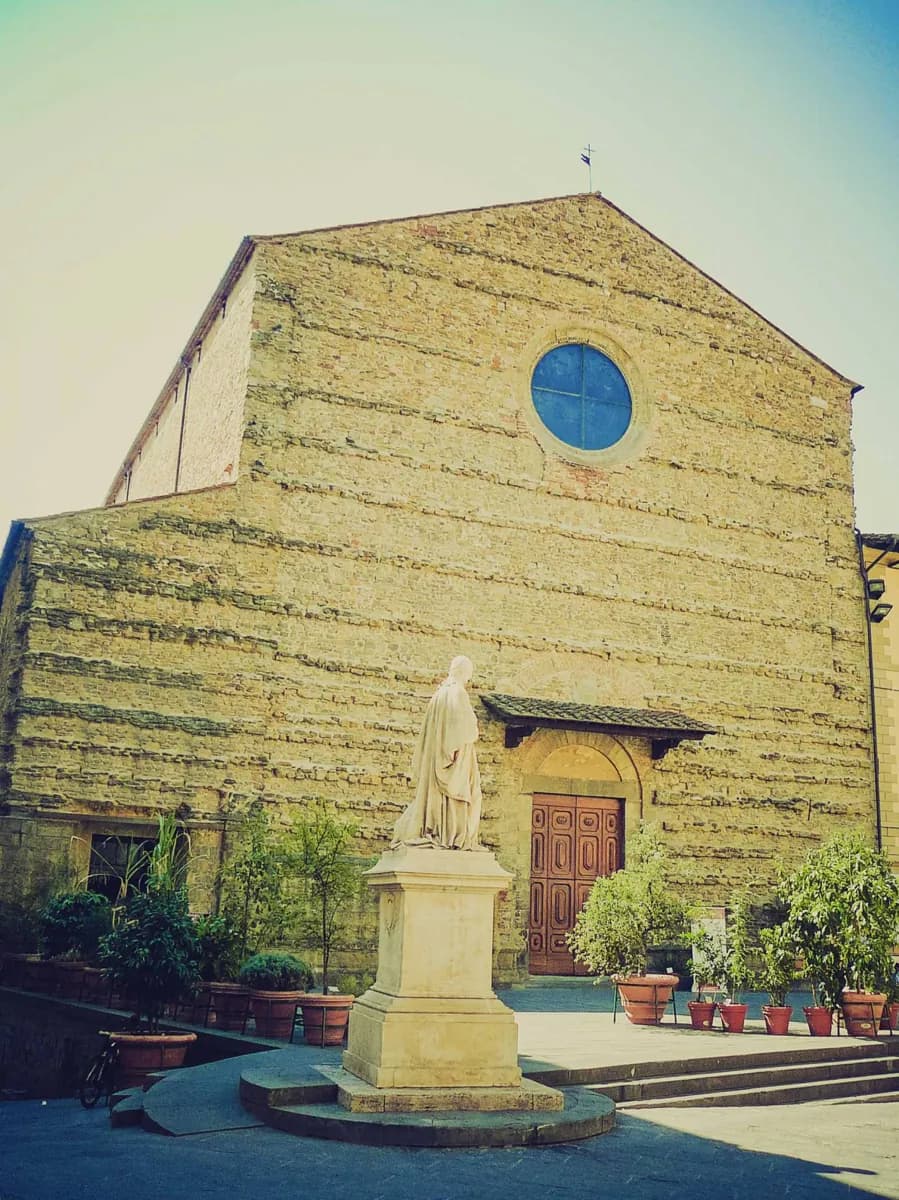
The fresco cycle gives Arezzo one of its most compelling art visits. Its scenes unfold across the chapel walls, so time inside matters more than the church’s modest exterior suggests. Other surviving frescoes place Piero within a wider Aretine artistic setting.
What to look for
- Piero della Francesca’s Legend of the True Cross covers the Bacci Chapel.
- The broad nave and unfinished facade are deliberately restrained.
- Other medieval and Renaissance frescoes survive in the church.
The full story
The Franciscans began this church in Arezzo around the end of the thirteenth century. Its simple exterior and wide nave prepare little for the painted world in the chancel. The Bicci family commissioned decoration for the chapel, and after Bicci di Lorenzo’s death in 1452, Piero della Francesca took up the cycle of the Legend of the True Cross. The story moves between episodes from different times rather than reading like one straight strip. That structure rewards a slow circuit of the walls: look for how architecture, groups of figures and patches of light separate the scenes while tying them together. Frescoes elsewhere in the church show that Piero worked within a broader local tradition, yet the Bacci Chapel changes the scale of the visit. The unassuming building becomes a place to study how Renaissance painting organized a complex sacred narrative in physical space.
Useful to know
- Book the Bacci Chapel visit ahead through the official museum channel.
- Allow time to follow the scenes around the chapel rather than viewing one panel and leaving.
Your next visit
Estimated · Declared scenario and planning estimates; no live opening, weather, queue or booking service.
Outdoor visit · 30–45 min
World planning estimate; admission, opening, visit duration and access need checking.