
Why go
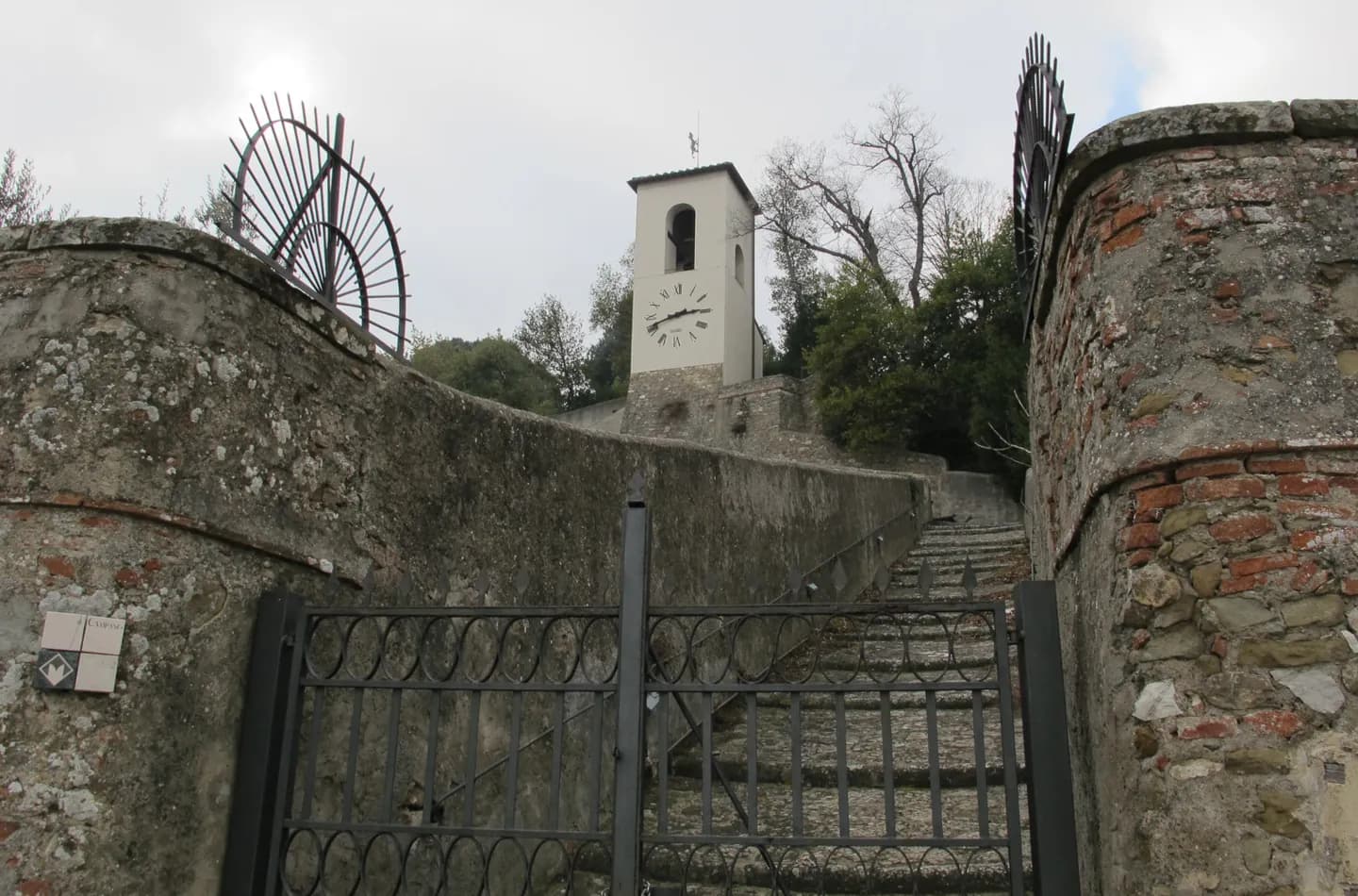
The fortress viewpoint explains the ridge's strategic value, while Pontormo's Visitation in the parish church gives an unusually specific art reason to stop. Nearby Artimino and Comeana extend the story into Etruscan and Medici landscapes, so decide whether you want the village or the wider hills.
What to look for
- The medieval fortress surveys the valleys toward Prato, Pistoia and Florence.
- Pontormo's Visitation is associated with the town's Saints Michael and Francis church.
- Artimino and Comeana hold further traces of the area's Etruscan past.
The full story
Carmignano is both a hill town and a broader Montalbano territory, a distinction that matters when planning a visit. The medieval fortress occupies a commanding ridge with views toward the valleys of Prato, Pistoia and Florence. Its position reflects long contests over this borderland, including the struggle between Pistoia and Florence. The territory's history goes further back: Etruscan finds around Artimino and Comeana show settlement and movement across the hills north of the Arno. Later, Medici interest brought villas and estate landscapes to this part of Tuscany. In the village itself, Pontormo's Visitation in the church of Saints Michael and Francis is a strong reason to look beyond the panorama. These are different experiences rather than stops on one short walk. The fortress and painting belong to a focused town visit; Artimino, Comeana and the surrounding vineyards call for a wider exploration of Montalbano. Keeping that scale in mind makes Carmignano's varied history easier to appreciate.
Useful to know
- Use Carmignano village as a base for choosing separate stops across the Montalbano hills.
- Check church access if seeing Pontormo's painting is a priority.
Your next visit
Estimated · Declared scenario and planning estimates; no live opening, weather, queue or booking service.
Outdoor visit · 15–25 min
World planning estimate; admission, opening, visit duration and access need checking.