
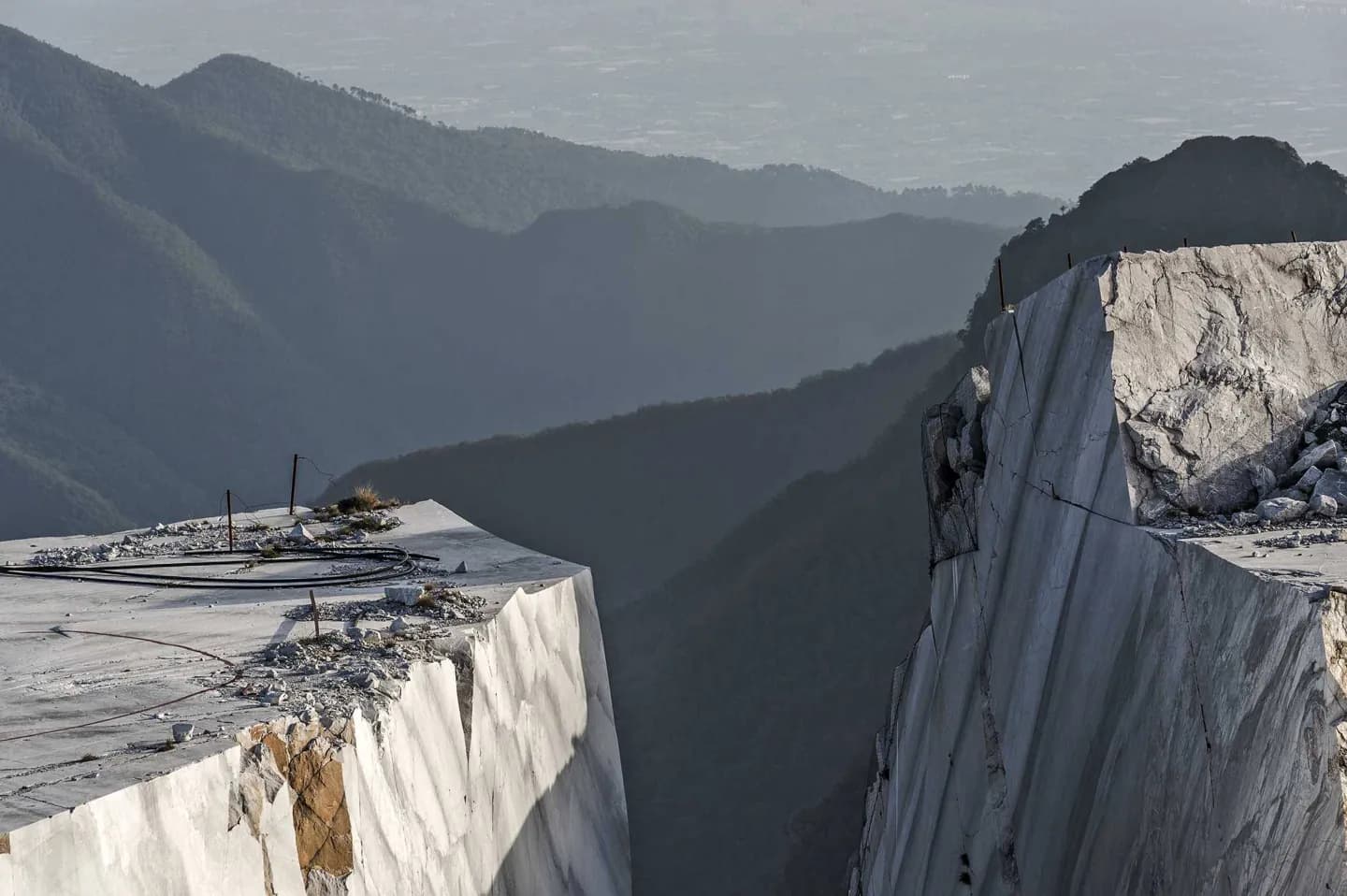
Why go
See marble where it shaped both a city and a livelihood. The striped stonework of the cathedral in Piazza Duomo gives a close view of the material, while the Malaspina castle and surrounding streets place carving within Carrara's longer civic history.
What to look for
- The cathedral façade alternates white Luni marble with dark Colonnata stone.
- Piazza Duomo forms the old city's architectural focus.
- The Malaspina castle recalls Carrara's passage from episcopal rule to local lordship.
The full story
Carrara's marble story reaches back to Roman quarrying in the Apuan Alps. Stone from this area was moved through the nearby port of Luni, connecting the mountain slopes to building and sculpture far beyond Tuscany. The city grew around the labour needed to extract and work that material. Its cathedral demonstrates the result at close range: pale and dark marble create a patterned façade in Piazza Duomo, where the stone becomes architecture rather than raw rock. Power over Carrara changed repeatedly in the Middle Ages, from the bishops of Luni to neighbouring republics and later the Malaspina family. Their castle adds a political layer to the industrial story. Quarry work also shaped social life, with stonecutters and carvers associated with radical politics in the nineteenth century. A walk in the centre cannot replace seeing the quarry landscape, but it gives the mountains a human scale: the material visible on a façade came from difficult work above the city.
Useful to know
- Start with the cathedral and old streets before treating the quarries as a separate excursion.
- Check current access and conditions before making an interior or quarry visit central to the day.
Your next visit
Estimated · Declared scenario and planning estimates; no live opening, weather, queue or booking service.
Outdoor visit · 15–25 min
World planning estimate; admission, opening, visit duration and access need checking.