
Why go
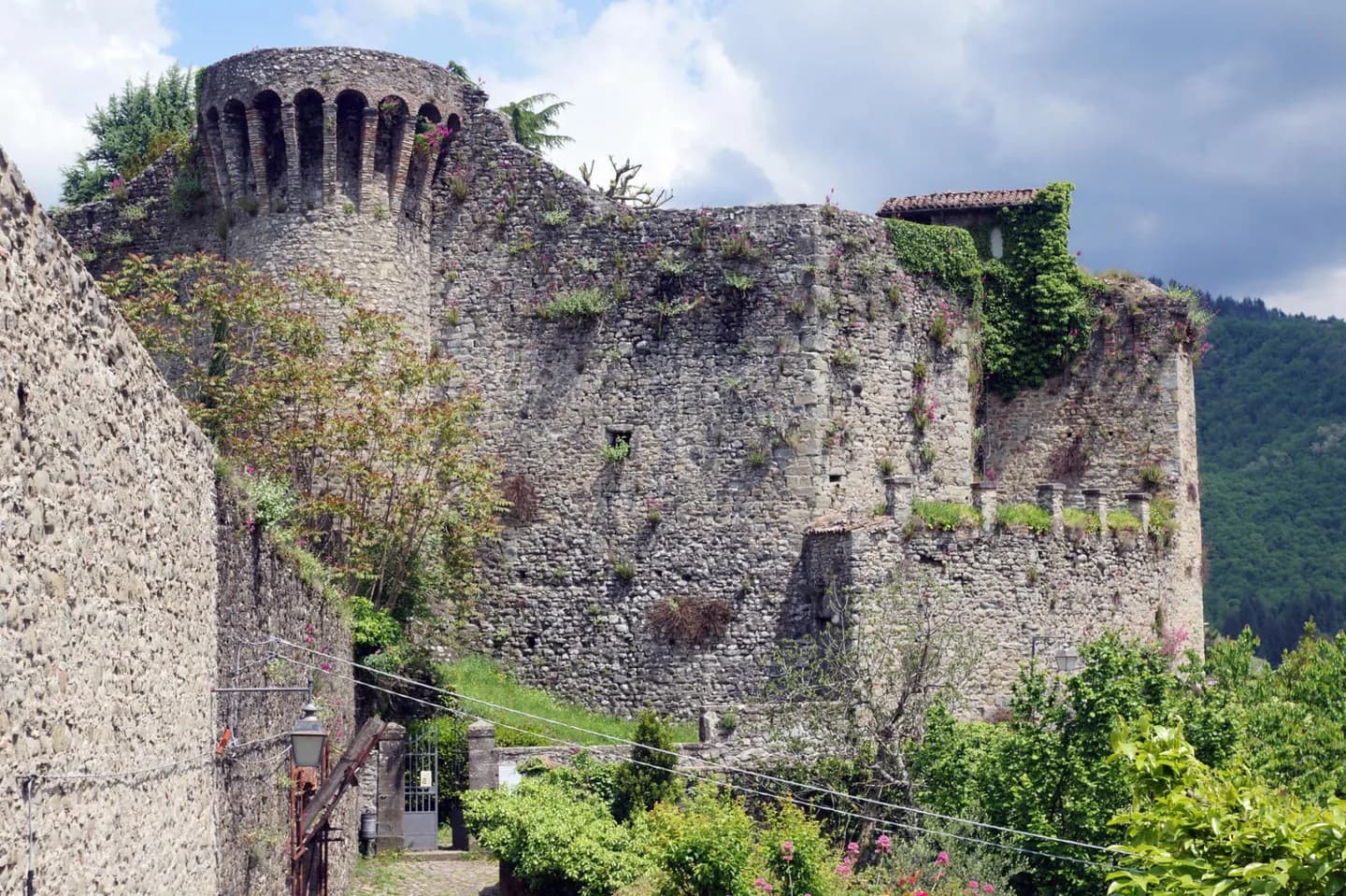
Its enclosing walls make the village itself the main sight. Towers and the churches of San Pietro and San Michele show how religious buildings were woven into a defensive settlement overlooking a route toward the Apennine passes. The enclosed streets make that relationship unusually easy to follow.
What to look for
- Medieval walls and large towers still define the village outline.
- San Pietro and San Michele are the two principal churches within the fortified town.
- Church bell towers reuse the defensive language of the walls.
The full story
Castiglione's hill position above the Esarulo valley helped control access toward the San Pellegrino Pass across the Apennines. A fortified settlement developed here from an early stronghold, and Lucca repeatedly fought to secure it in the Middle Ages. After further conflict, Lucca established lasting control in the fourteenth century and strengthened the walls. In the fifteenth century, when much of Garfagnana came under the Este family, Castiglione remained aligned with Lucca. That border history explains the exceptional emphasis on defence visible today. The settlement was built to be read as a whole: substantial walls, towers and close-set streets reinforce one another. Even the churches of San Pietro and San Michele echo the fortifications through their use of wall towers as belfries. Look beyond individual monuments to the way the village sits above the valley; its survival as a near-complete fortified outline is the reason to make the detour.
Useful to know
- Walk the perimeter as well as the inner lanes to appreciate how complete the defences remain.
- Combine the village with another Garfagnana stop only if you have time for the hill-country detour.
Your next visit
Estimated · Declared scenario and planning estimates; no live opening, weather, queue or booking service.
Outdoor visit · 15–25 min
World planning estimate; admission, opening, visit duration and access need checking.