
Why go
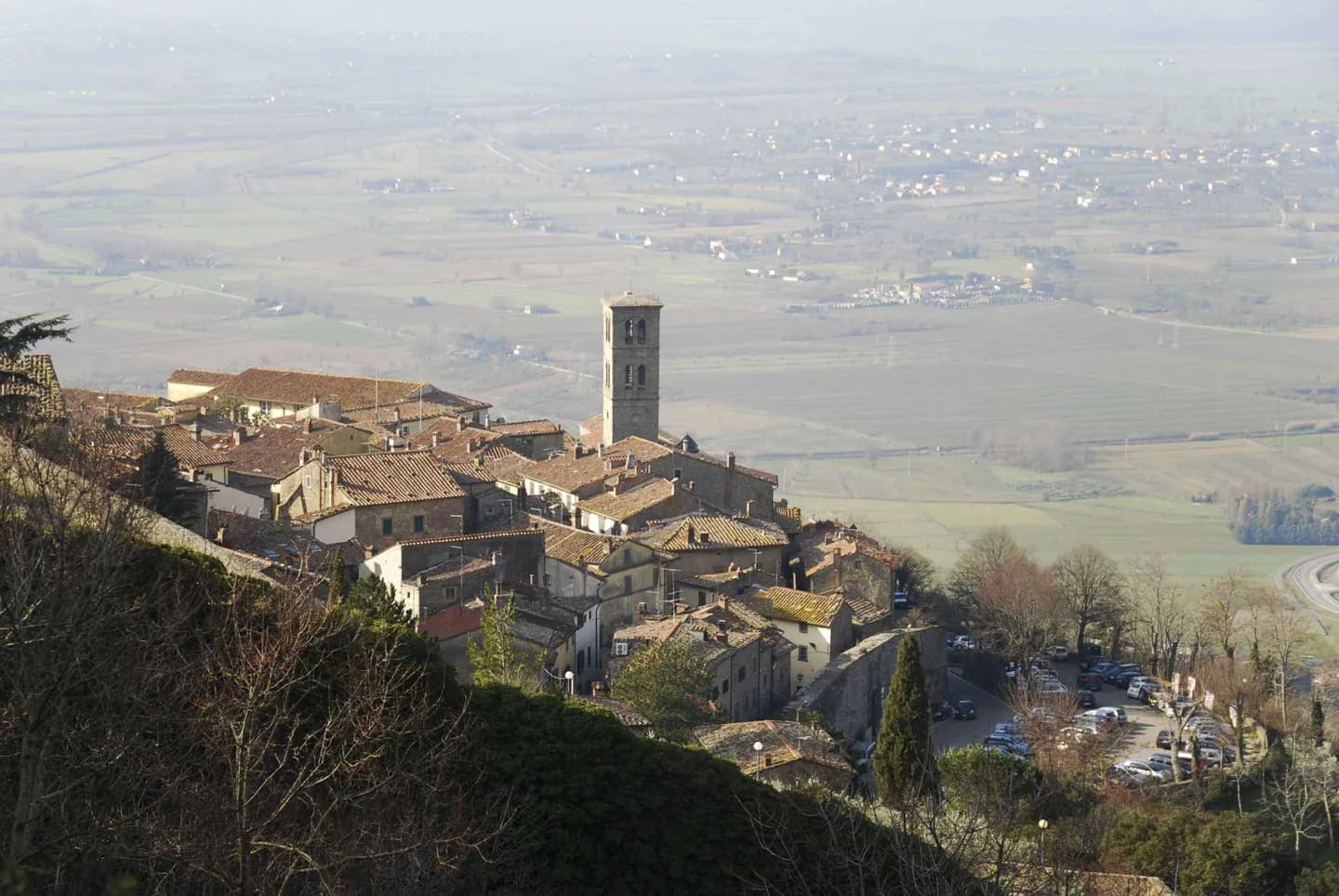
This is a hill town where the terrain is part of the experience: level Via Nazionale gives way to steep lanes, old walls and views across the valley. The MAEC museum can deepen the visit with Etruscan objects, including its bronze chandelier.
What to look for
- Via Nazionale is the unusually level spine of the hillside town.
- Sections of the Etruscan wall survive beneath later defenses.
- The MAEC holds a large Etruscan bronze chandelier with figured decoration.
The full story
Cortona’s streets preserve a much longer history than their medieval appearance first suggests. The Etruscans expanded an earlier settlement here, and parts of their wall still form a base for later defenses. After Roman rule, the hill town developed into a medieval city state; the Casali family governed it for much of the fourteenth century before Florence’s Medici acquired it in the early fifteenth. That sequence helps explain why ancient masonry, medieval lanes and Renaissance works share one compact hillside. The MAEC, housed in Palazzo Casali, makes the Etruscan layer especially tangible. Its bronze hanging lamp, found near Cortona in the nineteenth century, has burners ringed with figures and sea creatures. Look at those details before returning to the open valley view: the museum objects and the high site tell connected stories about the town’s early importance.
Useful to know
- Start on Via Nazionale, then choose how far to climb into the upper lanes.
- Check MAEC opening details separately if the Etruscan collection is central to your visit.
Your next visit
Estimated · Declared scenario and planning estimates; no live opening, weather, queue or booking service.
Outdoor visit · 30–45 min
World planning estimate; admission, opening, visit duration and access need checking.