
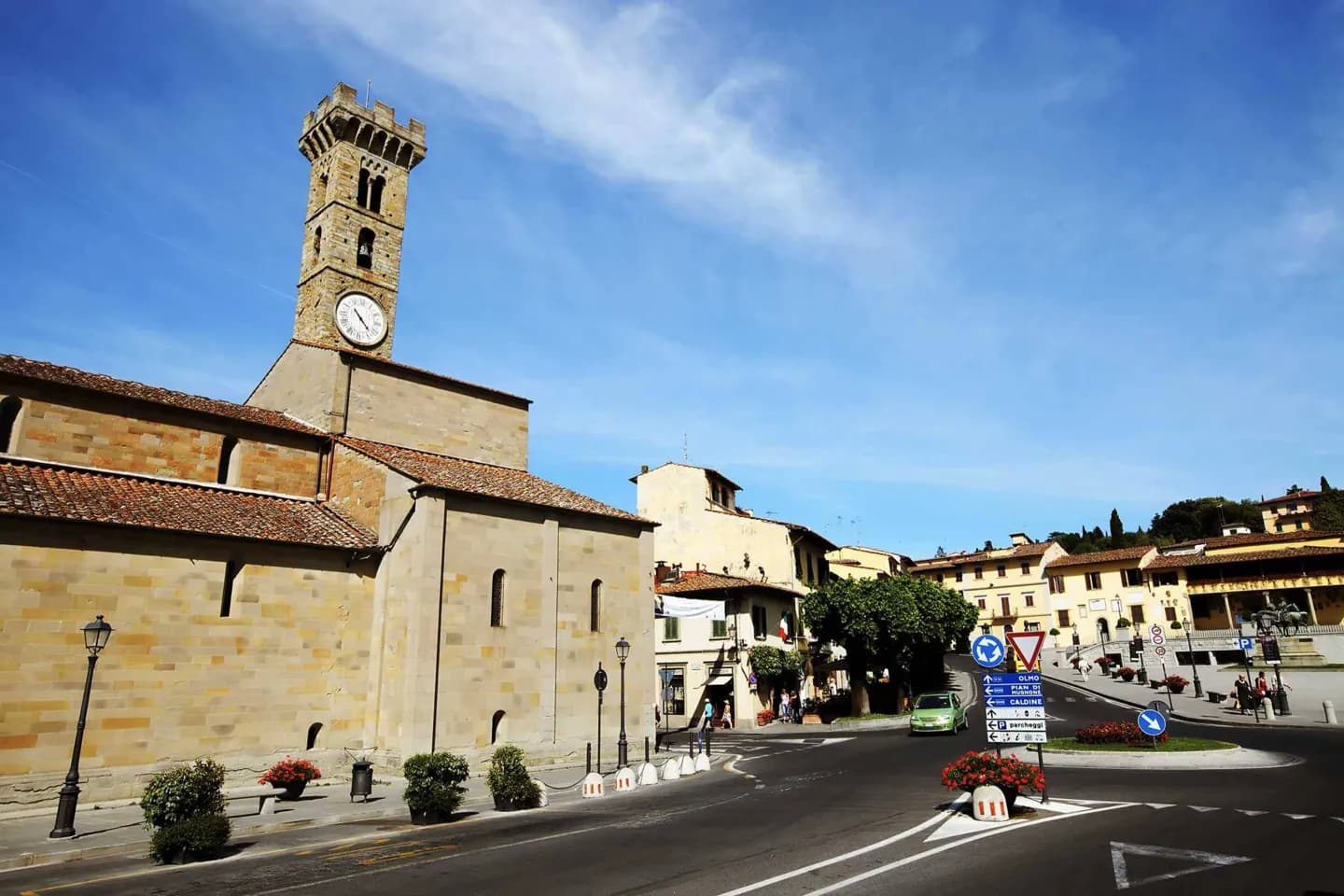
Why go
The view puts Florence into its valley setting, while the Roman theatre and older Etruscan traces show that Fiesole has its own long history. The contrast between the ancient hill settlement and the city below is more interesting than a viewpoint alone.
What to look for
- Florence spreads below the hill town.
- A Roman theatre survives within Fiesole’s archaeological area.
- Remains of Etruscan walls mark an older settlement.
The full story
Fiesole’s height above Florence has shaped the relationship between the two towns for centuries. It was an Etruscan settlement before Roman Faesulae developed here; surviving wall traces, the theatre and baths belong to different chapters of that ancient story. In the Middle Ages Fiesole remained a rival of Florence until the lower city conquered it in the twelfth century. Later, Florentine families built villas on these hills. The view therefore carries more than scenic value: it lets you read the valley where a younger city eventually overtook the older hill town. Begin with the panorama, then look for the archaeological remains that make Fiesole a destination in its own right. The Roman theatre is especially easy to connect to the slope of the site. Its present use for performances does not change the need to check entry conditions before planning an interior visit.
Useful to know
- Allow time for both the panorama and the archaeological area.
- Check archaeological-area access separately before planning to enter the theatre.
Your next visit
Estimated · Declared scenario and planning estimates; no live opening, weather, queue or booking service.
Outdoor visit · 30–45 min
World planning estimate; admission, opening, visit duration and access need checking.