
Why go
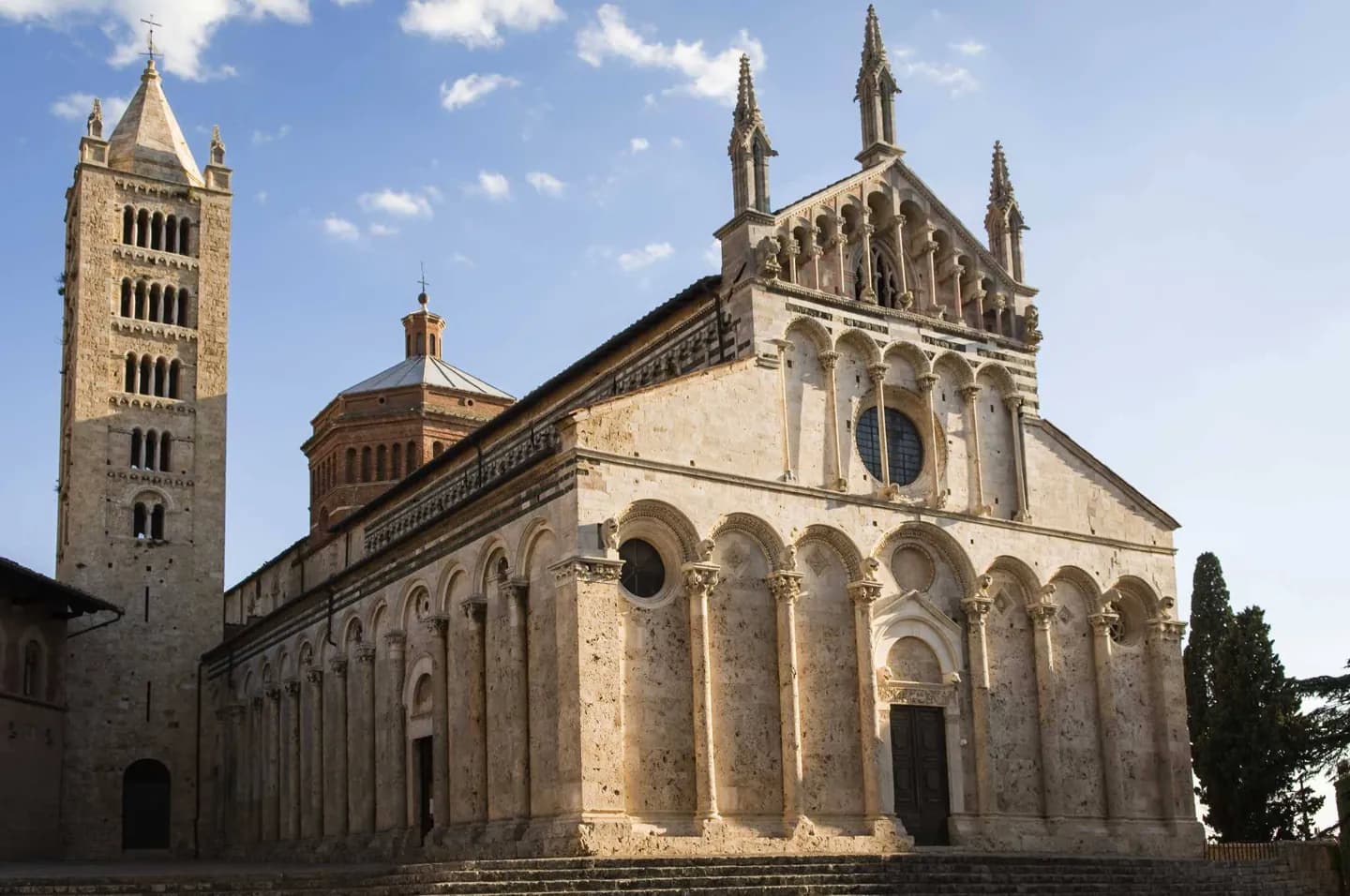
The Cathedral of San Cerbone rises from an unusually dramatic sloping square, while the Sienese fortress and old waterworks recall the town’s medieval independence and resources. This is a strong choice for architecture with a clear connection to the surrounding mineral hills.
What to look for
- San Cerbone Cathedral faces a sloping medieval square.
- The Cassero Senese recalls Siena’s control of the town.
- Fonti dell’Abbondanza marks a medieval water-supply project.
The full story
Massa Marittima’s medieval wealth was tied to the mineral country around it. The town became a bishopric after the see of Populonia moved inland, and in the thirteenth century it governed itself as a commune before Siena took control. Those shifts remain visible in the streets above the central square. San Cerbone Cathedral gives the town its most memorable façade: sculpted lions and scenes from the saint’s life frame the entrance, while the building rises from a sloping public space. Higher up, the Cassero Senese speaks to the later Sienese period. The Fonti dell’Abbondanza is another useful stop because it shows how water infrastructure belonged to the same civic world as churches and fortifications. Move through these sites in sequence and the hill town becomes a story about faith, municipal ambition, defense and the resources that sustained them.
Useful to know
- Start at the cathedral square, then climb toward the upper defenses.
- Check entry details separately for the cathedral and museums.
Your next visit
Estimated · Declared scenario and planning estimates; no live opening, weather, queue or booking service.
Outdoor visit · 30–45 min
World planning estimate; admission, opening, visit duration and access need checking.