
Why go
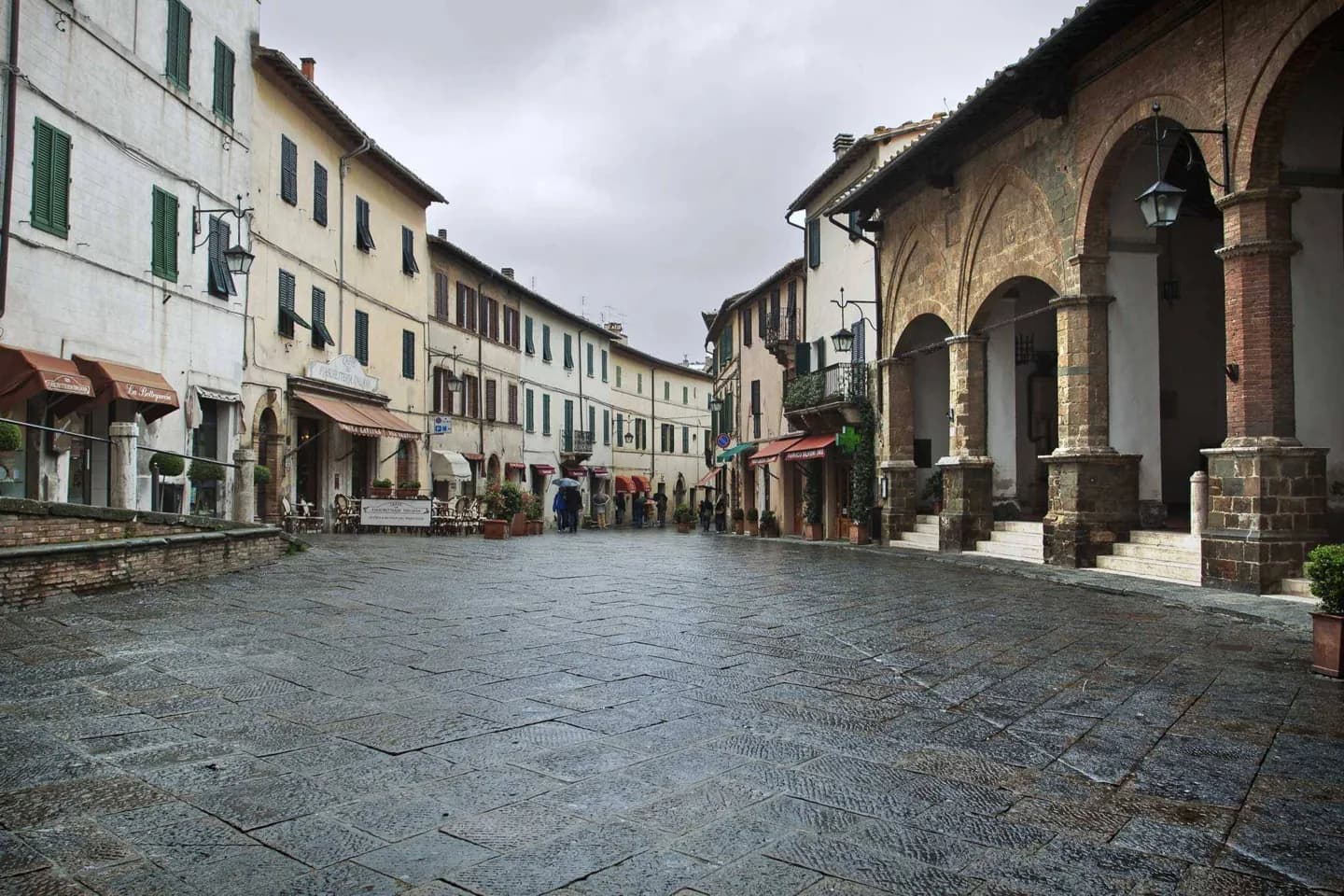
Come for the combination of medieval streets, the imposing fortress and the landscape behind Brunello di Montalcino. The citadel gives the town a stronger defensive character than nearby Pienza. A walk through the center makes the wine country and the old political frontier visible together.
What to look for
- The fourteenth-century fortress dominates the historic center.
- Steep streets lead to views over the Asso, Ombrone and Arbia valleys.
- Vineyards and olive groves cover the slopes below the town.
The full story
Montalcino's position above several valleys made it valuable in the long contest between Siena and Florence. It was tied to Siena in the later Middle Ages, and its fortress, built in the fourteenth century over earlier defences, still defines the upper town. When Florence took Siena in 1555, Sienese resistance continued at Montalcino for several more years. That history gives the citadel more meaning than its silhouette alone. The town also once made leather goods, before the vineyards on its surrounding slopes became central to its modern identity. Brunello di Montalcino grew from local winemaking work in the nineteenth century and remains closely linked to this particular landscape. From the streets above the vines, the wide Asso, Ombrone and Arbia valleys explain both the fortified site and the agricultural setting. Look at the fortress, then turn outward: the two views belong to the same story of territory and livelihood.
Useful to know
- Wear shoes suited to steep streets and allow time to climb to the fortress area.
- Check fortress access separately if you hope to enter; the town's streets and views form a visit on their own.
Your next visit
Estimated · Declared scenario and planning estimates; no live opening, weather, queue or booking service.
Outdoor visit · 15–25 min
World planning estimate; admission, opening, visit duration and access need checking.