
Why go
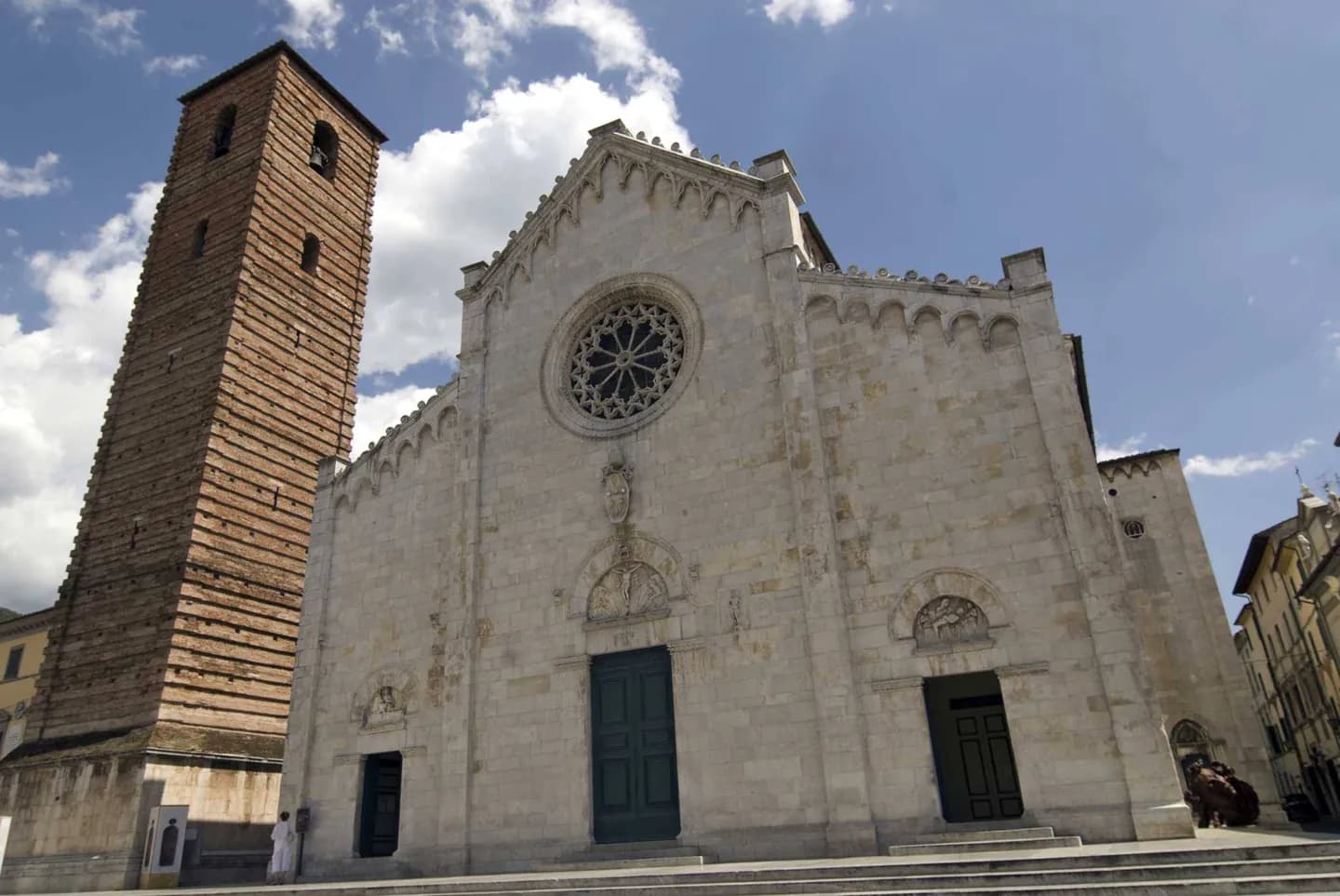
The town connects the stone of the nearby mountains to centuries of carving and contemporary sculpture. San Martino Cathedral anchors the main square, while galleries and artworks in the centre make the craft tradition visible beyond a museum visit. The square provides an immediate sense of that connection.
What to look for
- San Martino Cathedral overlooks Piazza Duomo.
- The cathedral bell tower contains a helical stairway.
- Galleries and sculpture give the historic streets a working art-town character.
The full story
Pietrasanta stands between Versilia's coast and the Apuan Alps, whose stone has shaped the town's identity. Founded as a medieval settlement in the thirteenth century around an earlier fortress, it later passed among regional powers before coming under Medici influence. Marble and carving became lasting local concerns. In the nineteenth century, Grand Duke Leopold II supported schools for carving skills and revived quarry activity, strengthening a craft tradition that still informs the town's art identity. Piazza Duomo gathers several historical layers in one place: San Martino Cathedral, its bell tower, civic buildings and the surrounding streets. The square is therefore a useful place to look at the relationship between architecture and the material that made the town known. Walk outward to galleries and sculpture before deciding whether to make a separate trip to the coast. Pietrasanta's beach district is part of the municipality, but the old centre's appeal lies in its dialogue between historic buildings and art.
Useful to know
- Begin in Piazza Duomo, then walk the surrounding streets to compare historic stonework with newer sculpture.
- Keep Marina di Pietrasanta as a separate coastal choice; the historic centre lies inland.
Your next visit
Estimated · Declared scenario and planning estimates; no live opening, weather, queue or booking service.
Outdoor visit · 15–25 min
World planning estimate; admission, opening, visit duration and access need checking.