
Why go
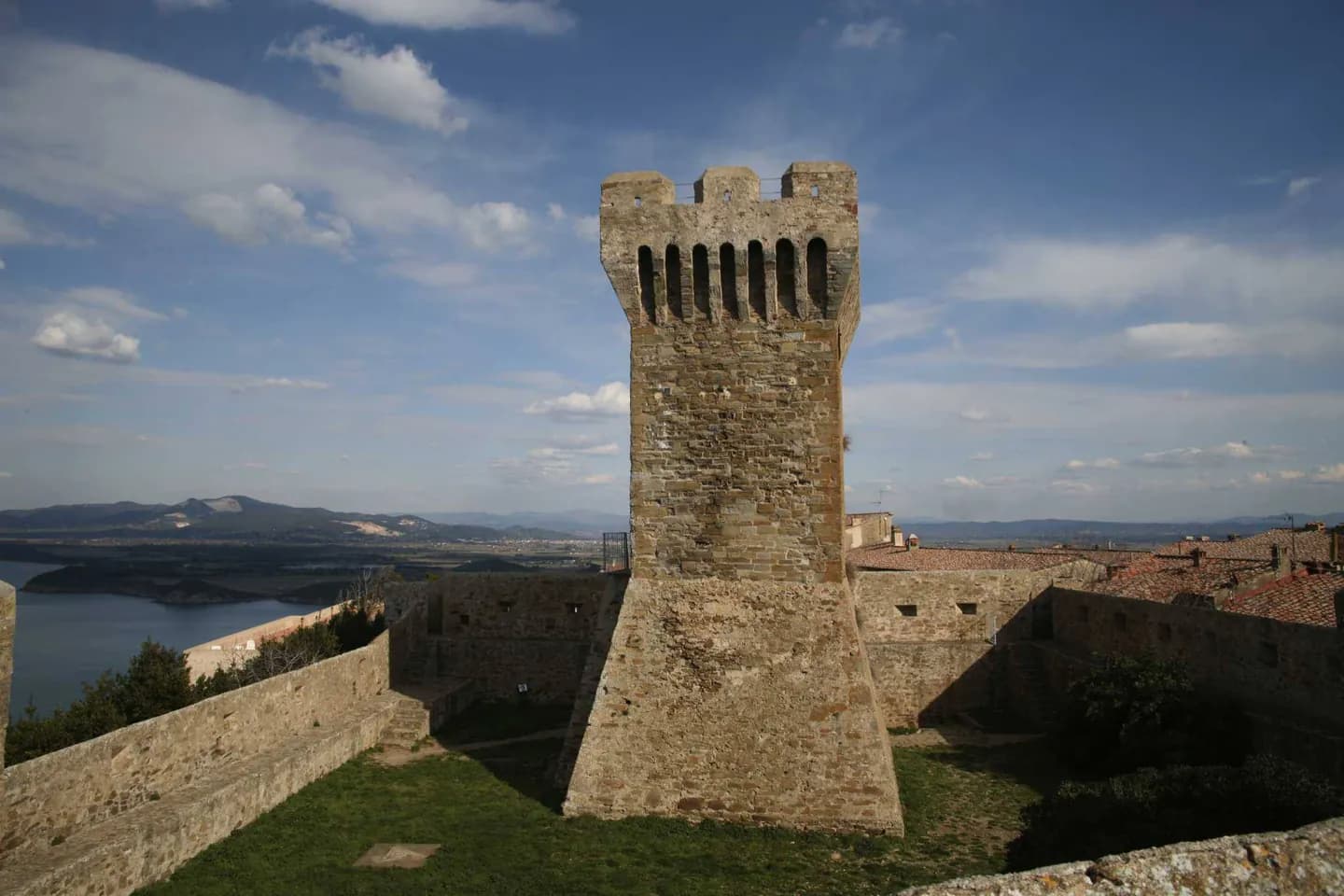
The old town gives the port a deeper story: defensive walls, the Torrione and Rivellino recall its strategic position opposite Elba. The Fonti di Marina point to the harbour's earlier role supplying ships, while Casa delle Bifore adds a quieter fourteenth-century detail to the walk.
What to look for
- The Torrione and Rivellino frame the fortified historic centre.
- The Fonti di Marina recall the old harbour's supply point for ships.
- Casa delle Bifore preserves a fourteenth-century layer among later buildings.
The full story
Piombino's position on the coast opposite Elba has long made its harbour consequential. In the Etruscan period, nearby Populonia was the main centre; Piombino later grew into an important port of the Republic of Pisa. Control passed to the Appiani family, who made Piombino the centre of a state that also included islands in the Tuscan Archipelago. Its defences therefore speak to more than a picturesque seaside past. The Torrione, Rivellino and surviving wall sections mark the town's need to protect a valuable coastal foothold. Renaissance changes, including work associated with Leonardo da Vinci, added another layer to those fortifications. After the Napoleonic period, Piombino joined the Grand Duchy of Tuscany, and the town's industrial and ferry port became part of its modern identity. Walk from the old defensive edge to the Fonti di Marina and Casa delle Bifore to see how military, maritime and civic histories meet within a small centre.
Useful to know
- Explore the old centre on foot before deciding whether to continue to Baratti and Populonia.
- Treat churches and other interiors as separate visits; check access before making one the focus.
Your next visit
Estimated · Declared scenario and planning estimates; no live opening, weather, queue or booking service.
Outdoor visit · 15–25 min
World planning estimate; admission, opening, visit duration and access need checking.