
Why go
The square gathers Pistoia's political and religious buildings in one readable space. Step inside the cathedral for the silver Altar of St James, then look back at the façades from the open piazza. It is a strong choice if you want architecture and art in a working town rather than a single monument.
What to look for
- Piazza del Duomo places the cathedral opposite the Palazzo del Comune and Palazzo del Podestà.
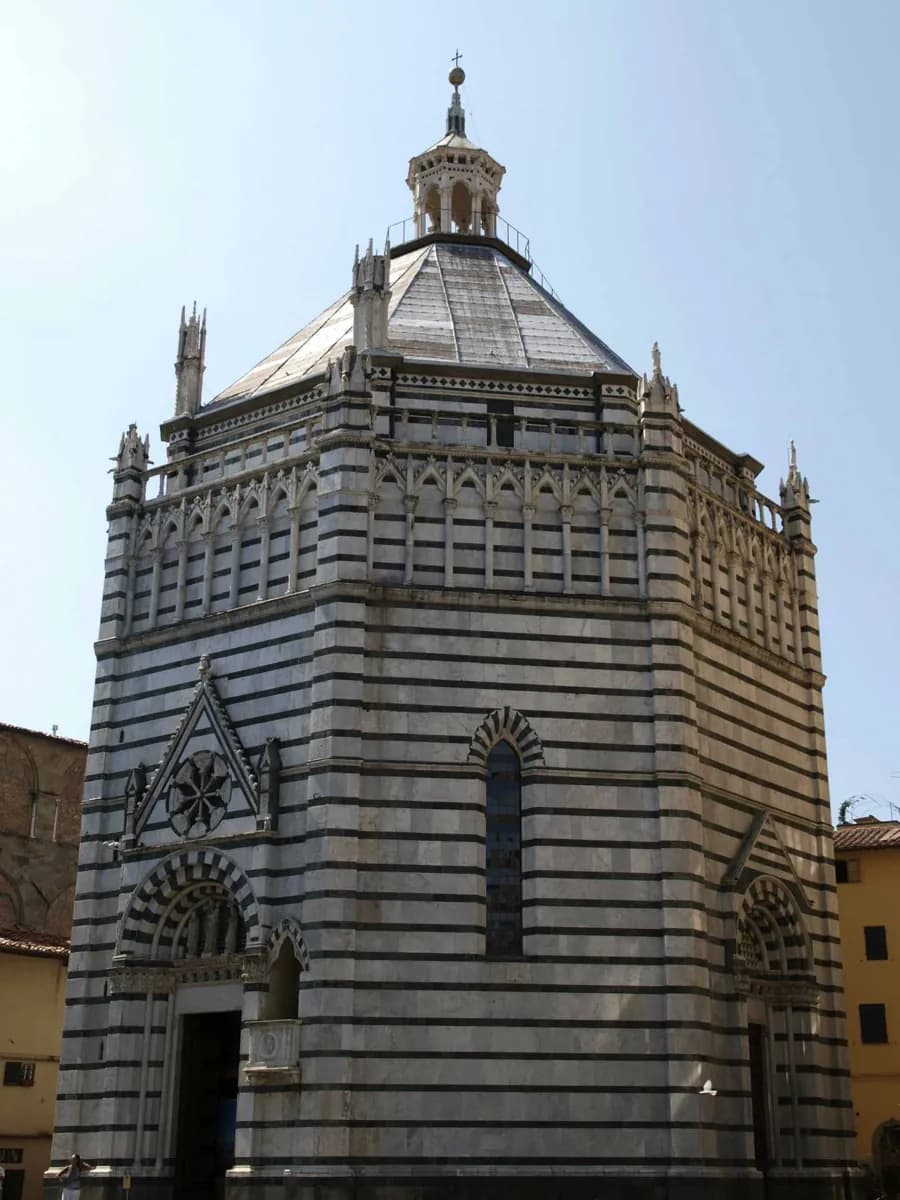
- The baptistery pairs Gothic forms with bands of white and green marble.
- The cathedral's Altar of St James grew through centuries of work by silversmiths.
The full story
Pistoia grew from a Roman settlement into a medieval commune. Its central square still makes that civic history legible: the town hall and former judicial palace face the cathedral and baptistery, bringing government and worship into a single setting. The cathedral's Romanesque front and later interior changes reflect a building repeatedly adapted after a fire in the early twelfth century. Its Altar of St James was begun in the late thirteenth century and expanded for generations; the densely worked silver tells a longer story than any one style of the church. Outside, the baptistery's alternating pale and green stone gives the square a different rhythm from the cathedral façade. Pistoia's history also reached beyond its walls. Conflict with Florence shaped its medieval politics, while Dante placed the Pistoian Vanni Fucci in the Inferno. Those layers make the square a useful starting point for reading the town, rather than merely a backdrop for photographs.
Useful to know
- Start in Piazza del Duomo; check cathedral and baptistery access separately before planning interiors.
- Allow time to compare the buildings around the square before moving into the surrounding streets.
Your next visit
Estimated · Declared scenario and planning estimates; no live opening, weather, queue or booking service.
Outdoor visit · 15–25 min
World planning estimate; admission, opening, visit duration and access need checking.