
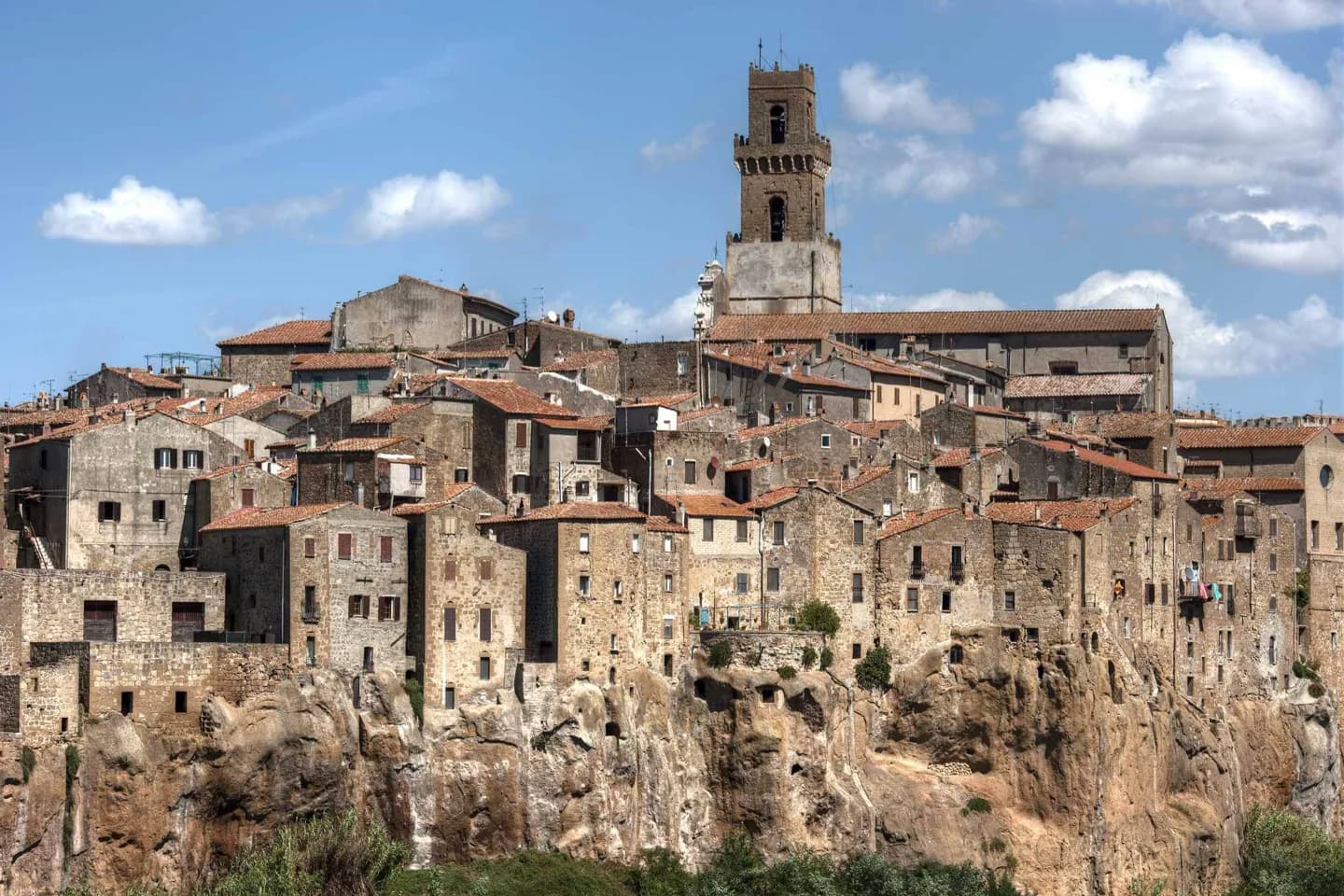
Why go
See the houses appear to grow from the volcanic rock, then walk inside the town to find Orsini defenses and traces of its Jewish community. The Etruscan vie cave nearby add a very different, rock-cut landscape for those with more time.
What to look for
- Tall houses merge visually with the tuff cliff beneath them.
- Orsini defenses and an aqueduct shape the skyline.
- The historic synagogue recalls Pitigliano’s Jewish community.
The full story
Pitigliano’s architecture begins with the tuff ridge itself. Houses rise above sheer volcanic rock, making the settlement look like an extension of its cliff. Etruscan activity in the area left traces in the surrounding landscape, including the deep rock-cut corridors known as vie cave; their exact original purpose remains debated. In the Middle Ages the Aldobrandeschi held Pitigliano, followed by the Orsini, whose fortress was reshaped in the sixteenth century. Another history survives in the town’s Jewish quarter. Pitigliano became known as “Little Jerusalem” because a Jewish community found refuge here, particularly as people fled persecution in the Papal States. The synagogue is a focal point for that story. Look first at the town’s dramatic outer profile, then enter the streets to find these less obvious layers. The rock-cut routes and interiors each need their own planning; the village itself is more than a viewpoint.
Useful to know
- See the town from outside the ridge before walking its streets.
- Treat the vie cave as a separate outdoor walk and check the route before setting out.
- Check synagogue and museum access separately if they are central to your visit.
Your next visit
Estimated · Declared scenario and planning estimates; no live opening, weather, queue or booking service.
Outdoor visit · 30–45 min
World planning estimate; admission, opening, visit duration and access need checking.