
Why go
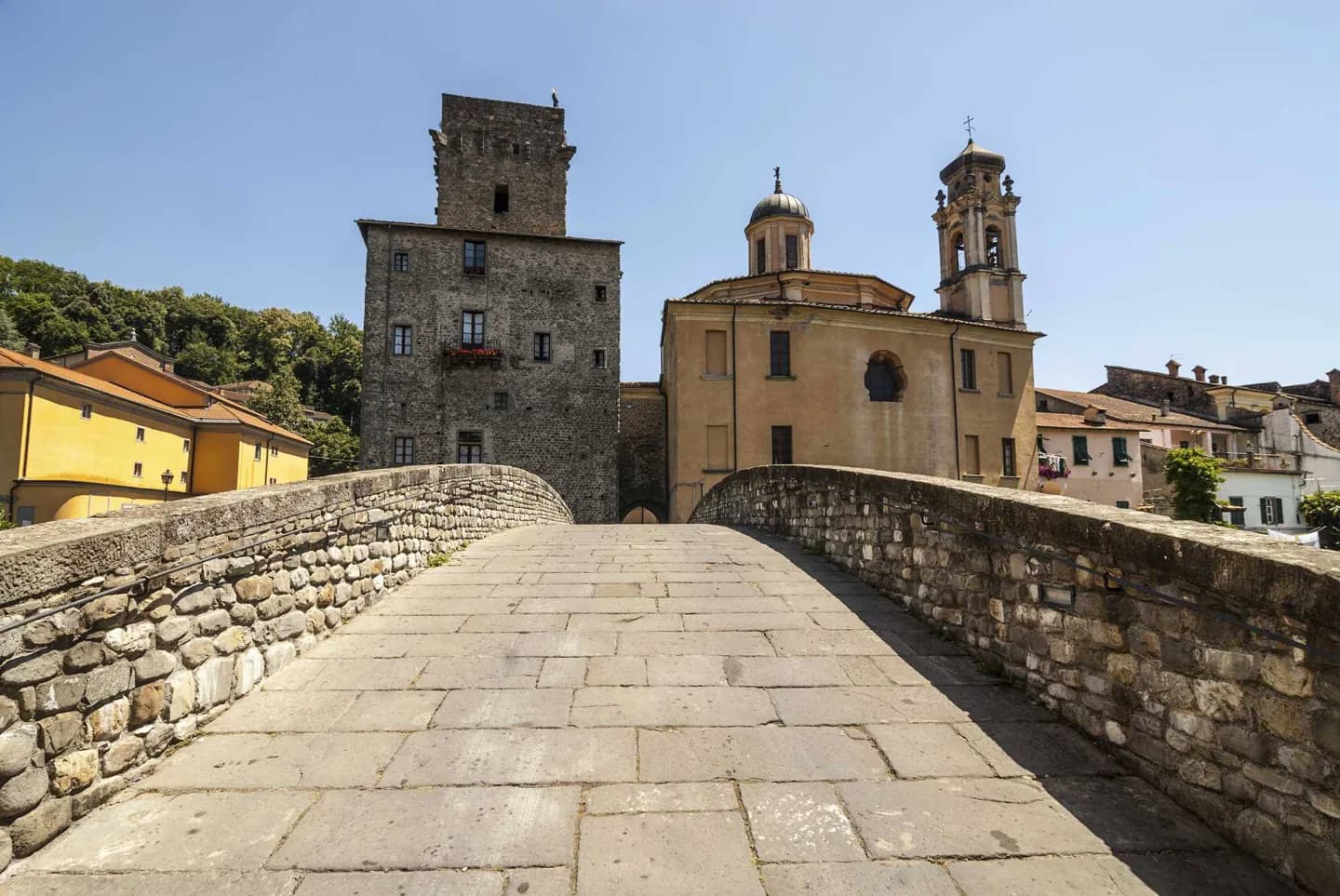
The Piagnaro Castle holds the Lunigiana stele statues, offering a much older story than the medieval town below. A walk past the Campanone and through the centre then shows how route traffic and rival powers shaped this strategic valley settlement.
What to look for
- Piagnaro Castle rises over the old town and houses the stele statue museum.
- The Campanone marks a medieval division between rival factions.
- The Magra valley setting explains Pontremoli's role on north–south routes.
The full story
Pontremoli occupies a passage through the upper Magra valley, where travellers crossed Lunigiana between northern Italy and Tuscany. Medieval pilgrims on the Via Francigena passed through, but the place's history extends much further back. The anthropomorphic stele statues displayed at Piagnaro Castle date from prehistoric periods through Romanization and are among the clearest reminders of Lunigiana's early cultures. In the town below, the Campanone bell tower recalls a later conflict: it was built to divide rival medieval factions. Pontremoli gained communal status under Frederick II, yet its position also made it a prize for competing lords and states. Rather than memorize each change of ruler, look at the town as a route junction with layers of defence, religious travel and exchange. The castle above and the streets below tell connected parts of that story. Seeing both gives a fuller account than visiting the museum alone or making only a brief stop in the centre.
Useful to know
- Walk the town before climbing to Piagnaro Castle so the valley setting and streets connect.
- Verify museum and castle access if the stele statues are your main reason to visit.
Your next visit
Estimated · Declared scenario and planning estimates; no live opening, weather, queue or booking service.
Outdoor visit · 15–25 min
World planning estimate; admission, opening, visit duration and access need checking.