
Why go
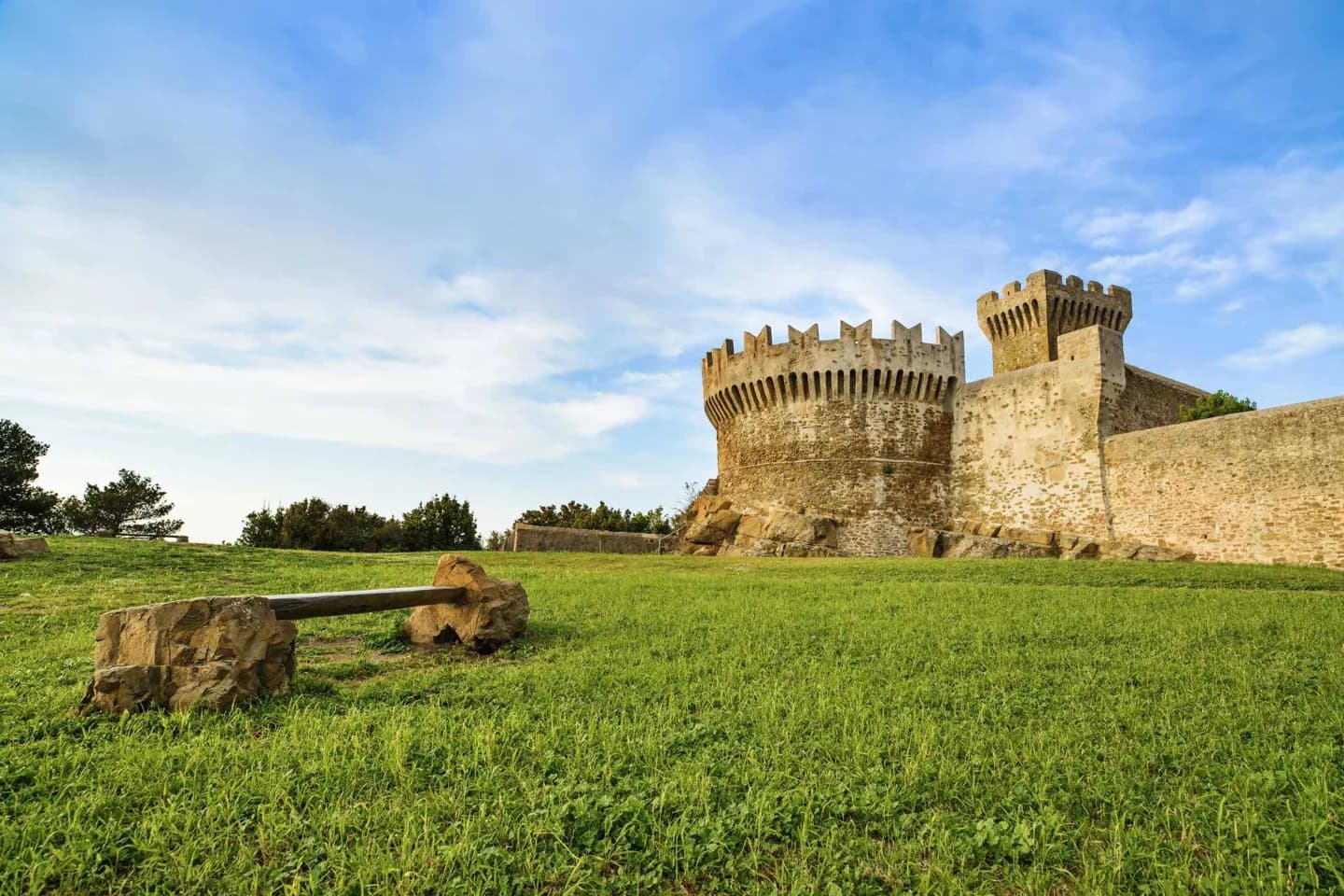
The village gives a clear starting point for understanding the wider Baratti archaeological landscape. Etruscan walls and Roman remains sit near the medieval Rocca, while the view down to the gulf shows why the ancient settlement could connect ore, metalworking and sea trade.
What to look for
- Etruscan walls and Roman remains reveal older layers around the hilltop.
- The fifteenth-century Rocca rises within the medieval walled village.
- The road toward Baratti opens a panorama over the gulf and ancient port area.
The full story
Populonia was more than a hilltop stronghold. Its ancient city extended from the heights toward the shore of the Gulf of Baratti, which served as its port. Ore from the mainland's metal-bearing hills and iron from Elba fed a substantial Etruscan metalworking centre. Slag accumulated along the bay over generations of production, then later reworking of that material exposed tombs and other remains. That history explains why a visit works on two levels: the small medieval village occupies part of the old upper settlement, while the archaeological landscape spreads toward the coast. The fifteenth-century Rocca belongs to the later Appiani lords of Piombino, and the surrounding walls add another defensive chapter. Looking down from the village toward Baratti, it is easier to grasp the relationship between the acropolis, workshops, burial grounds and maritime outlet. The surviving Etruscan and Roman traces are pieces of a much larger coastal city, rather than isolated ruins beside a scenic village.
Useful to know
- Allow separate time for the hilltop village and the archaeological area by Baratti.
- Check current access before planning around the Rocca, collection or archaeological park interiors.
Your next visit
Estimated · Declared scenario and planning estimates; no live opening, weather, queue or booking service.
Outdoor visit · 15–25 min
World planning estimate; admission, opening, visit duration and access need checking.