
Why go
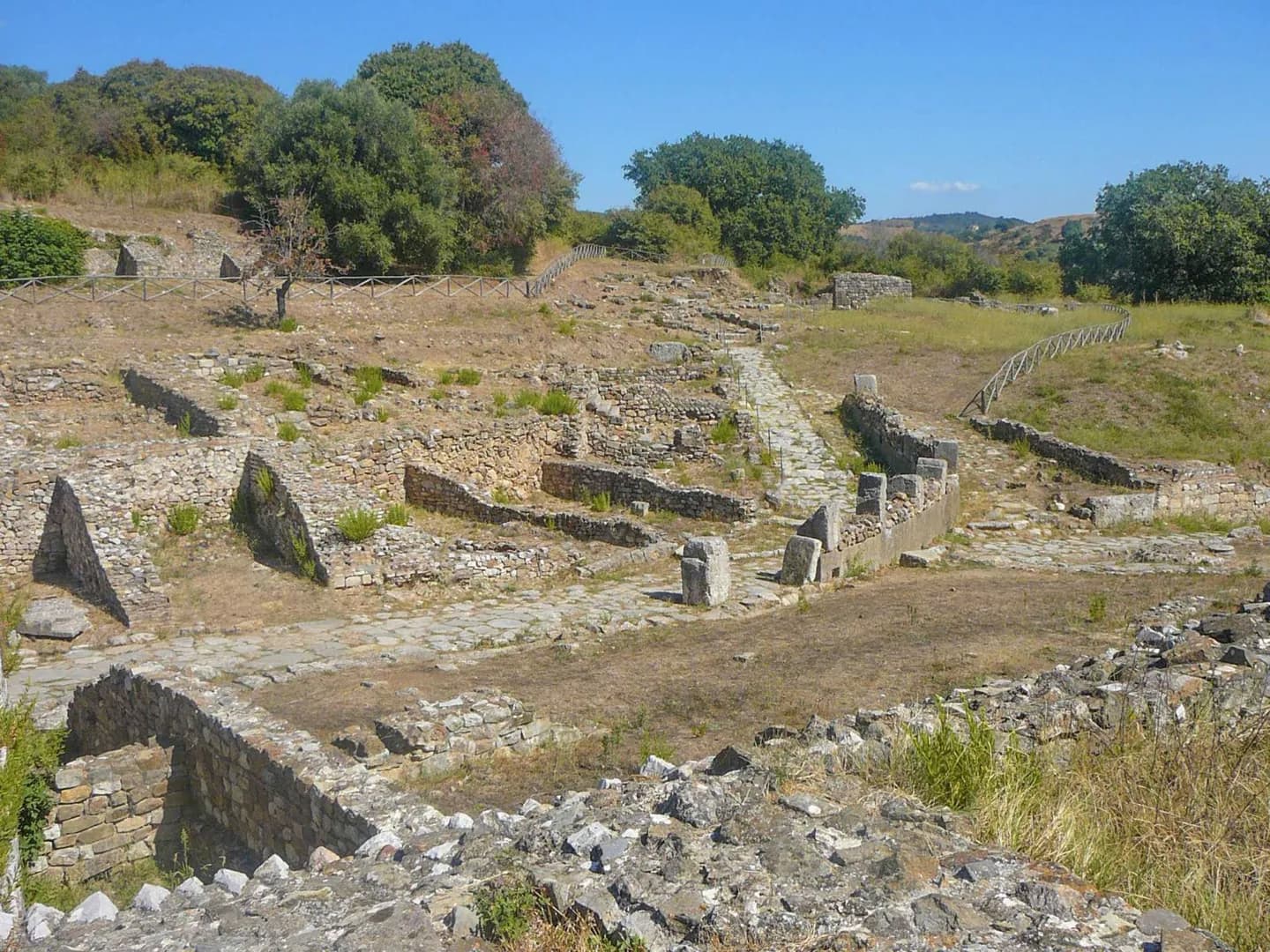
Few stops in the Maremma show the transition from Etruscan to Roman city so clearly. Follow the long wall circuit, then look for the amphitheatre, forum and baths; Grosseto adds the later chapter after the old settlement declined. The two hill summits help you read the ancient city’s layout.
What to look for
- Long stretches of the Etruscan wall survive around the hill.
- A Roman amphitheatre occupies one of the site’s summits.
- The forum and baths reveal the later Roman city.
The full story
Rusellae began as an Etruscan settlement on a pair of hills above the Maremma plain. Its massive stone walls are the most immediate sign of that early city. Rome captured it in the third century BCE, and the Roman phase left a different set of public spaces: an amphitheatre, a forum complex and baths. Walking between them lets you see a settlement changed by conquest rather than replaced all at once. Rusellae continued into the Middle Ages, but its importance faded and the bishopric moved to Grosseto in the twelfth century. That transfer connects the ruins to the present regional capital nearby. The site is an outdoor archaeological park rather than an inhabited town, and its entrance and current operating conditions need checking. Once inside, give the walls and the Roman centre time as distinct parts of the visit.
Useful to know
- Check the official park timetable before setting out.
- Prepare for an outdoor site exposed to sun and weather.
- Use the archaeological park’s visitor entrance; the map point may indicate the site interior.
Your next visit
Estimated · Declared scenario and planning estimates; no live opening, weather, queue or booking service.
Outdoor visit · 30–45 min
World planning estimate; admission, opening, visit duration and access need checking.