
Why go
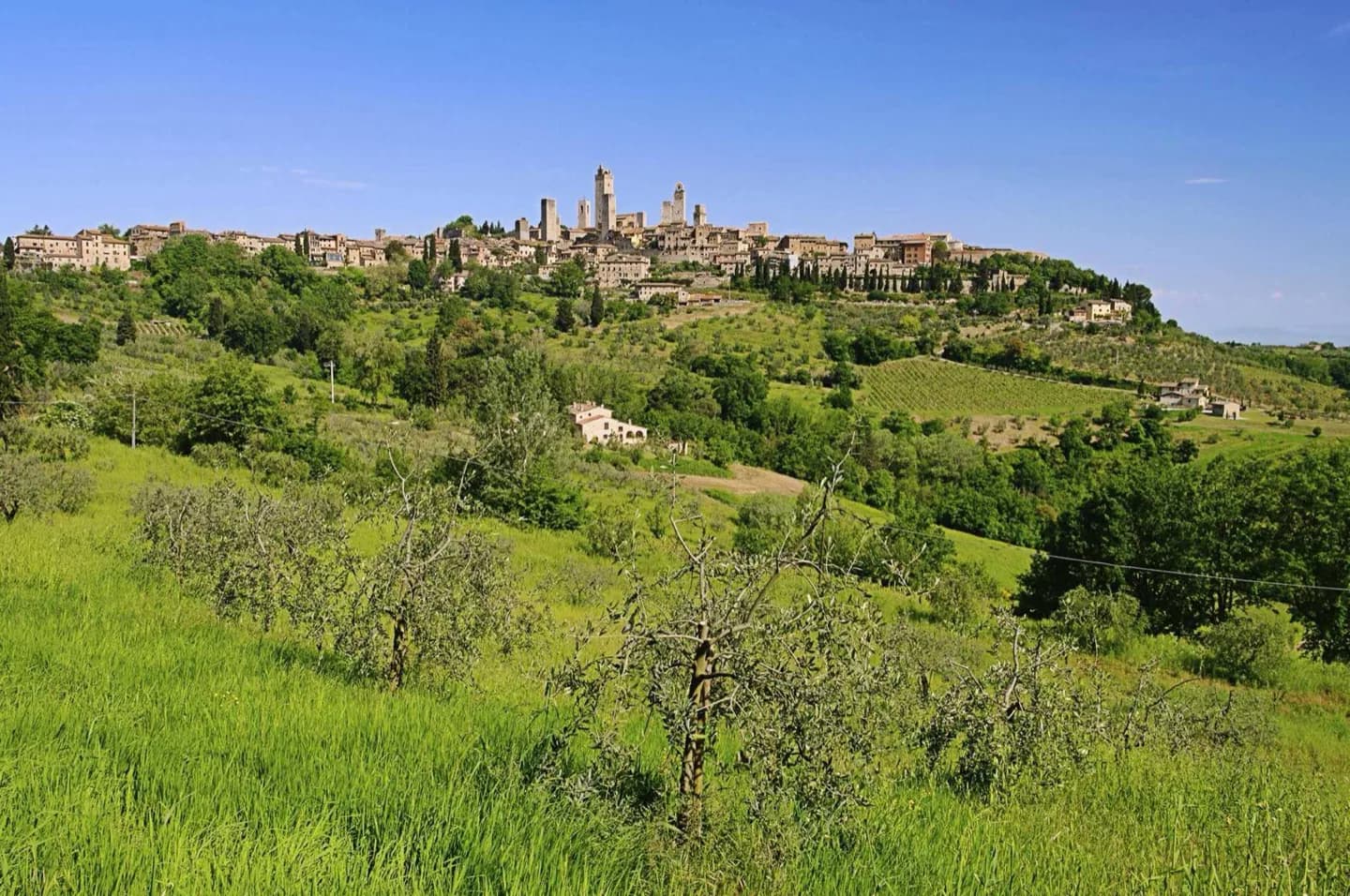
The towers show how wealthy families marked their presence in a medieval commune. Walk beyond the first skyline view to compare Romanesque and Gothic buildings and seek out the frescoes in the Collegiate Church and Palazzo Comunale. The town rewards attention at street level as much as from a distance.
What to look for
- Medieval tower houses still rise above the walled center.
- The Collegiate Church and Palazzo Comunale hold important fresco cycles.
- Romanesque round arches and Gothic pointed arches appear across the town's buildings.
The full story
San Gimignano grew along the Via Francigena, where pilgrims and trade helped support a prosperous medieval commune. Saffron and Vernaccia wine were among the products of the surrounding hills. Inside the walls, family rivalry left an unusually visible mark: prominent households built tall tower houses, turning private status into a skyline. Only a fraction of the medieval towers survive, but their concentration still makes the town easy to recognize from afar. The same prosperity also funded civic and religious art. Fresco cycles in the Collegiate Church and Palazzo Comunale take the story indoors, while the streets preserve a mix of Romanesque and Gothic forms. Look for the shift from round to pointed arches as you walk. Dante visited in 1300 as an ambassador, another reminder that this was an active town in Tuscan politics and exchange. The towers draw the eye first; the art and ordinary stonework explain the life beneath them.
Useful to know
- See the tower skyline from outside the walls, then walk into the center for architectural detail.
- Check entry arrangements separately for churches, museums and any climbable tower.
Your next visit
Estimated · Declared scenario and planning estimates; no live opening, weather, queue or booking service.
Outdoor visit · 15–25 min
World planning estimate; admission, opening, visit duration and access need checking.