
Why go
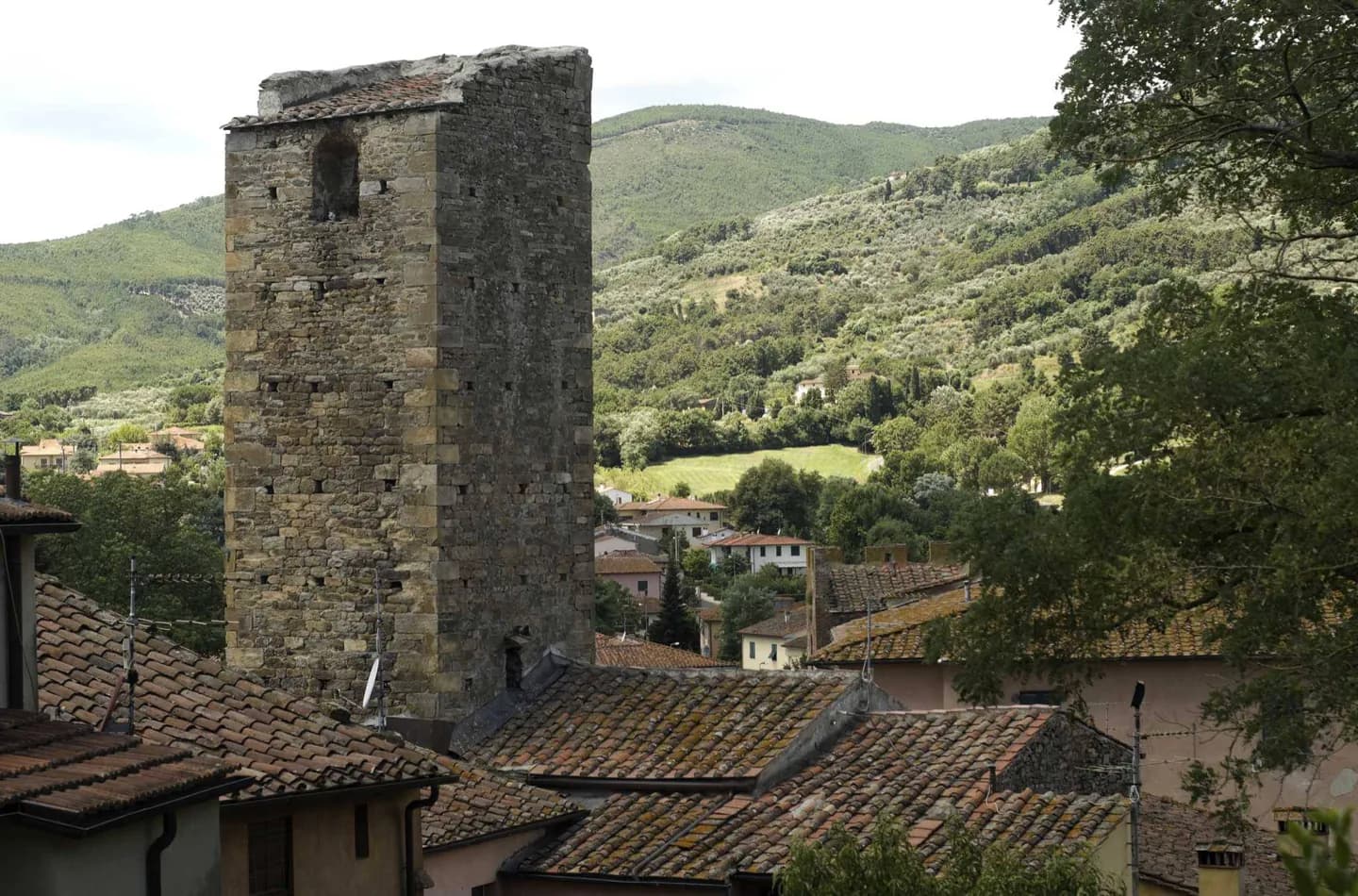
The Rocca Nuova tells the story of Florence strengthening a former Pisan stronghold after conquest. Medieval towers, Palazzo Pretorio and the Romanesque church of Santa Maria help fill out the older town around that later fortress. Its compact scale makes the sequence clear during a short walk.
What to look for
- Brunelleschi's Rocca Nuova rises above the fortified village.
- Medieval towers punctuate the old streets.
- Pieve di Santa Maria preserves a Romanesque layer.
The full story
Vicopisano was a fortified centre of the Republic of Pisa before Florence conquered it in 1406. Florence then commissioned Filippo Brunelleschi to design the Rocca Nuova in the fifteenth century, turning a former rival's stronghold into part of its own defensive system. That shift explains why the fortress is the headline sight, but the older town deserves equal attention. Medieval towers and Palazzo Pretorio show the settlement that predated the Florentine work. The Romanesque Pieve di Santa Maria adds a religious layer alongside the military one. Vicopisano's position below Monte Pisano and near the Arno valley made defence important even as the river's course later changed. On a short walk, watch how the towers, walls and Rocca relate to one another. The village is valuable because it preserves the shape of a contested medieval place, with Brunelleschi's intervention still visible above earlier streets.
Useful to know
- Walk the village streets and look up at the towers before focusing on the Rocca.
- Check current access if you hope to enter the fortress or churches.
Your next visit
Estimated · Declared scenario and planning estimates; no live opening, weather, queue or booking service.
Outdoor visit · 30–45 min
World planning estimate; admission, opening, visit duration and access need checking.