
Why go
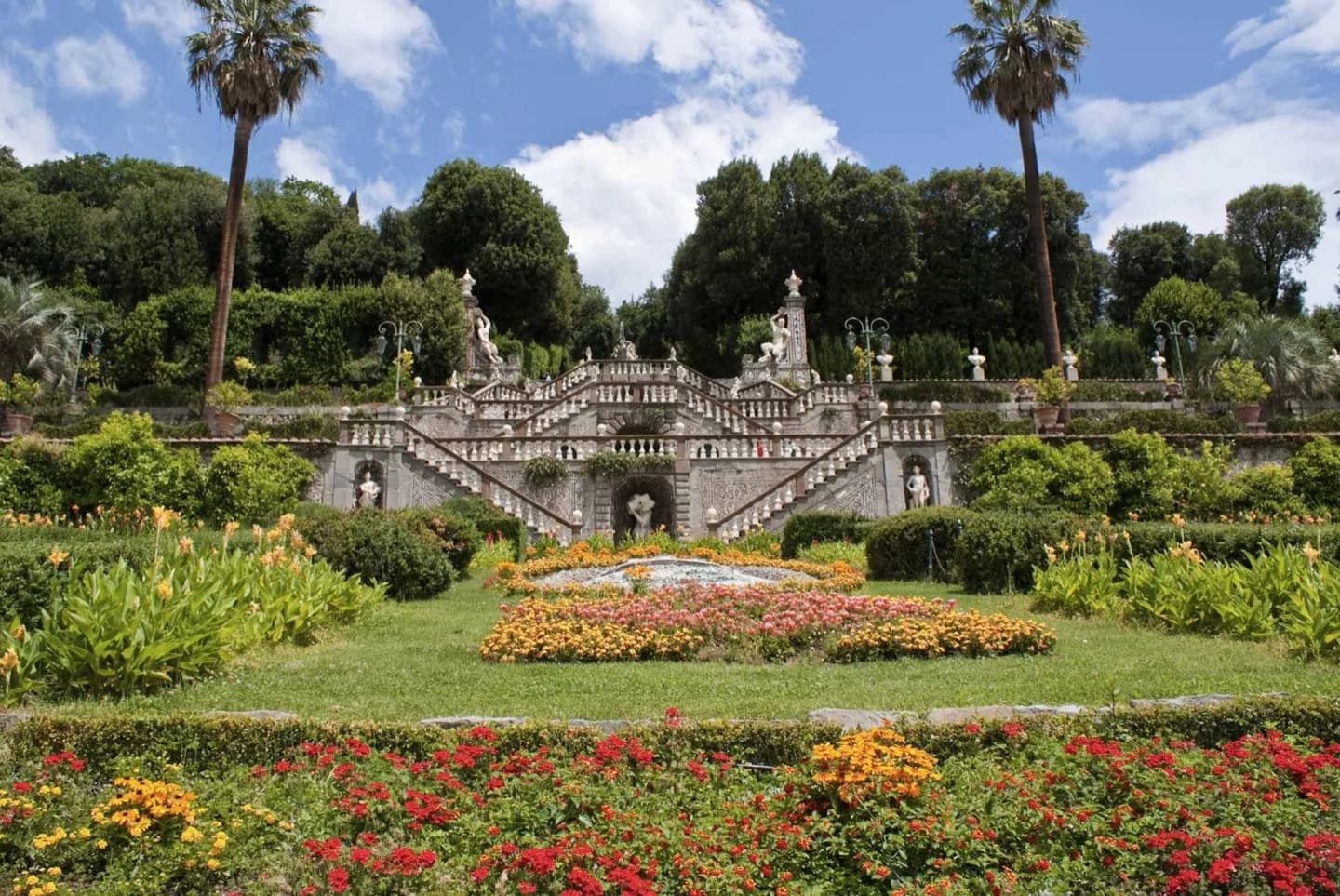
The slope is the attraction here. Balustraded terraces and grand stairs turn a difficult site into a theatrical sequence, with water features below and higher garden spaces above. It is a more demanding garden walk than a flat town square.
What to look for
- Grand symmetrical staircases link lower water features to upper terraces.
- Balustrades and clipped planting frame views up the hillside.
- The garden is set against Collodi’s steep slope.
The full story
The Garzoni family developed the garden beside their Collodi villa during the 17th century. Rather than flattening its steep hillside, the design used the slope for spectacle. Terraces, balustrades and broad staircases draw the eye upward from the lower water garden toward the house and higher planted spaces. Each change in level alters the view back down, so the climb itself is part of the experience. Clipped greenery blends into the wooded hillside, while cascades and other water features add movement to the formal geometry. The garden continued to develop after its first layout; an 18th-century water garden is attributed in the historical account to local architect Ottavio Diodati. The villa was rebuilt in the same broad period. Together, the rebuilding and hillside design show how the Garzoni estate grew across generations. The outdoor composition is a Baroque response to demanding terrain, with the house as the visual goal of the climb.
Useful to know
- Wear shoes suitable for steps and sloping paths.
- Check the operator’s current access information for both the garden and villa before travelling to Collodi.
Your next visit
Estimated · Declared scenario and planning estimates; no live opening, weather, queue or booking service.
Outdoor visit · 30–45 min
World planning estimate; admission, opening, visit duration and access need checking.