
Why go
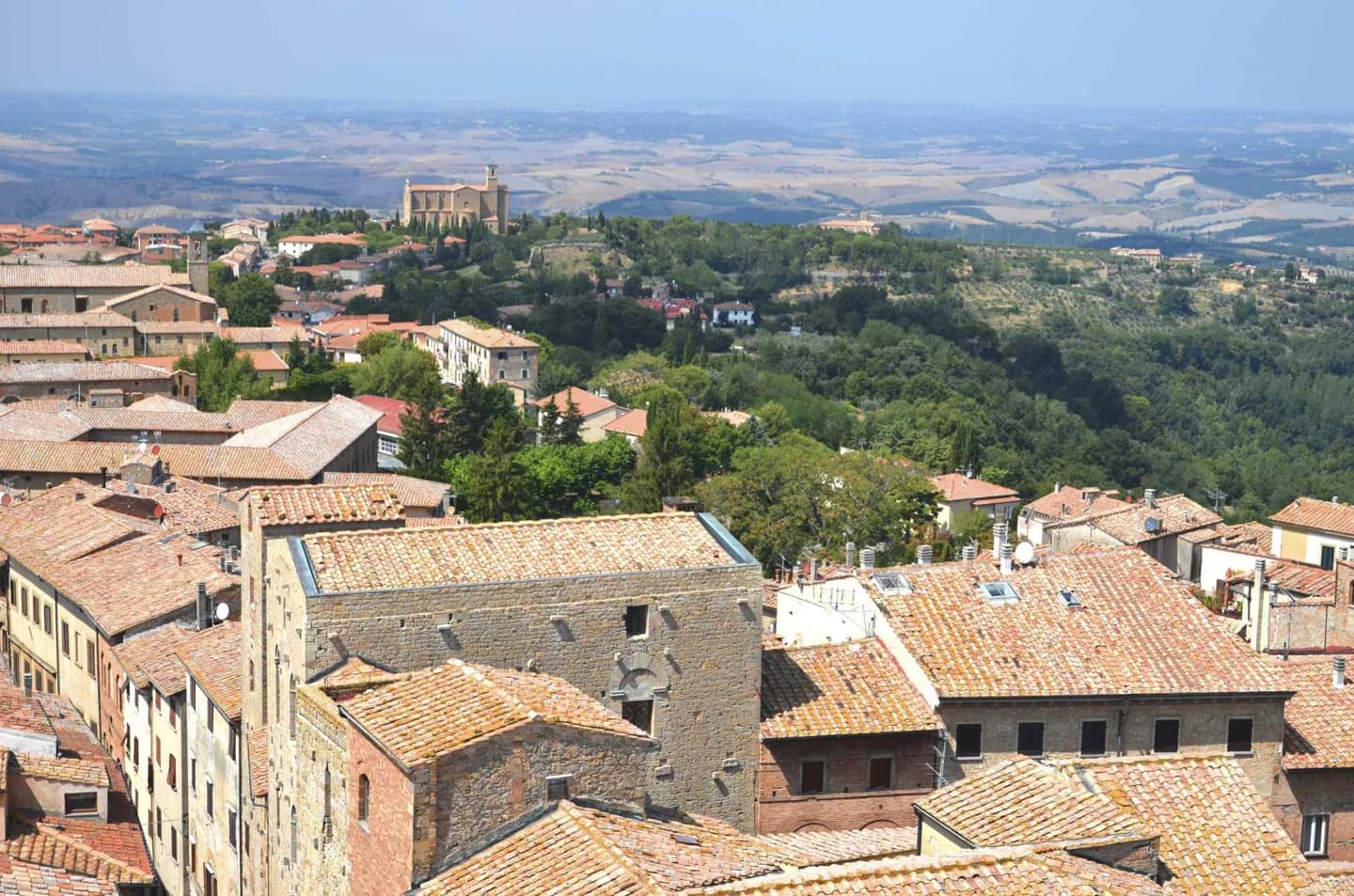
Few Tuscan town walks show the transition from Etruscan city to Roman settlement and medieval commune so clearly. The old walls, theatre and Piazza dei Priori are meaningful together, while the Etruscan museum offers a deeper look at the earliest layer.
What to look for
- Etruscan and thirteenth-century walls mark successive city boundaries.
- The Roman theatre reveals a later use of the hillside.
- Palazzo dei Priori anchors the medieval civic square.
The full story
Known to the Etruscans as Velathri, Volterra occupied a hill between the Era and Cecina valleys long before its medieval streets took shape. Etruscan walls remain one of the strongest visible clues to that early city. Roman rule added another layer, represented by the theatre built into the slope. In the Middle Ages, Volterra became a bishop's seat and then a commune with a prominent civic centre. Palazzo dei Priori, begun in the early thirteenth century, still defines the main square. Florence later brought the city under its control, and Medici rule followed. The effect on a visitor is unusually legible: successive powers did not erase the earlier city, so the town can be read in stages during a walk. The Guarnacci Etruscan Museum, with its funerary urns, offers a close look at objects from the oldest chapter; Piazza dei Priori shows the confidence of the medieval one. Allow time to notice the contrast between the wide valley setting and the enclosed stone streets.
Useful to know
- Give the town more than a brief viewpoint stop; the ancient and medieval sights are distinct.
- Check individual museum and theatre access when deciding which interiors to include.
Your next visit
Estimated · Declared scenario and planning estimates; no live opening, weather, queue or booking service.
Outdoor visit · 15–25 min
World planning estimate; admission, opening, visit duration and access need checking.