
Why go
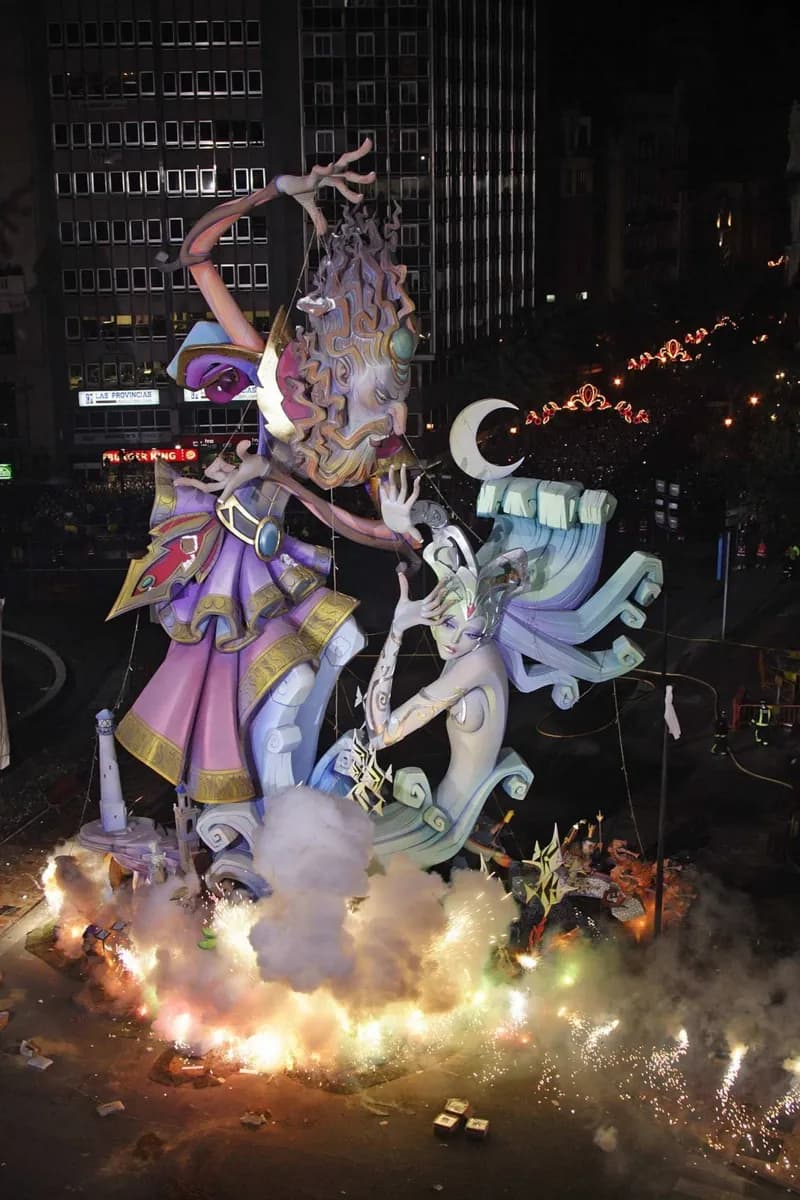
Go to understand how Valencia makes civic commentary physical and turns neighborhood creativity into a shared urban ritual. A falla is both the combustible monument and, by extension, the committee behind it; ninots populate its scenes, which are displayed, judged and ultimately consumed by fire.
What to look for
- Read the Valencian signs on each monument to catch its satirical subject.
- Distinguish the falla monument, its ninots and the neighborhood committee behind it.
- Notice how fire, sound and street space work together rather than treating the event as a parade.
The full story
Fallas is held from 15 to 19 March in honor of Saint Joseph, the patron saint of carpenters. Its central objects are fallas: large temporary monuments built from a wooden framework and combustible artistic materials. Smaller figures, called ninots, populate scenes that often use humor and satire to comment on current affairs. Neighborhood committees, known as falleros and falleras, create the monuments and enter them in competition. Fire is only one part of the experience. Music, fireworks, street gatherings and the early-morning despertà make the festival a city-wide soundscape, while mascletàs turn controlled explosions into a rhythmic performance. Valencian-language signs explain the scenes. At the end, the monuments are burned, giving the celebration a clear arc from construction and judgment to ritual destruction.
Useful to know
- Check the current official programme for firework events and access arrangements.
- Allow extra time to move between monuments; the festival occupies ordinary streets as well as squares.