
The full story
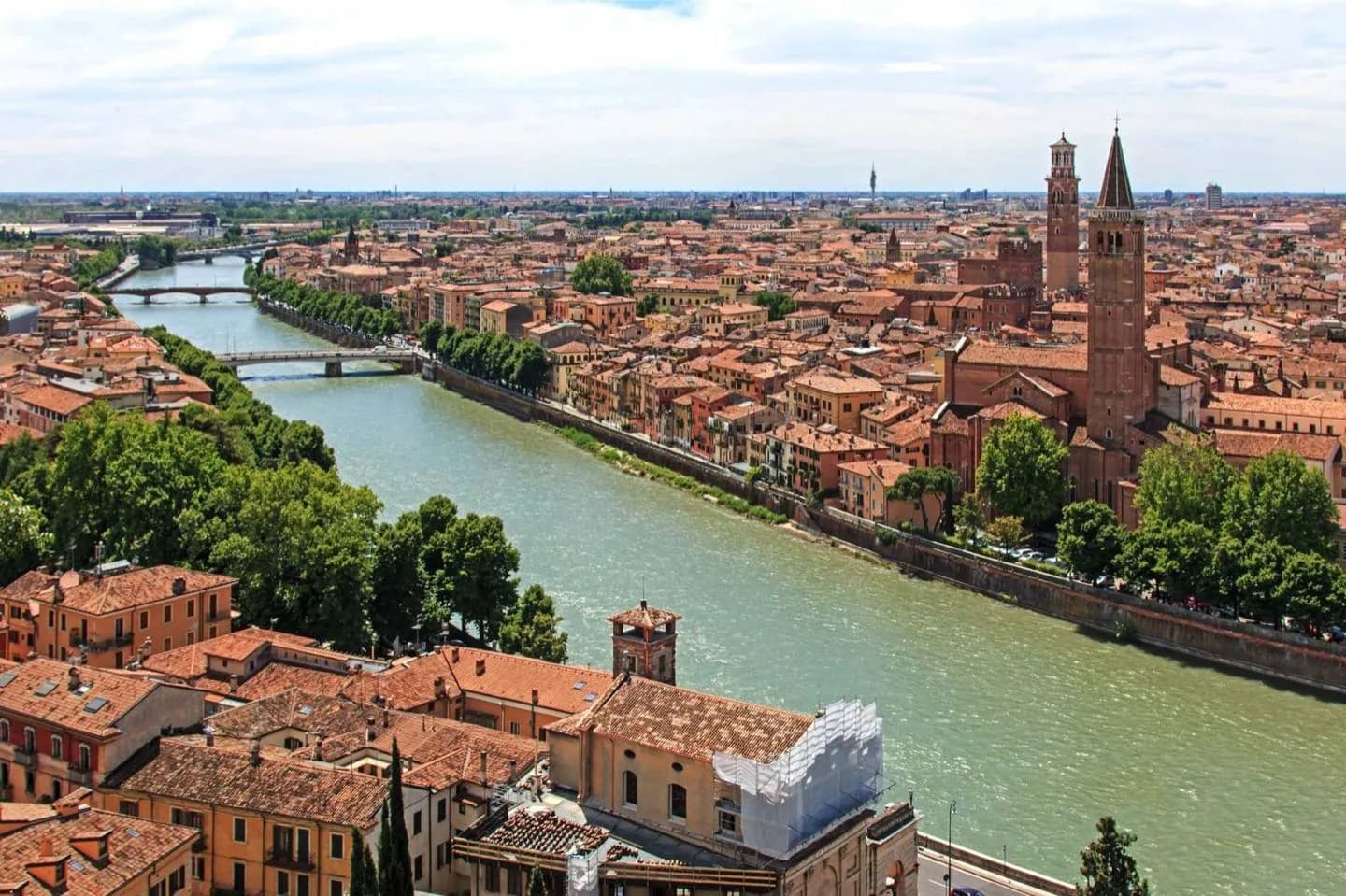
The Roman center developed around crossing streets that still lead toward Piazza delle Erbe. Medieval growth spread into quarters such as San Zeno and Veronetta, while successive rulers extended the defensive perimeter. Scaliger walls climbed around the northern hills; later Venetian works pushed outward with bastions and formal gates; Austrian fortifications added another military layer. The result is not one tidy ring but a sequence of boundaries visible in different parts of the city. For a practical reading, compare Porta Borsari with Porta Palio, then look from a high point such as Torre dei Lamberti or the upper Giusti garden. The changing scale of streets, walls and gateways shows how Verona expanded without losing its older center. Porta Palio is particularly useful here because its ceremonial outer face and restrained inner face reveal how a defensive threshold also represented the city.