
Why go
Train travelers arrive in a monumental station rather than a distant terminal. The Capitol is nearby, and the Red Line plus surface transport connect the station with hotels and neighborhoods. The building’s grand hall also makes a useful orientation point, though platforms and pickup areas can be busy at commuter peaks.
The full story
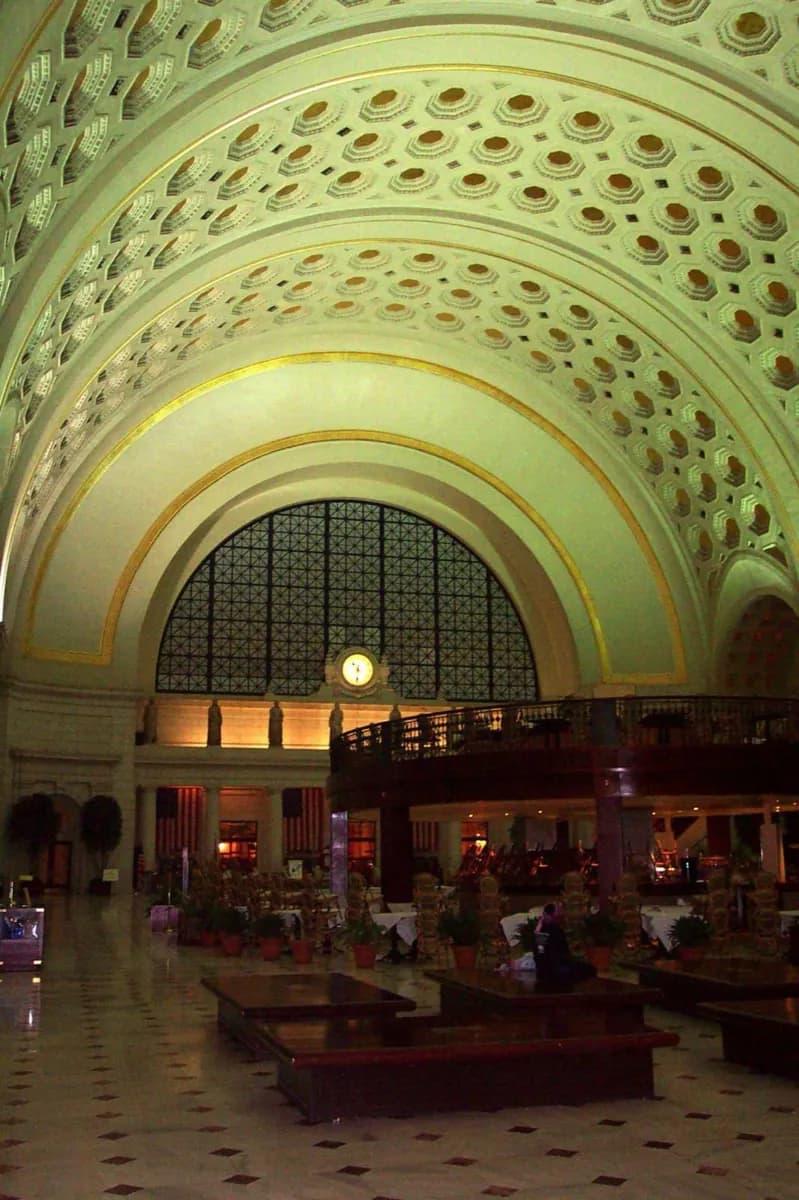
Union Station sits just northeast of the Capitol, a location that makes the transition from regional travel to the city unusually legible. Intercity trains, commuter rail, Metro and buses converge in one complex, but each uses its own concourse or stop. Pause beneath the restored classical interior before navigating onward, then choose transport according to luggage and destination rather than habit. Capitol Hill may be walkable; downtown and farther neighborhoods are usually easier by Metro or surface transit. The station is large enough that meeting someone “at Union Station” is not a complete plan—agree on a hall, entrance or platform area. Keep tickets accessible until clear of the train zone, and watch departure boards for track announcements. If you have a long connection, remain aware that active construction or crowd management can change the easiest path through the building.
Useful to know
- Keep your carrier and train number handy because several rail services use Union Station.
- Allow transfer time if continuing by Metro; the rail concourse and Metro entrance are connected but not the same platform area.
- Follow current signs for taxis, rideshare and buses, as construction can relocate pickup points.