
Why go
Keep a car for destinations poorly linked by transit or for travel beyond the city. Within central Washington, Metro, buses and walking usually provide a calmer day. Traffic circles, one-way streets and avenues that cross the grid at odd angles demand attention, while federal activity can close streets with little benefit to a sightseeing driver.
The full story
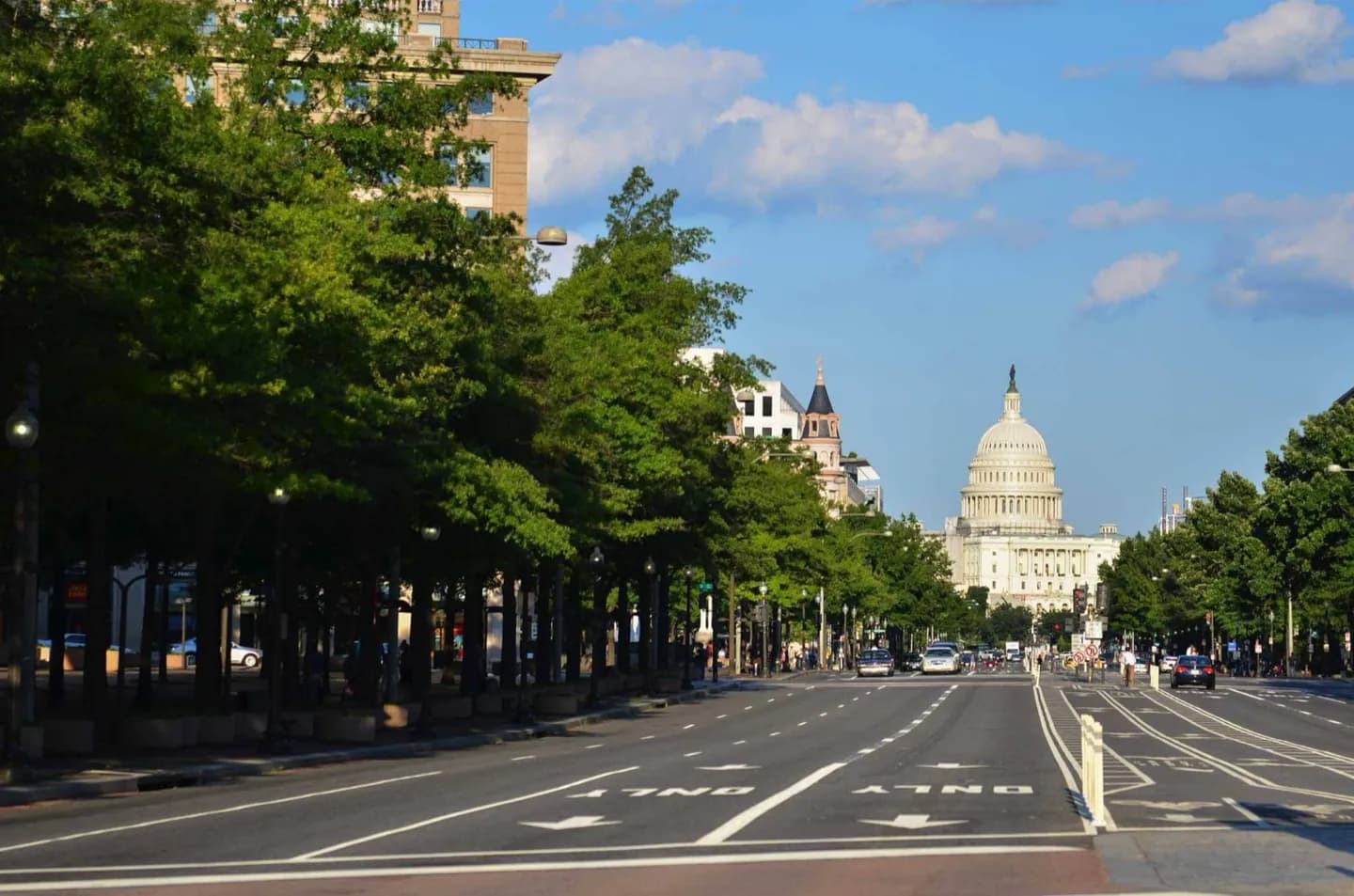
Washington’s broad avenues were designed for vistas, not simple modern driving. Diagonals meet the numbered-and-lettered grid at circles, lanes can shift around security zones, and an address without its quadrant can send you across town. Parking near monuments is scarce and often time-limited, so a car does not eliminate walking. If arriving by road, choose accommodation or a garage with clear access, unload once, and use transit for the center. Watch for rush-hour rules that alter curb use or permitted turns, and never assume the lane beside a parked vehicle continues through an intersection. River crossings can become bottlenecks even when downtown streets look clear. Save driving for places where it changes the trip—carrying equipment, reaching a regional trailhead or continuing beyond transit—rather than merely changing the traffic jam.
Useful to know
- Avoid moving the car between Mall attractions; park once in a legal facility or leave it outside the center.
- Read every curb sign for time, permit and rush-hour restrictions rather than assuming a meter makes a space legal.
- Do not leave valuables visible, and confirm overnight access before using a garage for an evening event.