
Why go
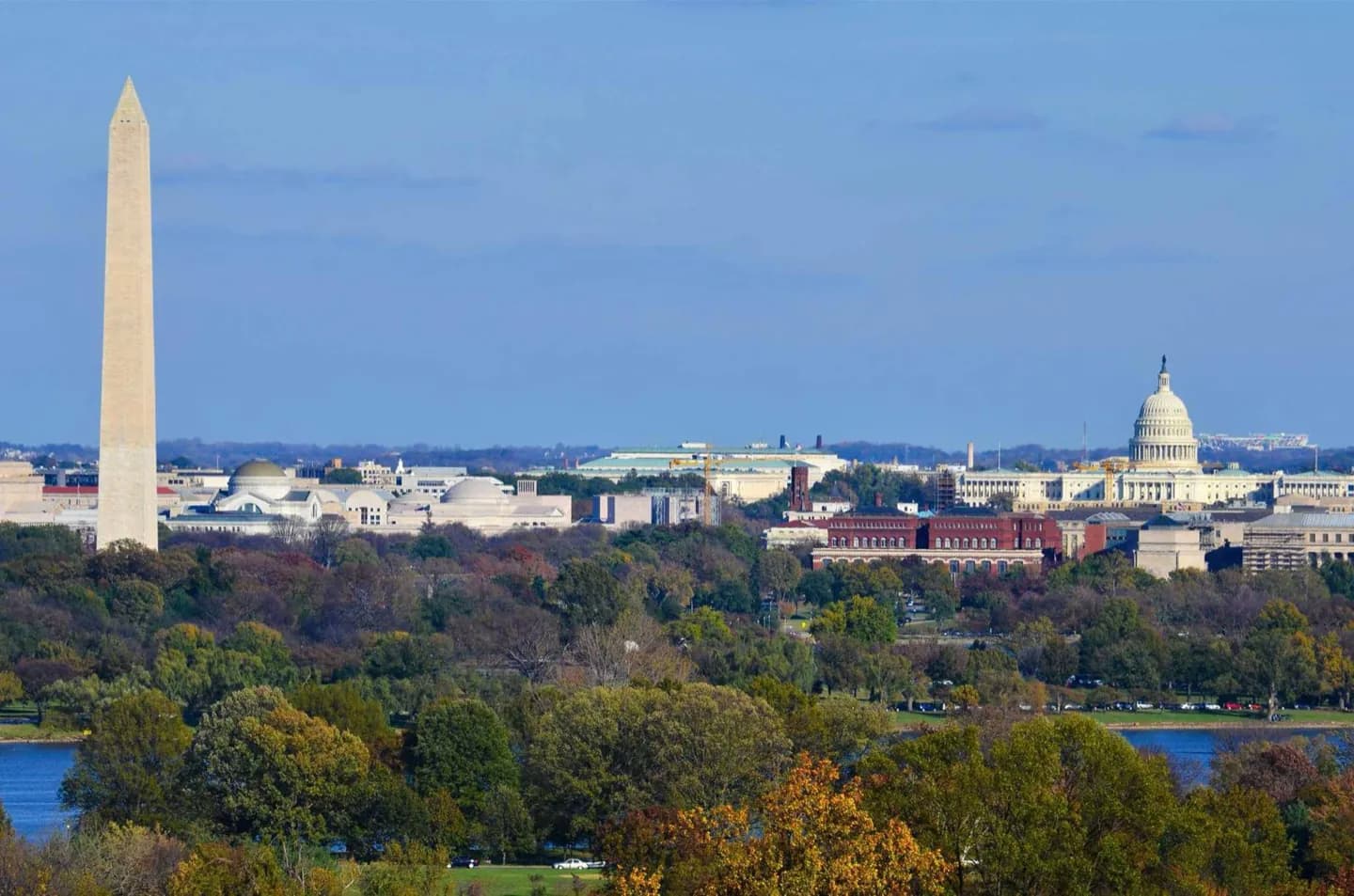
Begin with the city’s geometry. The Capitol and White House anchor a plan of cardinal streets, diagonal avenues and circles, while the Mall turns open space into a ceremonial national stage. Museums preserve shared collections; memorials shape public memory; neighborhoods reveal lives that the monumental core often leaves outside the frame.
The full story
Washington was created for government, but it never belonged only to government. The planned center depends on controlled vistas: stand at the Lincoln Memorial, Washington Monument or Capitol grounds and buildings seem to speak across distance. At street level, the picture becomes more complicated. Pennsylvania Avenue carries parades and protest between constitutional branches. The African American Civil War Memorial and U Street recover histories that older commemorative landscapes neglected. Georgetown predates the federal city, while Rock Creek preserves terrain the formal plan could not flatten. Even the Mall changes character from museum threshold to protest ground to quiet memorial edge. Use these contrasts as a method: pair a monument with a museum that tests its story, and pair the Mall with a neighborhood whose history complicates the official view. The city becomes more memorable when each grand statement meets a specific object, name or street.