
Why go
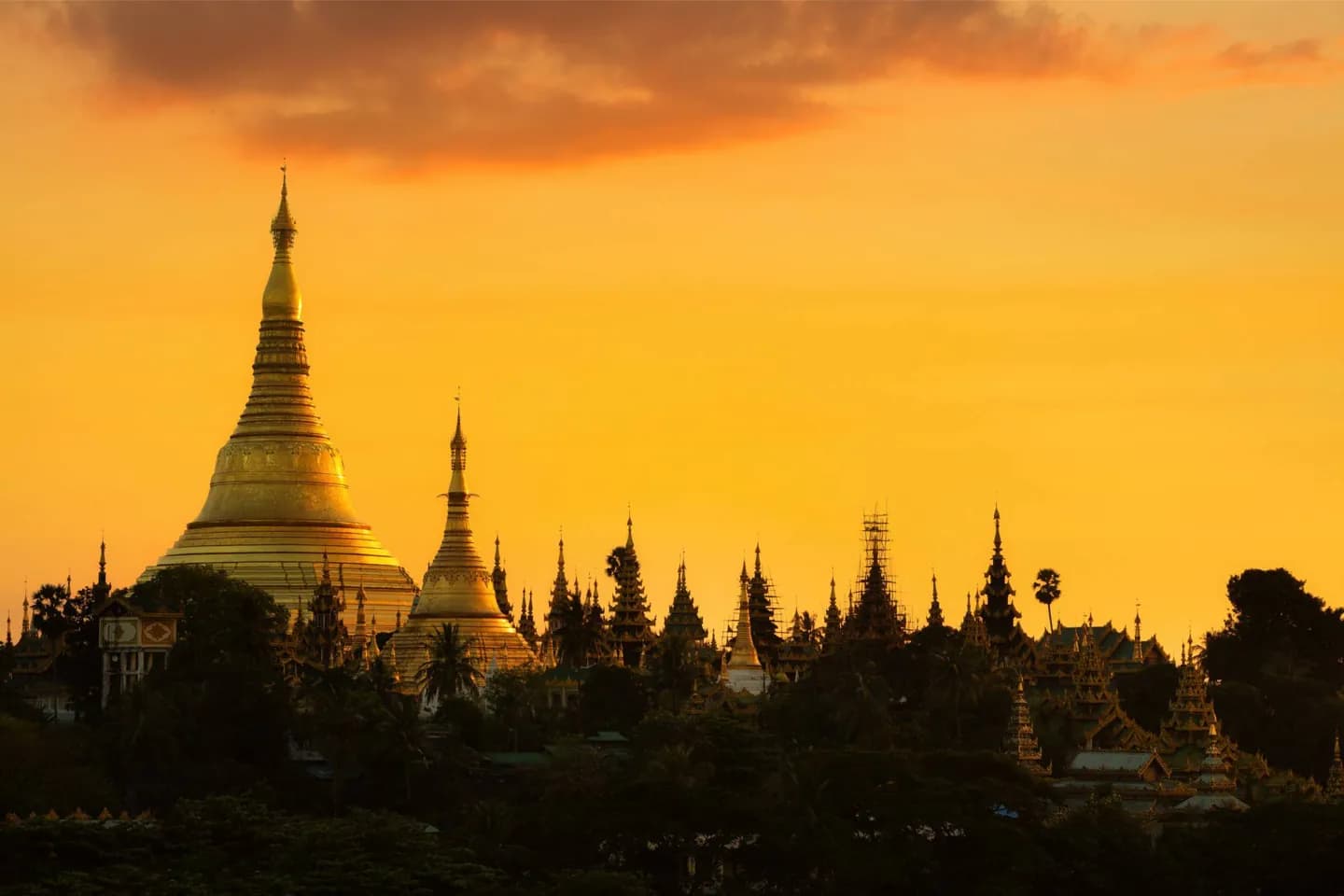
The early story places Shwedagon at the centre of a settlement long before downtown’s British-era buildings appeared. In 1755 King Alaungpaya took Dagon and renamed it Yangon, adding nearby settlements. British forces later occupied the city during the First Anglo-Burmese War but returned it after that conflict. These changes make a pagoda visit a way to read the city’s older geography, not merely an architectural stop.
The full story
The Mon established Dagon in Lower Burma, and the settlement developed around Shwedagon Pagoda. It was small compared with the later port city, but the shrine already gave it a lasting focal point. In 1755, King Alaungpaya conquered Dagon, renamed it Yangon and added surrounding settlements. The new name belongs to this political change, while Shwedagon recalls an older religious centre. British troops occupied Yangon during the First Anglo-Burmese War of 1824–26 and then returned the city to Burmese administration. A fire in 1841 damaged the city before the later colonial rebuilding that produced much of the downtown plan. On a visit, the useful distinction is spatial: Shwedagon stands apart from the riverfront grid that visitors often associate with old Rangoon. The two settings tell different parts of the story. Begin with the hilltop shrine for the earlier city, then look downtown for the plan built after British control of Lower Burma.