
Why go
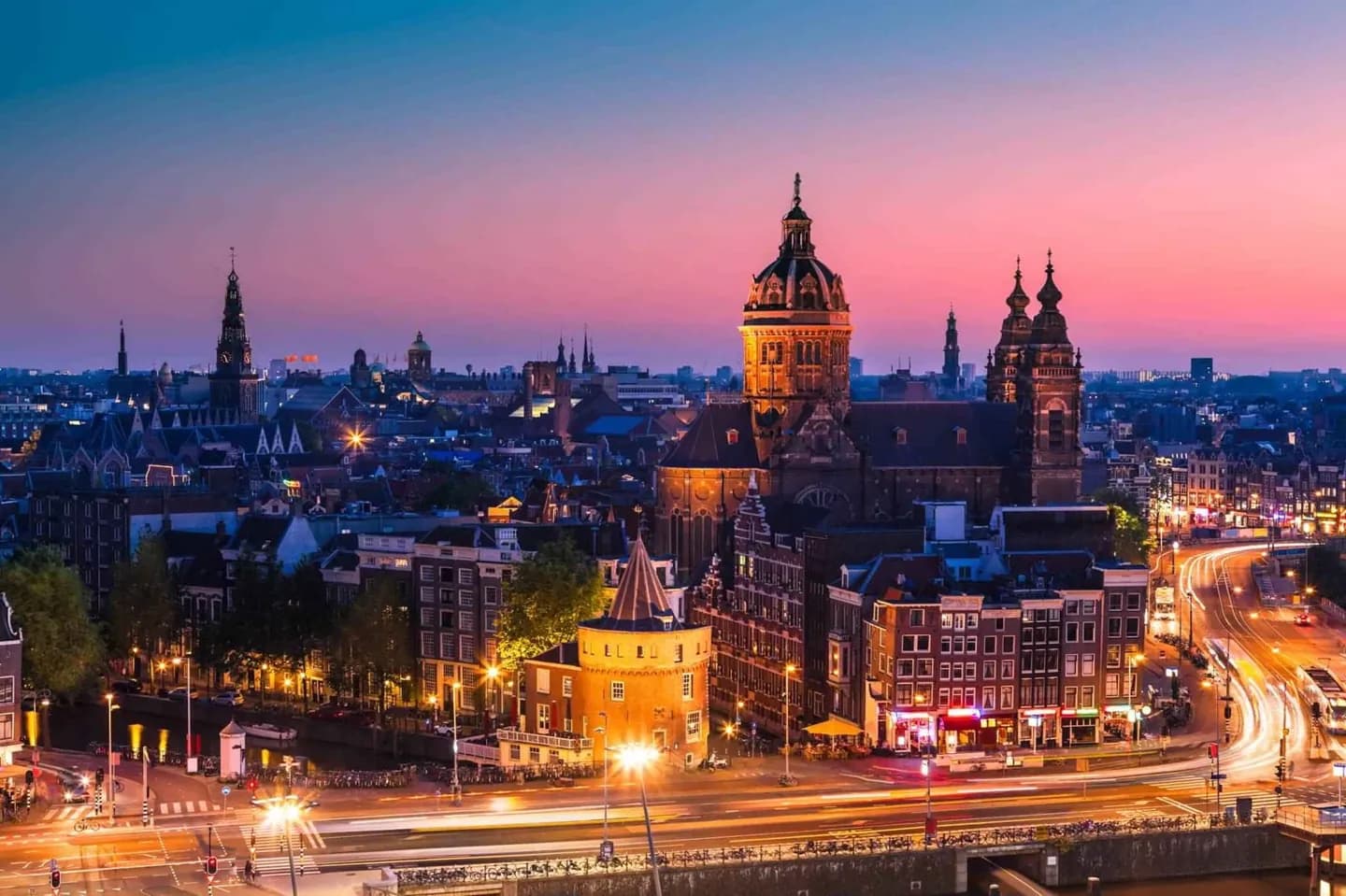
Read the city through the physical traces of growth. The Amstel's former course appears in Damrak and Rokin, the canal belt records seventeenth-century planning, and later museums, station buildings and neighbourhoods show how Amsterdam adapted after its maritime peak. This gives familiar sights a shared context.
The full story
The name Amsterdam comes from Amstelredamme, the settlement that developed around a dam on the Amstel. A 1275 document records the name and a toll exemption for its inhabitants, an early sign of the movement and trade that would shape the town. Its harbour position helped turn a fishing settlement into a commercial centre, and the seventeenth century brought both global trade and the planned canal expansion that defines the centre today. The city later moved through decline, industrial renewal and major nineteenth-century building projects. Those shifts are visible rather than abstract. Dam Square marks the old dam; Damrak and Rokin trace the river's earlier line; the Grachtengordel makes the seventeenth-century extension legible in water and façades. Amsterdam Centraal, museums and concert halls reveal later ambitions. Treat the city as a sequence of these layers, and the contrast between the medieval core, the canal belt and later districts becomes easier to understand.