
Chapter 1 / Amsterdam
Royal Palace Amsterdam.
Start with Royal Palace Amsterdam. Let a detail decide which thread you follow next.
Pause here. What detail would you keep from this place?
Outdoor walks and façade observations. Interior admission is not included.
The full story
Royal Palace Amsterdam reveals the scale of seventeenth-century civic ambition inside a building still used by the Dutch Royal House. Public access varies with official duties.
Enter to see how Amsterdam's former town hall presented the city as a new Rome: vast marble spaces, world maps and classical sculpture celebrate government and global trade. Its later conversion into a palace adds a second political layer. The contrast reveals how municipal wealth was recast as royal power.
Jacob van Campen designed the building as Amsterdam's town hall, opened in 1655 when the city's merchants wanted their government to project the authority of classical Rome. The sandstone exterior has darkened, but the interior uses marble. In the central hall, floor maps of the world and celestial imagery placed Amsterdam symbolically at the centre of commerce. Sculpture by Artus Quellijn reinforced the same civic programme. Above the roof, a cog-ship weather vane refers to the ships that once arrived in the harbour below the cupola. Political meaning changed after 1808, when Louis Napoleon turned the town hall into a royal residence. The Dutch Royal House later retained it as a palace, and official receptions still interrupt public access. That continuing use is part of the appeal: not a frozen Golden Age monument, but a civic statement adapted to royal ceremony.
- Cross the central hall over marble maps of the eastern and western hemispheres.
- Look up to the cupola and its cog-ship weather vane, a symbol of Amsterdam.
- Compare the sober sandstone exterior with the marble and sculpture inside.
Check the palace's official calendar before building your day around an interior visit.
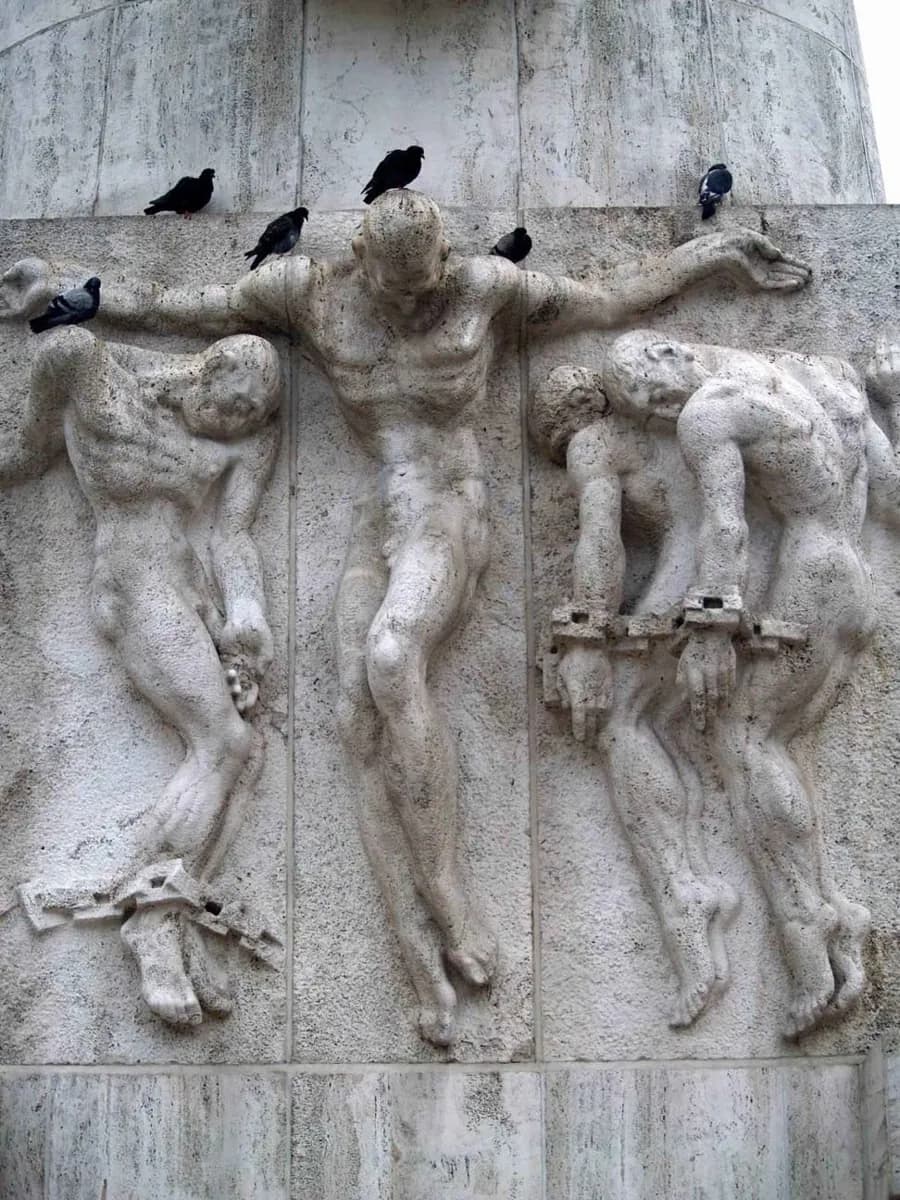
Combine the palace with Dam Square and the National Monument outside.
Give the central hall time before moving into smaller rooms; it carries the building's main argument.
What is pulling you next?
Another door into this story