
Why go
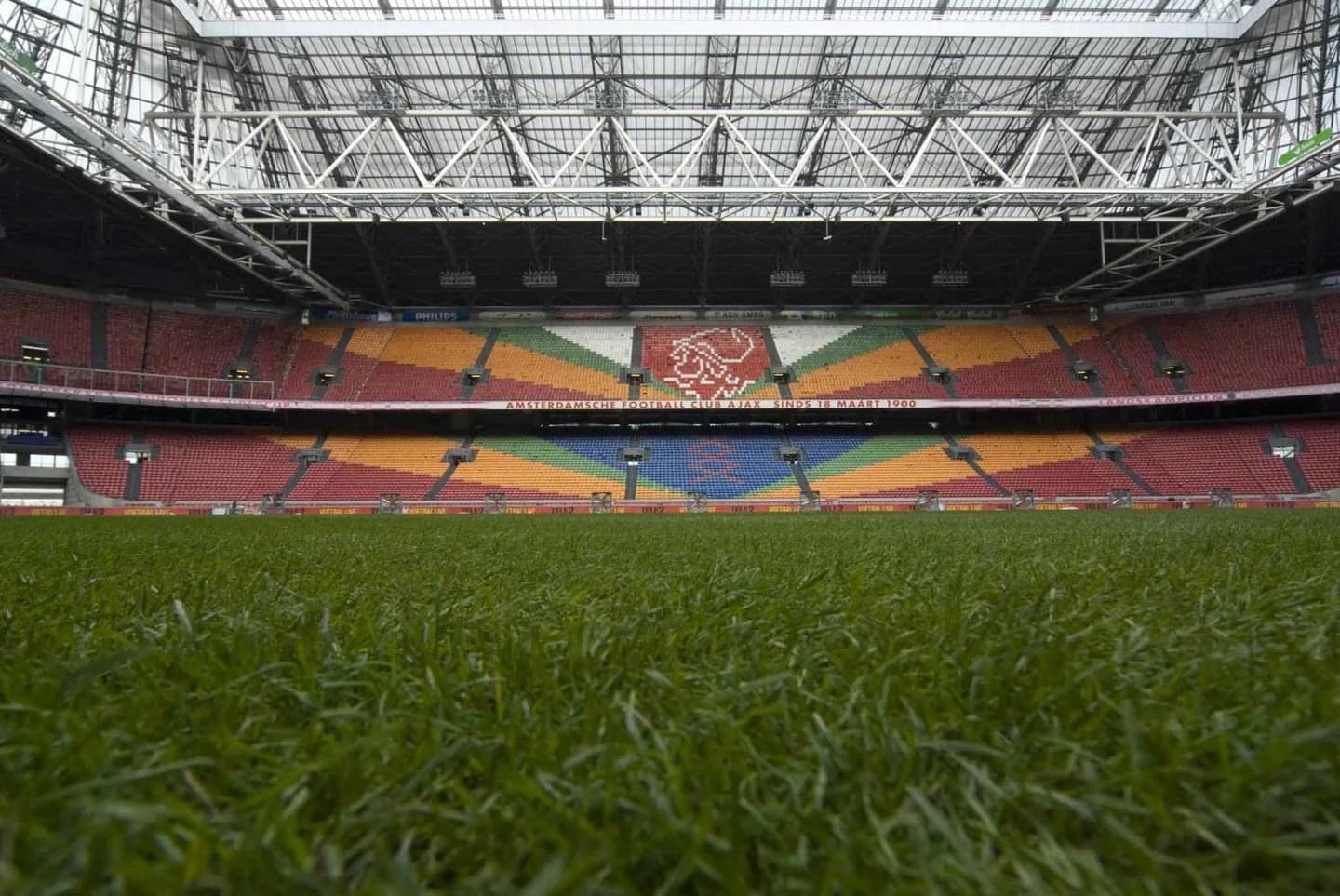
Take a stadium tour to understand how Ajax's home handles football and large concerts under a retractable roof. The bowl, pitch and behind-the-scenes areas give the building meaning even when no event is taking place. Football supporters also see more than broadcast views can reveal.
What to look for
- Look across the full seating bowl to grasp the stadium's scale.
- Study how the retractable roof meets the grass playing surface below.
- Use tour-only spaces to compare athlete, staff and spectator routes.
The full story
The stadium emerged from Amsterdam's abandoned bid for the 1992 Summer Olympics and Ajax's need for a larger home than De Meer. Revised plans removed the athletics track and introduced a retractable roof above the football pitch. Construction began in 1993, and Queen Beatrix opened the Amsterdam ArenA in 1996. Since then the ground has hosted Ajax matches, European football finals and large international concerts. The official name now honours Johan Cruijff, the player and thinker whose influence reaches far beyond the club. On a tour, the most useful contrast is between the public bowl and the controlled routes behind it. A match compresses attention toward the pitch; an empty or quieter stadium reveals circulation, sightlines, roof structure and the logistics required to change from sport to music. That makes the visit primarily about football culture and event engineering, not simply a collection of trophies.
Useful to know
- Choose between guided and self-guided formats on the official tour page.
- Check the event calendar because matches and concerts can alter tour access.
- Plan the ArenA as a focused trip to Amsterdam Zuidoost rather than a quick central-city stop.
Your next visit
Estimated · Declared scenario and planning estimates; no live opening, weather, queue or booking service.
Outdoor visit · 30–45 min
World planning estimate; admission, opening, visit duration and access need checking.