
Why go
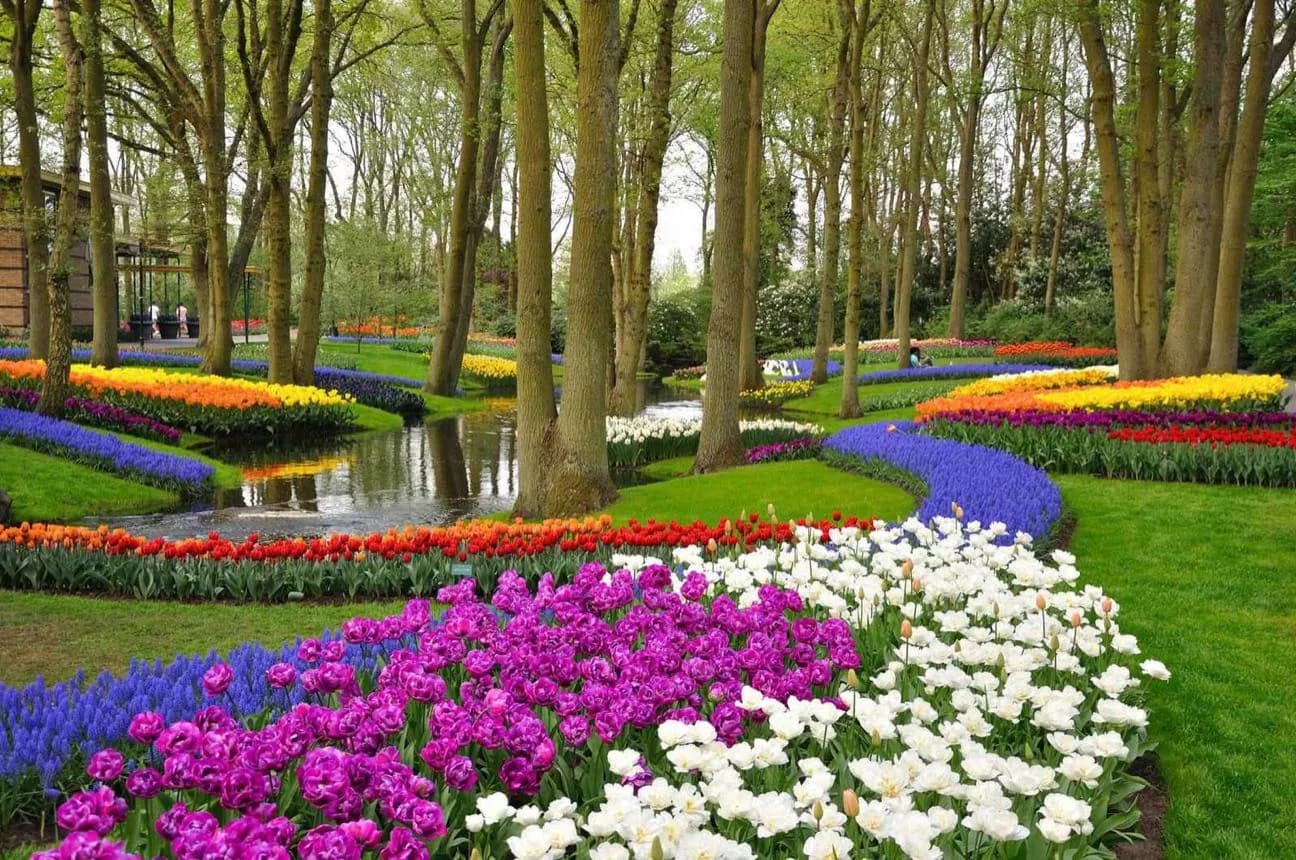
Go to compare Dutch bulb cultivation as landscape design: formal displays, water gardens, old bulb varieties and long sightlines create more variety than a single tulip field. The park works best for visitors willing to plan around its short season.
What to look for
- Compare the English landscape garden's curves with more enclosed displays.
- Seek old bulb varieties in the historical garden.
- Distinguish the designed park beds from privately owned flower fields outside the grounds.
The full story
The grounds began as hunting land and later supplied herbs to the kitchen of a nearby castle, giving Keukenhof its name: kitchen garden. In the nineteenth century, Jan David Zocher and his son Louis Paul Zocher, also associated with Amsterdam's Vondelpark, reshaped the castle grounds in an English landscape style. The modern flower exhibition began in 1949 as a place for Dutch and European growers to present bulb hybrids and support the export trade. That commercial origin explains the extraordinary concentration of cultivated varieties. The park now combines several approaches rather than one continuous tulip display. Curving paths create changing views, historical beds preserve older bulbs, and water, shrubs and perennials broaden the planting beyond tulips. The long fields seen in photographs of the surrounding bulb region are separate, often privately owned agricultural land. Knowing that distinction helps set expectations: Keukenhof is a designed exhibition garden, not unrestricted access to the fields around Lisse.
Useful to know
- Check Keukenhof's official seasonal dates before arranging transport to Lisse.
- Do not enter surrounding commercial fields unless access is clearly permitted.
- Allow for exposed outdoor walking and changing spring weather.
Your next visit
Estimated · Declared scenario and planning estimates; no live opening, weather, queue or booking service.
Outdoor visit · 30–45 min
World planning estimate; admission, opening, visit duration and access need checking.