
Why go
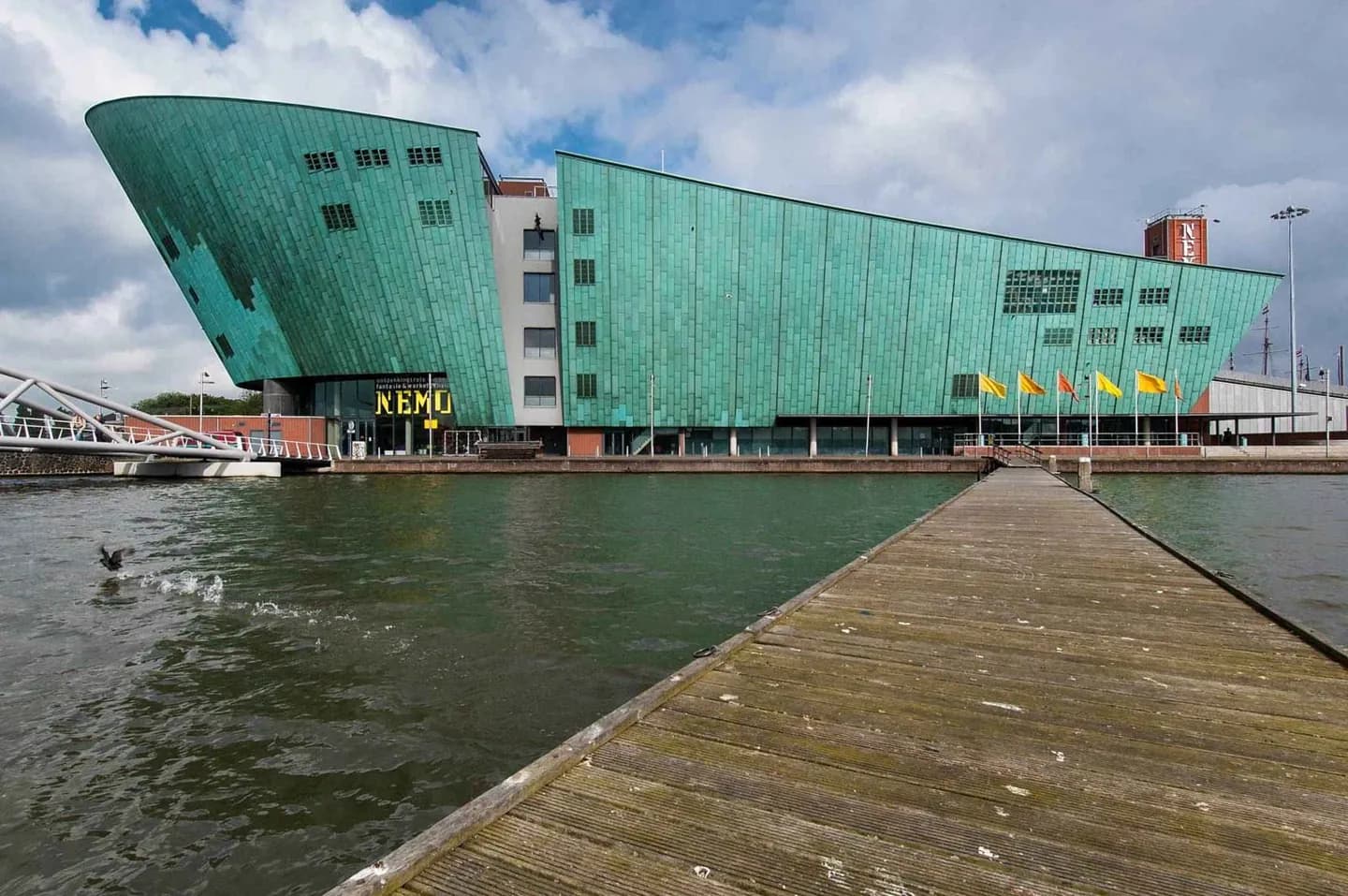
Come to test ideas rather than simply view objects: chain reactions, electricity, water, DNA and perception become physical tasks. The stepped green roof and upper deck also connect the exhibits to Amsterdam's harbour landscape. Families can compare reactions immediately instead of reading long explanations.
What to look for
- Follow the large chain-reaction installation and its moving parts.
- Try experiments dealing with DNA, electricity, water and the human mind.
- Climb toward the upper deck for a broad view over Oosterdok and the city.
The full story
NEMO traces its institutional roots to the Museum van den Arbeid, founded in 1923 to explain labour and technology. The organisation changed names and locations before moving to Oosterdok in 1997, into a building designed by Renzo Piano. Its sloping copper-green form rises above the IJ tunnel and resembles a ship's bow from the water. Inside, the museum turns science into action across five floors. Large chain reactions demonstrate cause and effect; other stations explore electricity, water cycles, materials, DNA, memory and the senses. A laboratory format lets visitors handle questions that might otherwise remain abstract. The building supports the same idea of discovery. As you move upward, enclosed experiments give way to the upper deck and views across Amsterdam's former harbour. That progression from machinery and bodies to the city outside is part of the visit, linking scientific curiosity with the engineered landscape around Oosterdok.
Useful to know
- Start with the lower-floor experiments before groups build around popular stations.
- Allow enough energy for several floors; the museum rewards doing, not rushing past displays.
- Check the official calendar for Monday openings outside the regular seasonal pattern.
Your next visit
Estimated · Declared scenario and planning estimates; no live opening, weather, queue or booking service.
Outdoor visit · 30–45 min
World planning estimate; admission, opening, visit duration and access need checking.