
Why go
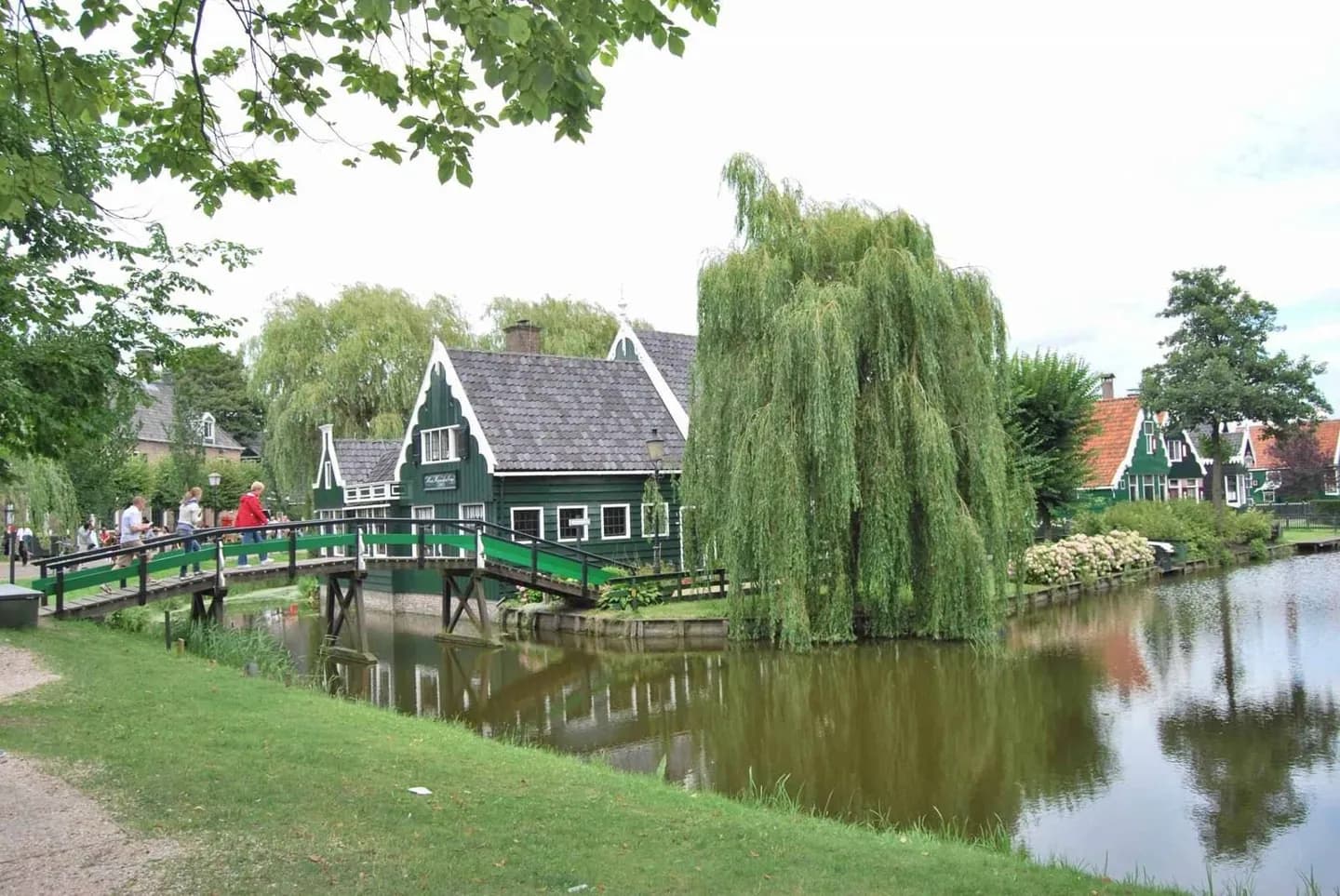
Go beyond Amsterdam to trace the industrial Zaanstreek through a real working city. The preserved Czar Peter House, river setting and history of sawmills show how wind power supported shipbuilding, paper production and an early manufacturing economy. Monet's paintings offer another view of the changing river landscape.
What to look for
- Use the Zaan River as the geographic thread through the city.
- Visit the preserved house linked to Peter the Great's study of shipbuilding.
- Look for references to timber work and the region's former sawmills.
The full story
Zaandam and the wider Zaanstreek developed around wind-powered industry. During the Dutch Golden Age, large numbers of mills drove saws that processed imported Scandinavian timber for shipbuilding, while other businesses made paper and related goods. The city remained an important lumber port well into the twentieth century. In 1697, Peter the Great of Russia stayed in Zaandam while studying Dutch shipbuilding; the small house associated with his stay survives as a museum. Claude Monet lived here for several months in 1871 and painted the river, boats and mills, recording a landscape already changing under industrial pressure. Zaandam later became part of the municipality of Zaanstad, but the Zaan remains the clearest way to understand its development. The most useful visit connects one preserved site with the river and present-day city, rather than treating Zaandam only as a transfer point for Zaanse Schans.
Useful to know
- Choose a specific Zaandam anchor before leaving Amsterdam; the municipal area is not one compact sight.
- Pair the city with Zaanse Schans only if you have time for both real urban fabric and relocated heritage.
- Check current museum access separately rather than assuming city-wide hours.
Your next visit
Estimated · Declared scenario and planning estimates; no live opening, weather, queue or booking service.
Outdoor visit · 30–45 min
World planning estimate; admission, opening, visit duration and access need checking.